I am hoping that this earthcache will enlighten you about the gumbo found in and around Regina.
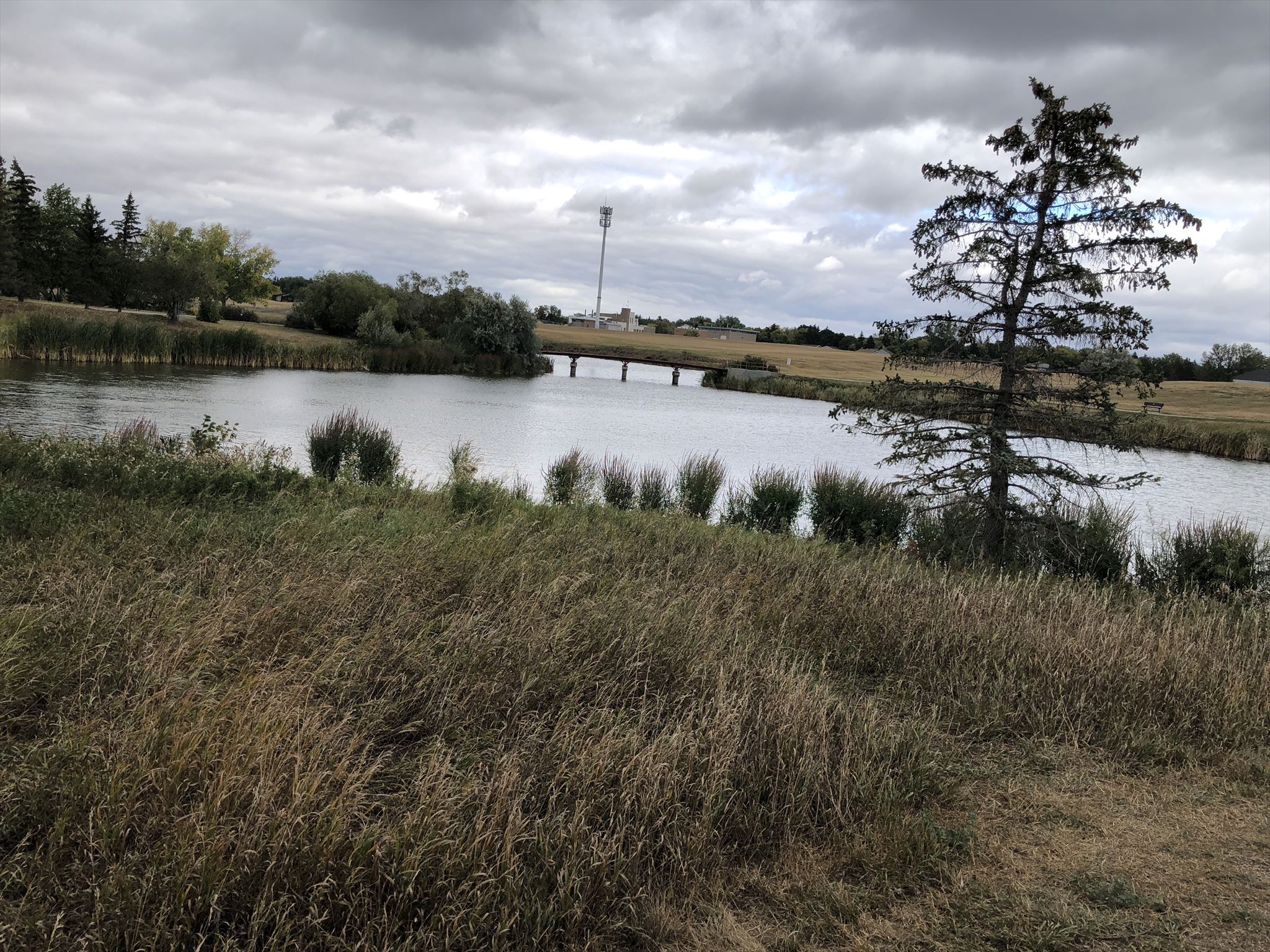
Thousands of square kilometers of Saskatchewan were covered by glacial lakes. The weight of the glacier depressed the underlying ground. This depressed area was exposed as the ice retreated and meltwater was trapped along the edge of the glacier forming a lake. With the loss of the weight of the glacier, the land gradually rebounded upwards (isostatic uplift) and the lake drained. Glacier meltwater was full of fine grained sediments (sand,silt,clay) produced by glacial erosion.
When this material reached a lake, it slowed down and was deposited onto the lake bottom.
Today these areas are flat plains composed of fine sediments with a high clay content. They form the best agricultural land in our province.Glacier meltwater was full of fine grained sediments (sand,silt,clay) produced by glacial erosion. When this material reached a lake, it slowed down and was deposited onto the lake bottom. Today these areas are flat plains composed of fine sediments with a high clay content. They form the best agricultural land in our province. Near the end of the last or Wisconsinian glacial period, glacial Lake Regina was formed The glacier deposited glacial till is a mixture of all particle sizes from clay to boulders that was further eroded by the meltwater.
Today the silts and clays from this former lake support rich agricultural soil but pose considerable engineering difficulties: the clays, dominated by montmorillonite, have a tremendous ability to expand with the addition of water and to contract on its absence. This results in heaving and cracking of sidewalks, roads, and foundations. It is believed that when Glacial Lake Regina drained, it did so quickly and catastrophically, eroding a large channel now occupied by the much smaller contemporary Souris River. Glacial Lake Regina lasted lesds than 1000 years.
Most of the information found above was retreived from: Encyclopedia of Saskatchewan, Proglacial Lakes, esask.uregina,ca/entry/proglacial_lakes.html
In order to be able to log this earthcache as found, you will need to answer the following questions and email your answers to the owner of this earthcache.
1. What is the most dominant mineral composing the clays that make the gumbo ?.
The answer can be found in the text above.
2. According to the information found at GZ, by what percentage can the clay expand ?
3. When at GZ, follow the trail to the nearest bridge and tell me what are the words displayed on the sign.