Skip to content

Pestrá kôpka kamenia (SK/EN) EarthCache

Hidden : 9/7/2022
Difficulty:
2 out of 5
Terrain:
2 out of 5

Size: Size:   other (other)

Join now to view geocache location details. It's free!

Watch

How Geocaching Works

Please note Use of geocaching.com services is subject to the terms and conditions in our disclaimer.

Geocache Description:


Keška

Nachádzate sa na turistickom chodníku, vedúcom z Červenej studne až na Klinger. Na súradniciach kešky, ako aj na waypointe 01 (Žila/Vein) možno pozorovať pestrý súbor hornín pôvodne andezitového zloženia. Tieto horniny boli intenzívne premenené hydrotermálnymi procesmi ako propylitizácia a argilitizácia. Premeny taktiež dali za vnik rudným žilám, ktoré boli zdojom bohatstva mesta.

Premenená hornina

Cieľom tejto kešky je ukázať vám ako sa pevná hornina - andezit dokáže vplyvom horúcich roztokov zmeniť na niečo úplne iné. A taktiež, ak budete mať šťastie, môžete nájsť aj pekné kryštály kremeňa.

Podmienky logovania

Earthcache nemá fyzický logbook kde sa môžete zapísať. Aby ste mohli zalogovať návštevu, musíte zodpovedať na nasledovné otázky a zaslať mi odpovede na profilový e-mail, alebo cez message centrum.

Zalogovať môžete okamžite po odoslaní odpovedí, nemusíte čakať na potvrdenie ich správnosti. Dodržuje prosím následnosť: 1) poslanie odpovedí na úlohy; 2) logovanie.


  1. Pozorujte horniny na lokalite. Ako rozdiely pozorujete (napr. farba, usporiadanie, vrstevnatosť)?
  2. Čím je spôsobená červená (okrová, hrdzavá alebo tmavohnedá) farba na povrchu andezitov? Ktorým chemickým prvkom?
  3. Aký je rozdiel v súdržnosti andezitu (tento obrázok) a intenzívne premenených hornín (tento obrázok).
  4. Dobrovoľné: na waypointe Žila/Vein skúste násť kryštál (drúzu) kremeňa. Aká je veľkosť kryštálov?

Fotografia nie je súčasťou úloh, ale ako dôkaz návštevy mám právo o ňu požiadať, tak ako je to uvedené v Help Centre.

  • Poprosím teda o fotku Vás, alebo vašej osobnej veci takým spôsobom, aby ste boli jednoznačne identifikovateľný na lokalite.


  • Bez doručených odpovedí je log neplatný a bez ďalšieho upozorňovania ho zmažem.
  • Skupinové odlovy - každý posiela odpovede sám za seba.

A na záver - nebojte sa odpovedí, skúste ;-)
A čítajte listing, možno Vám to pomôže.

Hydrotermálne premeny

Vplyvom fluíd, najčastejšie horúcich vodných roztokov rôzneho zloženia, dochádza v horninovom prostredí, ktorým tieto roztoky prenikajú, k zmenám v chemickom zložení pôvodnej horniny a vzniku nových minerálov (a teda de facto k vzniku nového typu horniny). Proces sa nazýva aj metasomatóza a je možný vo všetých typoch hornín - vulkanických, metamorfovaných a sedimentárnych.
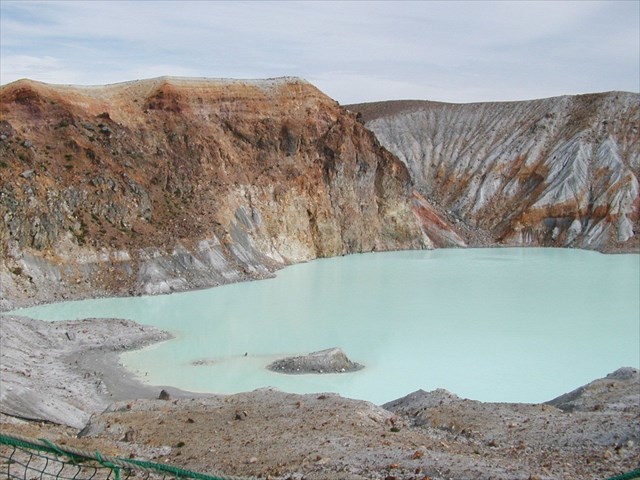
Kráter sopečného komplexu Kusacu-Širane (Honšú, Japonsko). Svahy krátera sú intenzívne premenené vplyvom kyslých roztokov.

Faktorov, ktoré ovyplvňujú celý proces hydrotermálnej premeny je veľa (teplota, tlak, čas, chemické zloženie roztoku, chemické zloženie pôvodnej horniny, veľkosť a tvar porúch v hornine - trhlín, puklín), no výsledok metasomatózy sa dá rozdeliť do niekoľkých typov (nie sú evedené všetky):

  • Albitizácia - premena sopečných hornín s vyšším obsahom oxidu kremičitého sodnými roztokmi za vzniku sodného živca - albitu.
  • Argilitizácia - pôsobením roztokov kyslého charakteru na horniny s vyšším obsahom živcov dochádza k ich rozkladu na kaolín a ílové minerály.
  • Dolomitizácia - zatláčanie vápnika vo vápencoch horčíkom a vznik dolomitov.
  • Chloritizácia - rozpad tmavých minerálov (pyroxény, amfiboly) alebo vulkanických skiel na minerály chloritovej skupiny.
  • Propylitizácia - je zapríčinená roztokmi s vysokým obsahom železa a síry. Výsledná hornina je obohatená o kremeň a hematit/limonit/pyrit.
  • Zeolitizácia - premena (hydratácia) vuklanických skiel na minerály zeolitovej skupiny.

Propylitizácia je jednou z hydrotermálnych premien pozorovateľých na lokalite, zapríčinená prienikom železom a horčíkom obohatených hydrotermálnych roztokov do horniny. Tento typ premeny rozkladá hlavne tmavé minerály ako biotit a amfiboly. Výsledkom je minerálna asociácia epidot–chlorit–albit a výplň puklín v hornine pyritom. Vplyvom vzdušného kyslíka pyrit neskôr oxiduje a zanecháva na hornine typické hrdzavočervené povlaky.
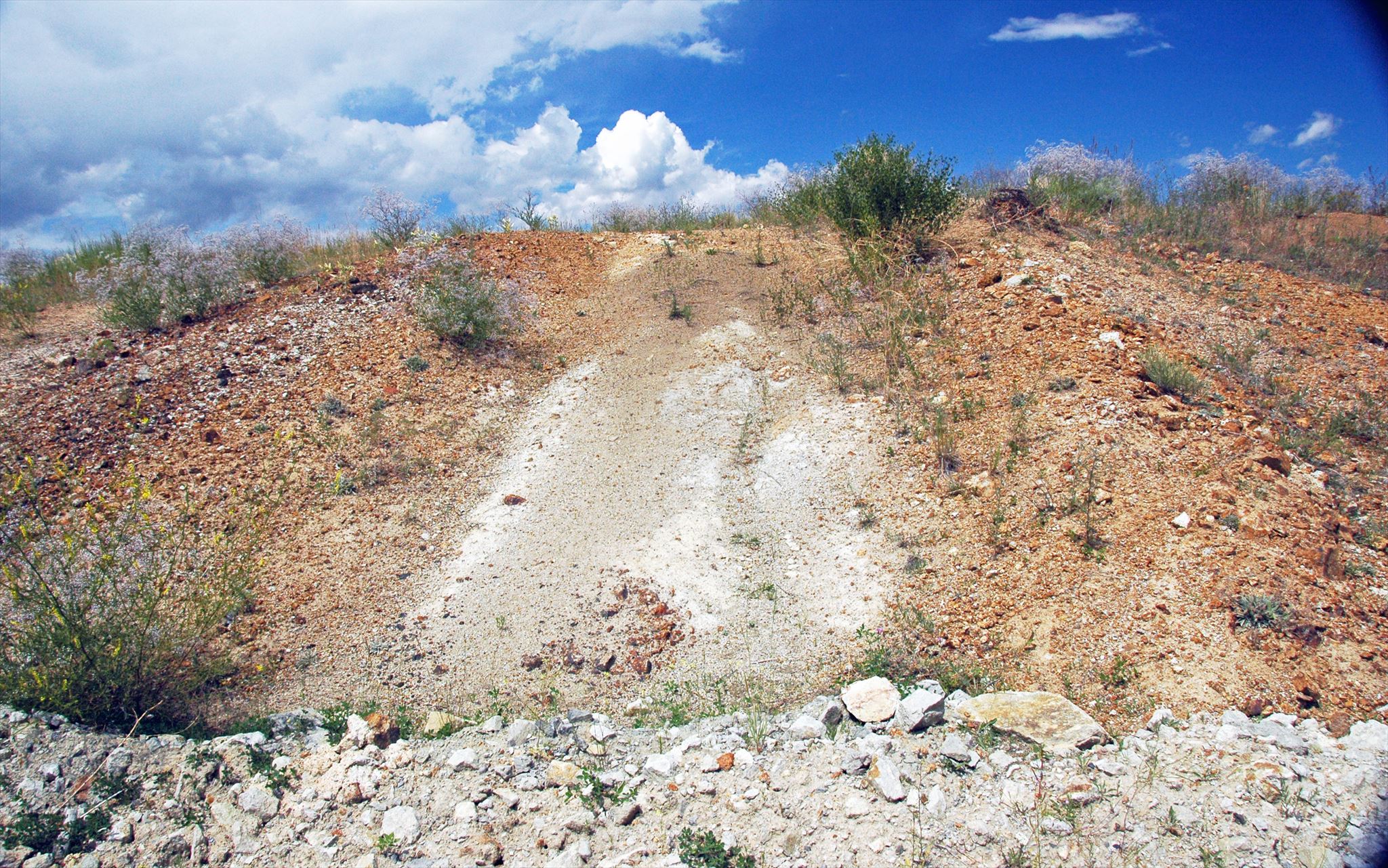
Argilitová zóna - svetlý pás ílových minerálov (prípadne kaolínu) v strede obrázka
Argilitová zóna - svetlý pás ílových minerálov (prípadne kaolínu) v strede obrázka.

Iným metsomatickým procesom, viditeľným na lokalite je argilitizácia. Je to proces premeny horniny pôsobením kyslých roztokov pri nižších teplotách. Zmena horniny je výrazná, výsledný argilit je menej súdržný, sfarbený je do bledších odtieňov.

Sodno-vápenaté živce (plagioklasy) sa rozkladajú na kaolinit, no kyseliny rozkladajú aj iné minerály v hornine. Napr. z amfibolov sa stáva ilit, resp. montmorillonit (ílové minerály). Ďalším bežným minerálom, ktorý je pozorovateľný v argilitovej zóne, je kremeň.

Rudné žily v Banskej Štiavnici

Bohatsvo Štiavnice je založené na žilnom systéme, tiahnucom sa v dĺžke cca 14 km od Štiavnických Baní až po Podhorie. Rudné žily približne sledujú zlomy po obvode štiavnickej kaldery. Viazané sú hlavne na silne premenené, propylitizované andezity.
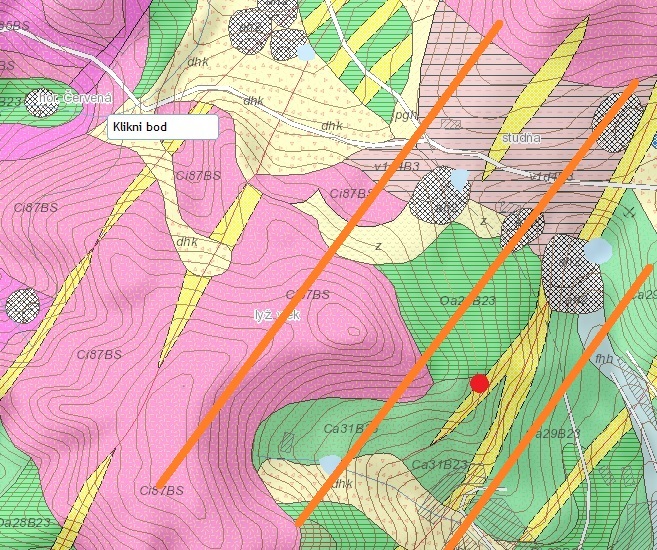
Geologická mapa okolia Červenej studne
Geologická mapa okolia Červenej studne. Legenda:
- Pozícia kešky
- Premenené, argilitizované andezity
- Lávové brekcie - Tanádsky intruzívny komplex
- Andezitový porfýr - intruzívny komplex Banisko
- Červenostudnianske súvrstvie - výplň kaldery
- Haldy
- Približná orientácia rudných žíl

Hlavnými prvkami, ktoré sa dolovali v Štiavnici bolo striebro a v menšej miere zlato, jeho obsah bol miestami až 300 g/t (žila Grüner). Okrem drahých kovov sa ťažilo aj olovo (galenit) a zinok (sfalerit). Z iných minerálov, ktoré tvoria výplň žíl, je to hlavne kremeň, baryt, hematit, chalkopyrit, kalcit, pyrit...

Cache

You are on a tourist trail leading from Červená studňa to Klinger. At the coordinates of the cache, as well as at the waypoint Žila/Vein you can see a varied set of rocks of originally andesite composition. These rocks were intensively altered by hydrothermal processes such as propylitization and argillitization. This alterations also created rich gold and silver ore veins.

Altered rock

The goal of this cache is to show you how solid rock - andesite can change into something completely different under the influence of hot fluids. And also, if you are lucky, you can also find some nice quartz crystals.

Logging conditions

EarthCache does not have a physical logbook. In order to log a visit, you must answer the following questions and send me the answers through my profile e-mail, or through Message center.

You can log immediately after sending the answers, you don't have to wait for confirmation of their correctness. Follow this sequence please: 1) sending answers; 2) log.


  1. Observe the rocks at the site. Describe differences (eg color, arrangement, layering).
  2. What causes the red (ochre, rust or dark brown) color on the surface of andesites? Which chemical element?
  3. What is the difference in cohesion between solid andesite (this image) and altered rocks (this image).
  4. Voluntary task: at the waypoin Žila/Vein, try to find a quartz crystal (druse). What is the size of the crystals?

Photography itself is not a part of tasks, but I can request it as a proof of visit, as stated in Help Center.

  • So, I kindly ask you a photo of you, your navigation device, your XWG... Just something that clearly identifies you on the site.

  • Without received answers, the log is invalid and I will delete it without further notice.
  • No group logging - everyone sends answers for himself.

And most of all - don't be afraid of the answers, just try ;-)
And read the listing, maybe it will help you.

Hydrothermal alterations

Hydrothermal alterations, or metasomatism (from the Greek μετά - change and σῶμα - body) is the chemical alteration of a rock by hydrothermal and other fluids. It is the replacement of one rock by another of different mineralogical and chemical composition. The minerals which compose the rocks are dissolved and new mineral formations are deposited in their place.

Crater of the Kusatsu-Shirane volcanic complex (Honshu, Japan). The slopes of the crater are intensively altered by the acids
Crater of the Kusatsu-Shirane volcanic complex (Honshu, Japan). The slopes of the crater are intensively altered by the acids.

Metasomatic rocks can be extremely varied. Often, metasomatised rocks are pervasively but weakly altered, such that the only evidence of alteration is bleaching, change in colour or change in the crystallinity of micaceous minerals. Investigation of altered rocks in hydrothermal ore deposits has highlighted several ubiquitous types of alteration assemblages which create distinct groups of metasomatic alteration effects, textures and mineral assemblages.

  • Argillic alteration, commonly present in the distal areas of porphyry deposits, is a low-temperature assemblage that converts feldspars and some other minerals into clay minerals such as kaolinite and illite.
  • Albite-epidote alteration is caused by silica-bearing fluids rich in sodium and calcium, and typically results in weak albite-silica-epidote.
  • Quartz-sericite-pyrite alteration, in which these minerals can be deposited both in veins and in a disseminated manner; sericite in particular replaces plagioclase and biotite.
  • Potassic alteration, typical of porphyry copper and lode gold deposits, results in production of micaceous, potassic minerals such as biotite in iron-rich rocks, muscovite mica or sericite in felsic rocks, and orthoclase (adularia) alteration, often quite pervasive and producing distinct salmon-pink alteration vein selvages.
  • Propylitic alteration is caused by iron and sulfur-bearing hydrothermal fluids, and typically results in epidote-chlorite-pyrite alteration, often with hematite and magnetite facies.

Propylitic alteration is the chemical alteration of a rock, caused by iron and magnesium bearing hydrothermal fluids, altering biotite or amphibole within the rock groundmass. It typically results in epidote–chlorite–albite alteration and veining or fracture filling with the mineral assemblage along with pyrite. The alteration occurs due to hot fluids that have a high sodium ion composition. This is typically due to fluids that have lost potassium ions in potassic alteration and gained sodium ions.

Argillic zone - the light-colored area at center of image.

Argillic alteration is hydrothermal alteration of wall rock which introduces clay minerals including kaolinite, smectite and illite. The process generally occurs at low temperatures and may occur in atmospheric conditions. Argillic alteration is representative of supergene environments where low temperature groundwater becomes acidic. Argillic assemblages include kaolinite replacing plagioclase and montmorillonite replacing amphibole and plagioclase. Orthoclase is generally stable and unaffected. Argillic grades into phyllic alteration at higher temperatures in an ore deposit hydrothermal system.

Advanced argillic alteration occurs under lower pH and higher temperature conditions. Kaolinite and dickite occur at lower temperatures whereas pyrophyllite and andalusite occur under high temperature conditions (T > 300°C). Quartz deposition is common.

Ore veins in Banská Štiavnica

The riches of Banská Štiavnica is based on a ore vein system that stretches for about 14 km from Štiavnické Bane to Podhorie. The ore veins roughly follow the faults around the perimeter of volcanic caldera. They are mainly related to highly altered, propylitized andesites.

Geological map of saddle Červená studňa and his vicinity
Geological map of saddle Červená studňa and his vicinity. Legend:
- Cache position
- Argilic andesites
- Lava breccias
- Andezitic porphyres
- Červená studňa formation (caldera base rocks)
- Heaps
- Ore veins

The main elements mined in Štiavnica were gold and silver, its content was sometimes up to 300 g/t (Grüner vein). Lead (galena) and zinc (sphalerite) were also mined. Other minerals that fill the veins are quartz, barite, hematite, chalcopyrite, calcite, pyrite...

Zdroje/sources

  • Konečný, V. (ed.), 1998: Geologická mapa Štiavnických vrchov a Pohronského Inovca 1: 50 000; MŽP SR – GSSR, Bratislava (sk)
  • Konečný, V. (ed.), 1998: Vysvetlivky ku geologickej mape Štavnických vrchov a Pohronského Inovca (štiavnický stratovulkán) 1: 50 000; GS SR, Bratislava, 473 s. (sk)
  • Koděra, M., a kol., 1989: Topografická mineralógia Slovenska I-III.; Veda, Bratislava 577+1098+1590 s.(sk)
  • Wikipedia: Metasomatóza; Propylitizácia; Argilitizácia (en)


Táto keška je súčasťou série Vulkanické fenomény Slovenska, venovanej produktom sopečnej činnosti, odohrávajúcej na území dnešného Slovenska prevažne v treťohorách. Zoznam kešiek nájdete tu.

This cache is a part of EarthCache series, dedicated to the volcanic activity in Slovakia in the tertiary. Complete list of caches you can find here.

Additional Hints (No hints available.)