Skip to content

Calcita @ Teruel EarthCache

Hidden : 12/14/2022
Difficulty:
2 out of 5
Terrain:
1 out of 5

Size: Size:   other (other)

Join now to view geocache location details. It's free!

Watch

How Geocaching Works

Please note Use of geocaching.com services is subject to the terms and conditions in our disclaimer.

Geocache Description:


Calcita


Español


Para registrar este earthcache, enviame um correo eletrónico com la respuesta a las seguintes preguntas:

1) En el WP1 ( coordinadas iniciales), fijate en el pasamanos detras de los enamorados, se pueden ver cristales de calcita en la roca calcarea. Describelos ( Color, son vitreos o no, textura suave o aspera), ¿se presenta en estado natural o han sido modificados?
2) En WP_statua: En la base de la estua se pueden ver cristales de calcita, dime el color de los mismos y su presentación/forma ( ayudate de los ejemplos del listing )
3) ¿Que diferencia la caliza de la calcita?
4) ¿De que esta formada la calcita? ¿ Que roca genera la metamorfosis de la calcita?
5) Añade dos fotografias tuyas en los dos locales, u otras en las que se pueda ver algún objeto, o tu nick en un papel

-Si crees que as concluido con exito los objetivos de este Earth Cache, y me ha enviado todas las respuestas solicitadas, puede hacer el log. Luego yo comprobaré que son correctas, y si hay cualquier problema me pondre en contacto para arreglarlo.
-Logs sin respuestas enviadas previamente, seran borrados sin aviso


Calcita


La calcita es un mineral formado por carbonato cálcico (CaCO3), de la clase 05 de la clasificación de Strunz, los llamados minerales carbonatos y nitratos. A veces, se usa como sinónimo caliza, aunque es incorrecto pues esta última es una roca, no un mineral. Su nombre viene del latín calx, que significa cal viva. Es el mineral más estable que existe de carbonato de calcio, frente a los otros dos polimorfos con la misma fórmula química aunque distinta estructura cristalina: el aragonito y la vaterita, más inestables y solubles.

La calcita es muy común y tiene una amplia distribución por todo el planeta, se calcula que aproximadamente el 4 % en peso de la corteza terrestre es de calcita.

Presenta una variedad enorme de formas y colores. Se caracteriza por su relativamente baja dureza (3 en la escala de Mohs) y por su elevada reactividad incluso con ácidos débiles, tales como el vinagre, además de la mencionada prominente división en muchas variedades —se han descrito cientos— según las impurezas de iones metálicos que puede llevar.

La mejor propiedad para identificar a la calcita es el test del ácido, pues este mineral siempre produce efervescencia con los ácidos. Puede emplearse como criterio para conocer si el cemento de rocas areniscas y conglomerados es de calcita. El motivo de ello es la siguiente reacción:

        CaCO3 + 2H+ → Ca2+ + H2O + CO2 (gas)

donde el dióxido de carbono produce burbujas al escapar en forma de gas. Cualquier ácido puede producir este resultado, pero es recomendable usar el ácido clorhídrico diluido o el vinagre para este test. Otros carbonatos muy parecidos, como la dolomita, no producen esta reacción tan fácilmente

Caracteristicas fisicas:


Transparencia: Transparente, Opaco
Color: Incoloro puro; ofrece varias tonalidades de gris, amarillo, marrón, rojo, verde, azul y negro cuando hay impurezas presentes
Color en sección fina: Incolora
Raya: Blanco
Dureza (Mohs): 3
Tenacidad: Frágil

 Variedades

Existen tantas variedades de calcita que es imposible describirlas todas ellas, aunque algunas son más conocidas como por ejemplo su forma más común, el cristal escalenoedro también llamado dientes de perro, que presenta la forma de una dipirámide con cierto parecido a los dientes de los cánidos, de ahí su nombre.

El denominado ónix mexicano es una variedad de calcita usada con propósitos ornamentales, pues se talla con facilidad en pequeñas figuras, vasos y otros objetos comunes. No se debe confundir con el verdadero ónix, variedad de cuarzo semipreciosa.

Otra variedad muy común es el llamado espato de Islandia, que son fragmentos de calcita totalmente incoloros y transparentes. Fue descrita en cavidades basálticas de Islandia y muestra con mucha claridad el fenómeno de la birrefringencia o refracción doble.

La variedad denominada alabastro ha sido empleada como ornamental, por su estructura de cristales especialmente finos susceptible de ser pulimentada, con un bello color blanco translúcido.

Algunos ejemplos de calcita
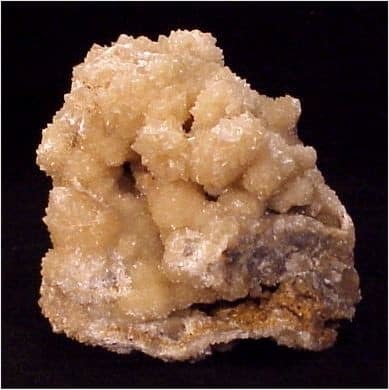


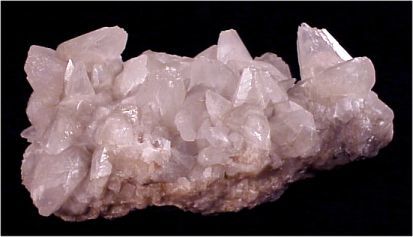
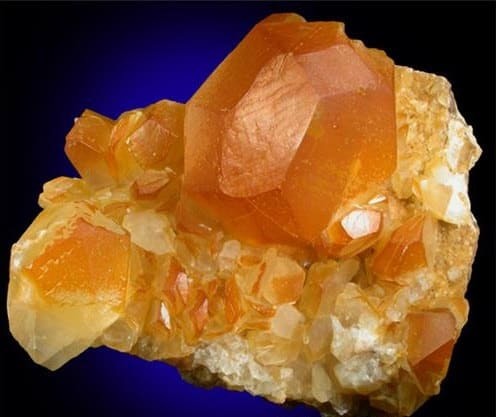
Agrupación de cristales de Calcita Agregado de cristal de calcita blanca Calcita con inclusiones de cobre


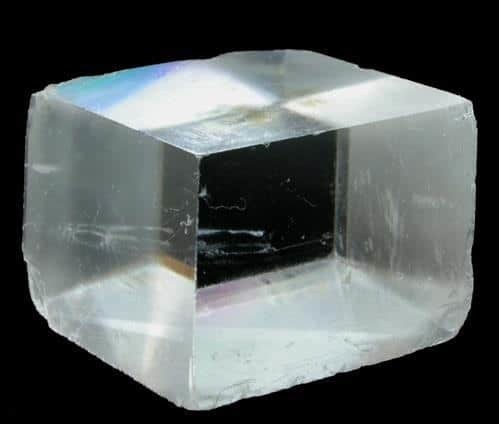
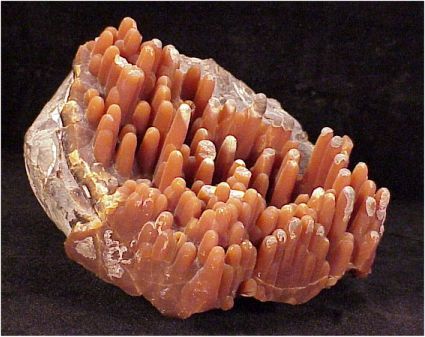
Espato de Islandia Estalactitas de Calcita Naranja
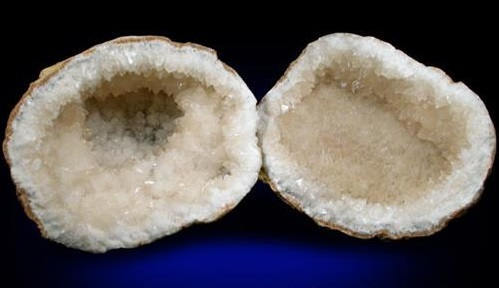
Geoda de Calcita

Ambiente de formación


Sus cristales se encuentran en la mayoría de los depósitos sedimentarios geológicos o bien como mineral de sustitución formado posteriormente en muchos otros ambientes, aunque lo más común es que aparezca sin ser visibles sus cristales como material masivo formando rocas calizas, donde es el componente fundamental y casi único mineral de esta roca.

Como depósito sedimentario de tipo químico mediante evaporación de soluciones muy ricas en bicarbonato cálcico forma la caliza química, aunque también puede formarse por la actividad de los organismos marinos que forman sus conchas de carbonato cálcico y al morir sedimentan éstas dando lugar a las llamadas calizas organogénicas.

También puede sufrir metamorfismo regional o de contacto y transformarse en mármol por recristalización de la calcita, y rara vez forma rocas ígneas (carbonatitas). También es un mineral común en filones hidrotermales de baja temperatura, asociada a sulfuros.

En las cuevas de paisajes cársticos se forman depósitos de calcita muy característicos, las llamadas estalactitas, estalagmitas, columnas, travertinos, etc.
Un tipo microcristalino de calcita en forma globular es común en ciertas regiones, ésta se forma de precipitando agua rica en calcio dentro de la caverna o en acantilados de piedra caliza. Existe en forma de estalagmitas, estalactitas, flowstone y extraños crecimientos globulares. Estos crecimientos se acumulan constantemente, formando capas.

La llamada agua dura, es un agua encontrada en regiones ricas en calcita y que contiene una alta concentración de calcio. Si esta concentración es muy elevada, el agua no hace espuma en contacto con el jabón.


English


To log this earthcache, send me an email with the answer to the following questions:

1)  At WP1 (initial coordinates), look at the handrail behind the lovers, you can see calcite crystals in the calcareous rock. Describe them (color, are they glassy or not, smooth or rough texture), is it in its natural state or has it been modified?
2) At WP_statua: At the base of the statue you can see calcite crystals, tell me their color and their presentation/shape (help yourself with the examples in the listing)
3) What differentiates limestone from calcite?
4) What is calcite made of? What rock generates the metamorphosis of calcite?
5) Add a photograph of yourself at WP1 and WP2, or another in which an object can be seen, or your nick on a piece of paper 
 
-If you think you have successfully completed the objectives of this Earth Cache, and you have sent me all the requested responses, you can log. Then I will check that they are correct, and if there is any problem I will contact you to fix it.
-Logs without responses previously sent, will be deleted without notice

Calcite


Calcite is a mineral formed by calcium carbonate (CaCO3), from class 05 of the Strunz classification, the so-called carbonate and nitrate minerals. Sometimes, limestone is used as a synonym, although it is incorrect because the latter is a rock, not a mineral. Its name comes from the Latin calx, which means quicklime. It is the most stable calcium carbonate mineral that exists, compared to the other two polymorphs with the same chemical formula but different crystalline structure: aragonite and vaterite, which are more unstable and soluble.

Calcite is very common and has a wide distribution throughout the planet, it is estimated that approximately 4% by weight of the earth's crust is calcite.

It presents a huge variety of shapes and colors. It is characterized by its relatively low hardness (3 on the Mohs scale) and by its high reactivity even with weak acids, such as vinegar, in addition to the prominently mentioned division into many varieties—hundreds have been described—according to ion impurities. metallic that you can carry.

The best property to identify calcite is the acid test, since this mineral always effervesces with acids. It can be used as a criterion to know if the cement of sandstone rocks and conglomerates is calcite. The reason for this is the following reaction:

        CaCO3 + 2H+ → Ca2+ + H2O + CO2 (gas)

where carbon dioxide produces bubbles when escaping as a gas. Any acid can produce this result, but it is recommended to use dilute hydrochloric acid or vinegar for this test. Other very similar carbonates, such as dolomite, do not produce this reaction so easily.

Physical characteristics:


Transparency: Transparent, Opaque
Color: Pure colorless; offers various shades of gray, yellow, brown, red, green, blue and black when impurities are present
Color in thin section: Colorless
Stripe: White
Hardness (Mohs): 3
Tenacity: Brittle

Varieties


There are so many varieties of calcite that it is impossible to describe them all, although some are better known, such as its most common form, the scalenohedron crystal, also called dog's teeth, which has the shape of a dipyramid with a certain resemblance to the teeth of canids. , hence its name.

The so-called Mexican onyx is a variety of calcite used for ornamental purposes, as it is easily carved into small figures, vases, and other common objects. Not to be confused with true onyx, a semi-precious variety of quartz.

Another very common variety is the so-called Iceland spar, which are completely colorless and transparent fragments of calcite. It was described in basaltic cavities in Iceland and shows very clearly the phenomenon of birefringence or double refraction.

The variety called alabaster has been used as ornamental, due to its particularly fine crystal structure that can be polished, with a beautiful translucent white color.

Some examples of calcite


Grouping of Calcite crystals
White calcite crystal aggregate
Calcite with copper inclusions


Iceland spar Orange Calcite Stalactites
Calcite geode


Formation environment


Its crystals are found in most geological sedimentary deposits or as a replacement mineral formed later in many other environments, although the most common is that its crystals appear without being visible as massive material forming limestone rocks, where it is the fundamental component and almost unique mineral from this rock.

As a chemical sedimentary deposit by evaporation of solutions very rich in calcium bicarbonate, it forms chemical limestone, although it can also be formed by the activity of marine organisms that form their calcium carbonate shells and when they die they settle, giving rise to the so-called organogenic limestone. .

It can also undergo regional or contact metamorphism and become marble by recrystallization of calcite, and it rarely forms igneous rocks (carbonatites). It is also a common mineral in low-temperature hydrothermal veins, associated with sulfides.

Very characteristic calcite deposits are formed in caves in karst landscapes, the so-called stalactites, stalagmites, columns, travertines, etc.
A microcrystalline type of calcite in globular form is common in certain regions, it is formed by precipitating calcium-rich water inside the cavern or on limestone cliffs. It exists in the form of stalagmites, stalactites, flowstone, and strange globular growths. These growths constantly build up, forming layers.

The so-called hard water is water found in regions rich in calcite and containing a high concentration of calcium. If this concentration is very high, the water does not foam in contact with the soap.


Additional Hints (Decrypt)

Qbf sbgbf erdhrevqnf Gjb cubgbf erdhverq

Decryption Key

A|B|C|D|E|F|G|H|I|J|K|L|M
-------------------------
N|O|P|Q|R|S|T|U|V|W|X|Y|Z

(letter above equals below, and vice versa)