Junior EC Series - Erosion
DEFINITION
Geology is part of Earth Science that studies the physical parts of the Earth as well as its history and the various processes that affect the Earth's crust. One of the many processes is EROSION and is a term used in Geology to describe one of the many natural actions or processes that moves soil or rocks or finer particles from one place to another on the Earth. Those materials that have been moved then become deposits in their new location
In short : Erosion is a Natural Geological process where Earth materials are worn away by wind or water and deposited elsewhere
THIS CACHE
WATER - Rain
Rainfall is one of the most prominent erosion processes and can have small effects in your garden, or massive effects like landslides or cliffs collapsing. Rain brings us 4 prominent types of erosion :
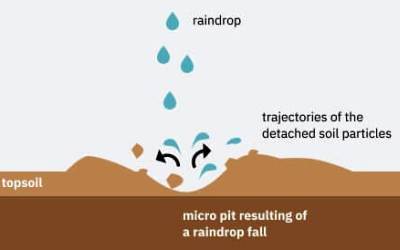
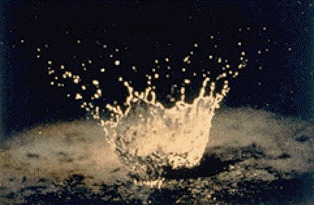
1. Splash Erosion : is the effect of a single raindrop on soft soil where it impacts. The raindrop has a mass and a velocity and when it hits the ground it makes an indent or small crater. The soil particles that are loosened in the process are ejected from the crater and falls away from where it was originally. This can be as small as a few millimeters away, but the collective effect of millions of raindrops at the same time can loosen and displace large quantities of soil at a time
|
|
|
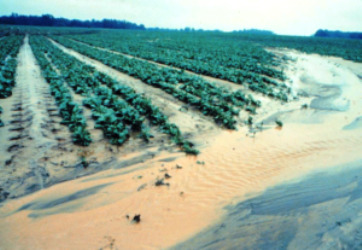
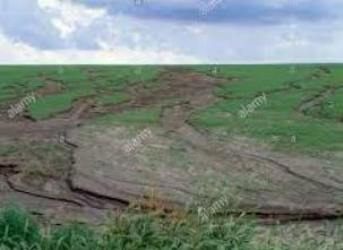
2. Sheet Erosion : is the result when lots of rain falls and the soil gets saturated with water and any subsequent rain that falls collects on top of the soil and flows away, called "runoff". When runoff ocurs, it will pick up some of the loosened underlaying soil particles and move them away from their origin. These particles are then called "sediment" and will be deposited elsewhere when the physical characteristics of the runoff allows for the sediment to precipitate. Such runoffs may be a tiny little streamlet in a flower bed... or a massive raging river that transports many metric tons of soil
|
|
|
3. Rill Erosion : are small waterways that are created as a permanent runoff. Think of your garden with flat flower beds. Then the rains come and you see little furrows forming where water flows like a tiny little stream. Those are called "rills" and can be from a few centimeters deep in soil to larger flow paths in hills and mountains and even in bedrock over time. These rills are considered a source of fresh sediment deposits as well as delivery systems where sediment is passed through to other areas
4. Gully Erosion : is similar to rills, but on a much larger scale, depth and velocity where masses of water pass through an area at a high rate, typically during rain storms or melting snow, and removing soil to greater depths. These often result in mudslides or landslides
TASKS for this EC :
- At GZ looking up the creek, observe the effect of the stream and determine how many of the rain related erosion processes you can see that influenced the formation of the stream. Primarily you will see GULLY EROSION as the prominent type of water erosion. From the other side of the bridge, look down the creek and take note of the difference in erosion on the two sides of the bridge. Also in your answer describe why you think there is a difference between the two sides. It will be noticable that the construction of the bridge has a significant restricting effect on the gully erosion, as the waters are channelled downstream and you will see less gully erosion on the lower side
- OPTIONAL take a pic of you at GZ and post it with your log
- Send your answers to the CO via the Message Center for verification