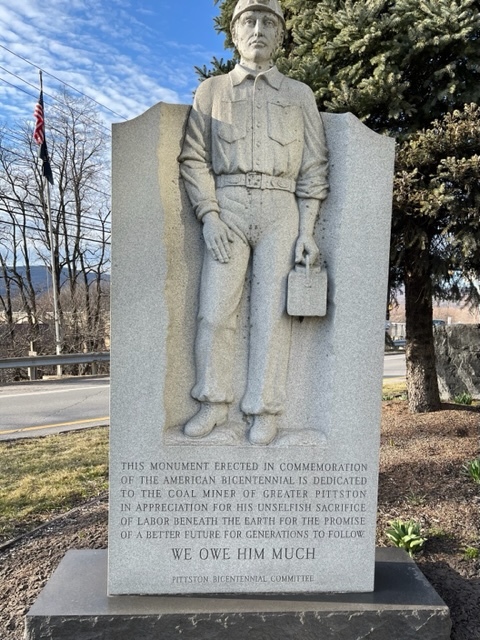
The Pittston Coal Miners Monument is a tribute to the hardworking miners who labored in the anthracite coal mines of northeastern Pennsylvania. Located in the heart of downtown Pittston, the monument serves as a reminder of the area's rich coal mining history. Pittston is situated in the Wyoming Valley, an area in northeast Pennsylvania that boasts the largest deposit of anthracite coal in the world. The monument features a statue of a miner and was erected for the nations bicentennial. The Pittston Coal Miners Monument is a testament to the contributions and sacrifices of the men who helped fuel America's industrial revolution.
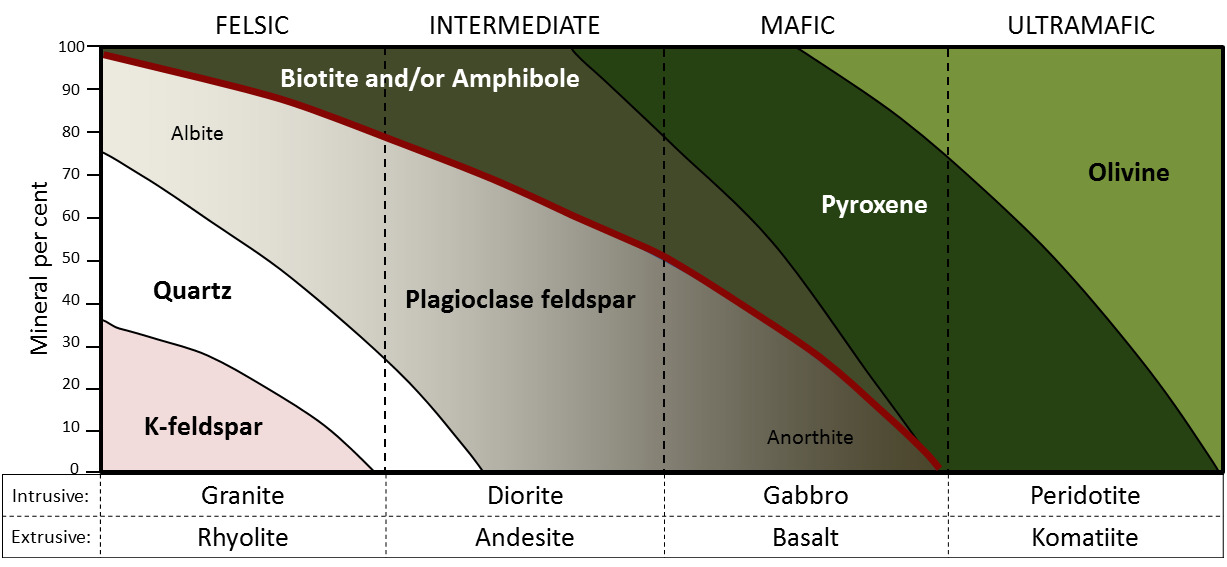
The monument is constructed from Vermont granite, which was likely quarried in Barre, VT. Vermont granite is highly sought after worldwide due to its fine grain, even texture, and superior weather resistance. Granite is an igneous rock that forms deep beneath the Earth's surface through a process called magma crystallization. Magma is molten rock that is rich in minerals and is forced up from the mantle and into the Earth's crust. As the magma cools and solidifies, large mineral crystals form, which give granite its distinctive texture and appearance. Some examples of common minerals found in granite include feldspar (typically pink, white, or gray in color and commonly found in large, blocky crystals), quartz (often clear or white in color and found in small, glassy grains), and mica (which can range in color from brown to black and is found in thin, sheet-like layers). Granite can contain either plagioclase feldspar or potassium feldspar. Potassium feldspar has a pink to reddish hue while plagioclase feldspar has a white to gray color. What distinguishes granite from other igneous rocks is that it contains mostly feldspar and quartz. You may be wondering what the difference is between granite and rhyolite, since they are both in the same location on the chart. The difference is where the rock was formed (and therefore they'll have different crystal sizes). Intrusive rocks such as granite were formed within the Earth's surface (and will therefore have larger crystal size since the rock cooled slowly). In contrast, extrusive rocks such as rhyolite are formed outside the Earth's crust (since they cool rapidly, they'll have smaller crystal size). Granite is known for its hardness and durability, which make it a popular choice for construction and decorative purposes.
Logging Requirements:
- What are some characteristics that make Vermont granite highly sought after worldwide?
- Look closely at the mineral composition of the stone. Does it contain potassium feldspar, or plagioclase feldspar? Are you able to identify any other minerals?
- Are there any patterns or variations in the color or texture of the granite across different parts of the monument?
- Upload a photo of the Pittston Coal Miners Monument. You don't have to be in the photo, though it is strongly encouraged.
Sources:
- https://www.timesleader.com/archive/387275/news-opinion_columns-opinon-50999912-reliving-the-story-of-the-coal-miner-statue
- https://dec.vermont.gov/geological-survey/resources-energy/minres/granite
- https://www.uvm.edu/~gdrusche/Classes/GEOL%20110%20-%20Earth%20Materials/Richter%20-%20Barre%20quarry%20field%20guide.pdf