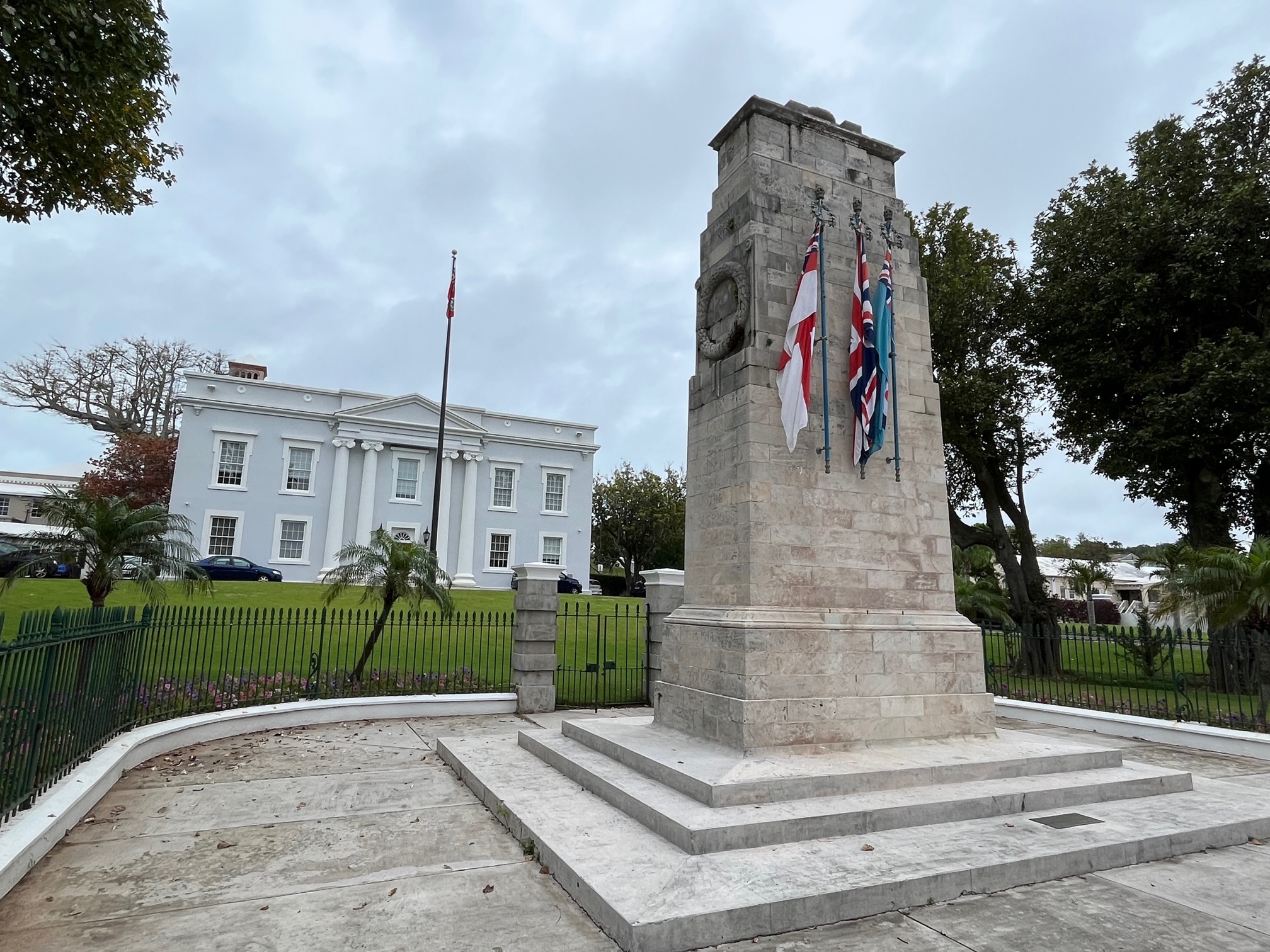
The Cenotaph in Bermuda is a solemn memorial in Hamilton, honoring those who sacrificed their lives in war. With its serene surroundings, it serves as a reminder of the island's gratitude and invites visitors to reflect on the impact of war. It stands as a lasting tribute to Bermuda's fallen heroes.
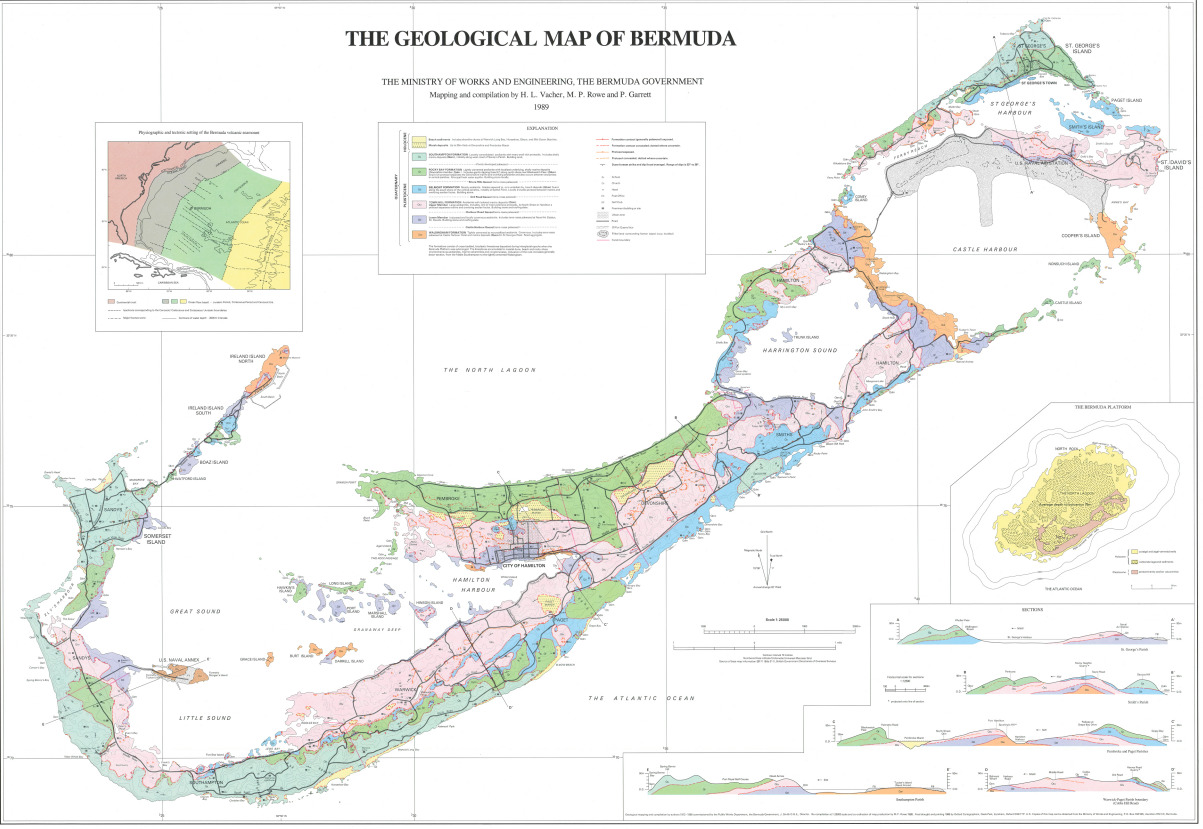
Bermuda's formation began approximately 30 million years ago. It originated as a volcanic island but over time, as the Earth's tectonic plates shifted and moved, the volcanic activity ceased, and the island began its transformation. Through a complex process of coral growth and limestone deposition, the coral reefs surrounding the volcanic landmass gradually expanded and fused together, forming a limestone cap that now blankets the entire island. Despite being 21 square miles in area, it's limestones has been divided into five formations. These formations, dominated by cemented sand dunes, or eolianites, are bounded by fossil soils, or palaeosols. The image above is a geologic map of Bermuda. To view a higher resolution image, you can go here.
The limestone formations in Bermuda can be categorized into five distinct groups, which in order of descending age, are: Walsingham, Town Hill (lower and upper members), Belmont, Rocky Bay, and Southampton. The youngest of Bermuda's formations can be easily distinguished from the oldest, however it is often more difficult to differentiate formations that are closer in age. To overcome this challenge, the geologists that created the map used an allostratigraphic approach, which relied on tracing palaeosols (which are ancient soil layers that separate the formations). By analyzing the soil boundaries, they were able to accurately map the geologic history of Bermuda's limestone formations. The variations in physical character among the formations is primarily reflected in their respective ages. As we progress from the youngest to the oldest limestones, a gradation of physical and chemical alteration, known as diagenesis, becomes apparent, highlighting the changes that have occurred over time.
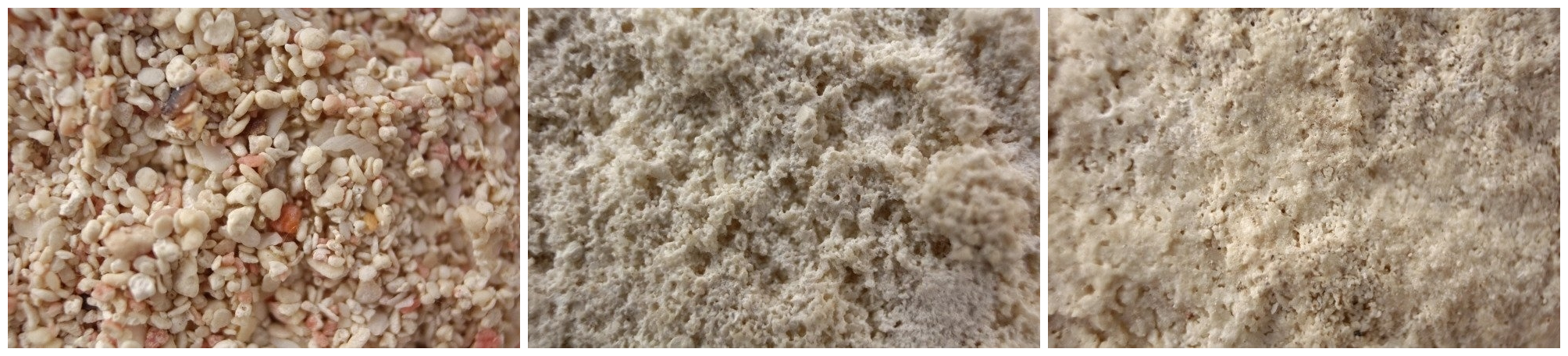
The youngest formations in Bermuda, belonging to the Southampton Formation (colored light green on the map), have undergone the least amount of alteration and resemble weakly consolidated beach sand. This is the heavily eroded limestone you may have noticed in some road cuts when travelling around Bermuda. As we progress to older formations like the Rocky Bay (dark green) and Belmont Formations (blue), the limestones become better cemented but still retain a primary granular texture similar to beach sand. Moving further into the Upper and Lower members of the Town Hill Formation (pink and purple) and eventually the Walsingham Formation (orange), the sand grains become corroded and tightly cemented. The limestone found on Bermuda was used as a building material for many buildings and monuments throughout the island. Each formation was used for a different purpose. For example, since the Southampton formation which is the youngest is made from weakly cemented grains, it was used as a source of sand for building purposes. In contrast, the Rocky Bay and Belmont Formations are quarried extensively as a building stone. The Town Hill Formation was preferred by masons due to it being highly cohesive. The oldest stone which is the Walsingham Formation is the most durable building stone on Bermuda and was used in the construction of many of the forts. The image above shows three of these limestone formations. The one on the left is the Rocky Bay Formation, in the center is the Lower Town Hill Formation, and on the right is the Walsingham Formation.
Logging Requirements:
- Examine the cenotaph. Describe the color, texture, and grain size of the limestone. Do the grains appear weakly, or tightly cemented?
- Based on your observations, which type of limestone do you think the Cenotaph was constructed from? Why do you think this type of stone was used?
- Upload a photo with the Cenotaph, or the downtown Hamilton area. You don't have to be in the photo, though it is strongly encouraged.