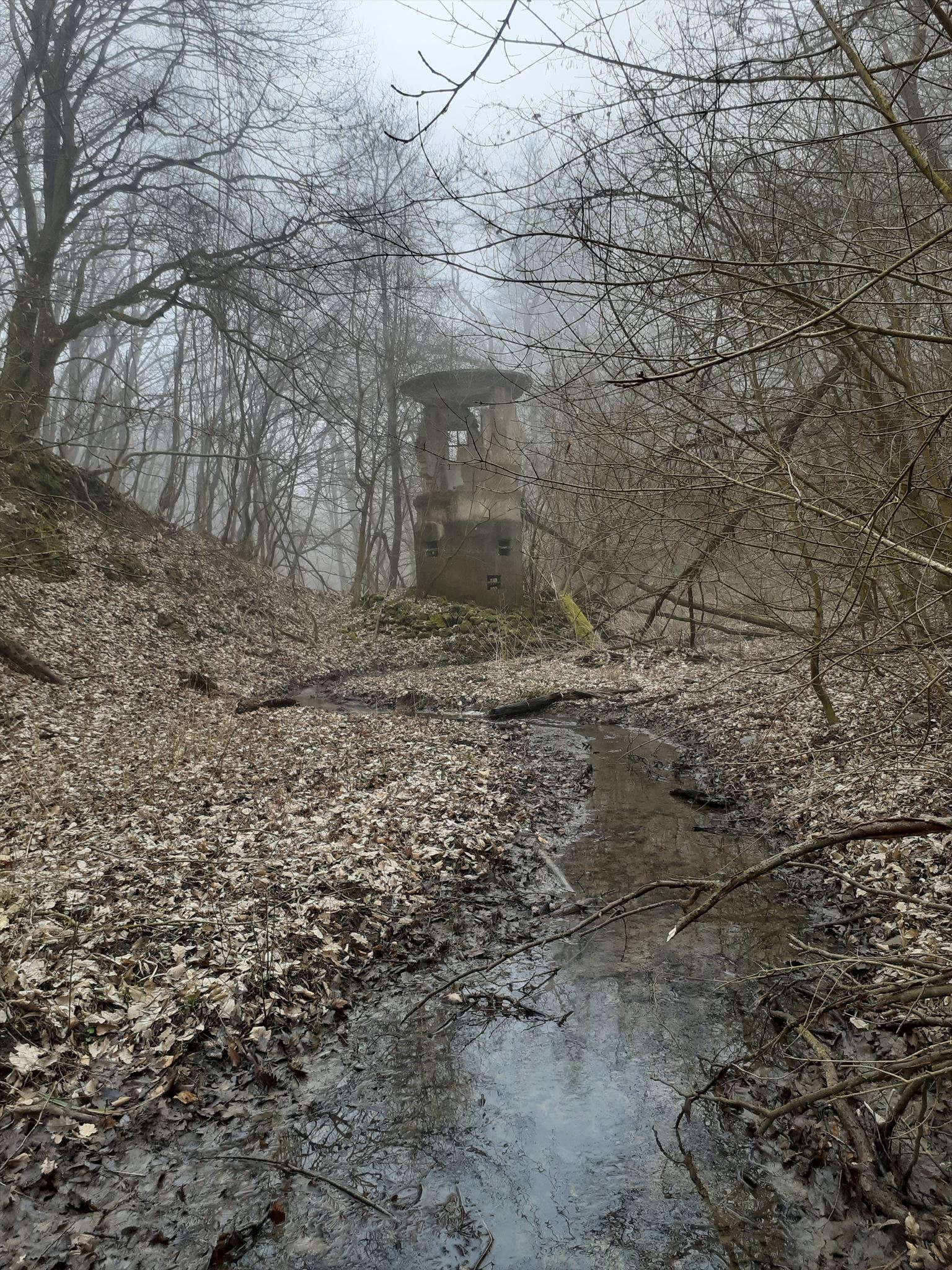
The cache is part of the ClimateQuest series of 43 caches in 8 European countries, six of which are located in Hungary, the rest in Germany, Czech Republic, Slovakia, Bulgaria, Romania, Lithuania and Latvia. In Hungary, these caches will take you to interesting places that are somehow connected with nature conservation or climate change.
ACCESS
The starting point, which is 11.7 km from the city centre of Pécs, can be approached by local buses, by car and by bicycle from Pécs, leaving the city centre via road 6 towards the East.
By bus we can get on bus no. 14 at several easily accessible points [Zsolnay-statue], Pécs-Árkád), and reach the stop called "Vashíd", the starting point, in about 30 minutes.
The bus schedule (only available in Hungarian) can be found here: https://mobilitas.biokom.hu/vonal/14
By car and by bicycle we depart from Pécs on road 6 towards the East. We have to leave the main road at the Pécs-Vasas fork, turning left onto Szövetkezet utca. Going on, after reaching the Pécs-Vasas sign, we will soon pass the Vasas cemetery on the right and arrive at a fork, where we have to turn left. In a little bit, we can glimpse the bus stop called Vashíd (Iron Bridge), which is indeed a bridge over the stream. This is our starting point. From here, we continue our journey on foot. We can park our car anywhere on the streets.
DESCRIPTION
The story of the Pécs-Vasas town area
The first town - now a district -, where mining first started in the Mecsek in the neolithic era. Accordingly, the people of Vasas and their cohesive communities nurture mining traditions the most. Just like many formerly independent towns that have since been annexed to Pécs, Vasas was already populated by the Árpád Era, and didn't become abandoned even during the Ottoman occupation; right until mining truly gathered speed, it was a purely Hungarian village. In the past few decades researchers found evidence suggesting that in the Middle Ages iron was also produced in the area from iron-containing clay and red iron ore - presumably, this is where the name of the town originates from ("vas" = iron). There are also theories that residents paid taxes to the Pécsvárad Abbey in iron, and that is why the town was named Vasas. Of course, the two theories are not incompatible.
The center of coal mining
We may be able to state that one of the first centres of the long-standing coal mining in Mecsek was in Vasas; it opened in 1869 with the then state-of-the-art Thommen-mine (now called Petőfi-mine). Based on research and preserved documents it is certain that even previously, in the mid-18th century, coal mining was present in Vasas. In 1782 the Pécsvárad Abbey also joined the extraction, and the first coal mine of the Mecsek Coal Basin was opened as the third in the country. The upswing of mining and therefore the town is well-illustrated by the fact that by 1840, twenty citizens owned mining sites. Constant development has brought foreign workers. Around 1870, about half a thousand immigrants, mostly Germans, settled down here. By this time coal mining in the Mecsek was singlehandedly controlled by the famous Danube Steamboat Shipping Company, which opened one mine after the other.
As a foreign visitor passes through Vasas, they will notice Saint Barbara's name (Szent Borbála) instantly: community centre, park, church paintings, altar and street all bear this name. There's no reason to be surprised, since Barbara is the patron saint of miners. According to the story of the 4th-century saint, her father strictly forbade his daughter all Christian teachings. Nevertheless, she still got baptised. Once his father realised this, he wanted to kill her, and Barbara fled from him to a cave. However, they ended up catching and torturing her, and she died a martyr. Miners honour her with wreaths every year.
At the high point of mining, in 1962, they also began surface mining, which went on until 2004, and a few years ago, it was resumed in a tiny area.
In 1946, Vasas was merged with the neighbouring Somogy, then annexed to Pécs in 1955. During the socialist decades it was known as Vasas II., while Somogy was called Vasas I. In the end, citizens of the latter had enough and managed to get the previous names of the two little villages back.
The Catholic Church founded a school in Vasas in the 18th century, then, as a result of the upswing in mining and the increase in population, a so-called "telepi" school was also opened in 1880. These were merged during the nationalisation in 1948. In 1976, the member school in Hird was also attached.
Even though Vasas belongs to the city, it has kept its village-like atmosphere. It is a little isolated, but this has many advantages. For example, the community is much more cohesive than elsewhere.
After the closing of the mine in 1993, the majority of the woodlands were privatised or came into the ownership of the forestry industry, so its forest-park function unfortunately ceased, which resulted in visible and rapid deterioration. Shrubbery spread through the forest, the paths disappeared, facilities were torn down, carried away, destroyed. We placed our geocache within the bounds of the abandoned mine, near a water tower and pump house blown up in the 80s and a fishing lake, somewhat commemorating the past and the communities of the once flourishing mining town.
LOCATION OF THE CACHE
STAGE 1 / Starting point
COORDINATES
N 46°7’58
E 18°19’21
Pécs (Somogy) – the Vashíd stop of local bus no. 14. Turning towards North-East, set off towards Szövetkezet Street (Szövetkezet utca). Find and follow the tourist route marked with a green stripe. Follow the green sign at the end of Szövetkezet Street to the forest edge.
STAGE 2 / End of Szövetkezet Street, forest edge, 16/1 sign and green stripe tourist mark on an electrical pole
COORDINATES
N _ _ °8’28
E _ _°_ _’7
We get the third and fourth digits of the eastern longitude by taking the first and third numbers of the year written on the memorial we see on the right as we walk, below the Tributarii Ferri inscription.
We get the first two digits of the eastern longitude by taking the first and third digits of the red numbers upon yellow background (108) found under the junction box on an electrical pole near the memorial.
We can find the first two digits of the northern latitude on our way from the first stage, finding the house number of the house which is across the road from the one bearing the sign "vegyesbolt", once a store.
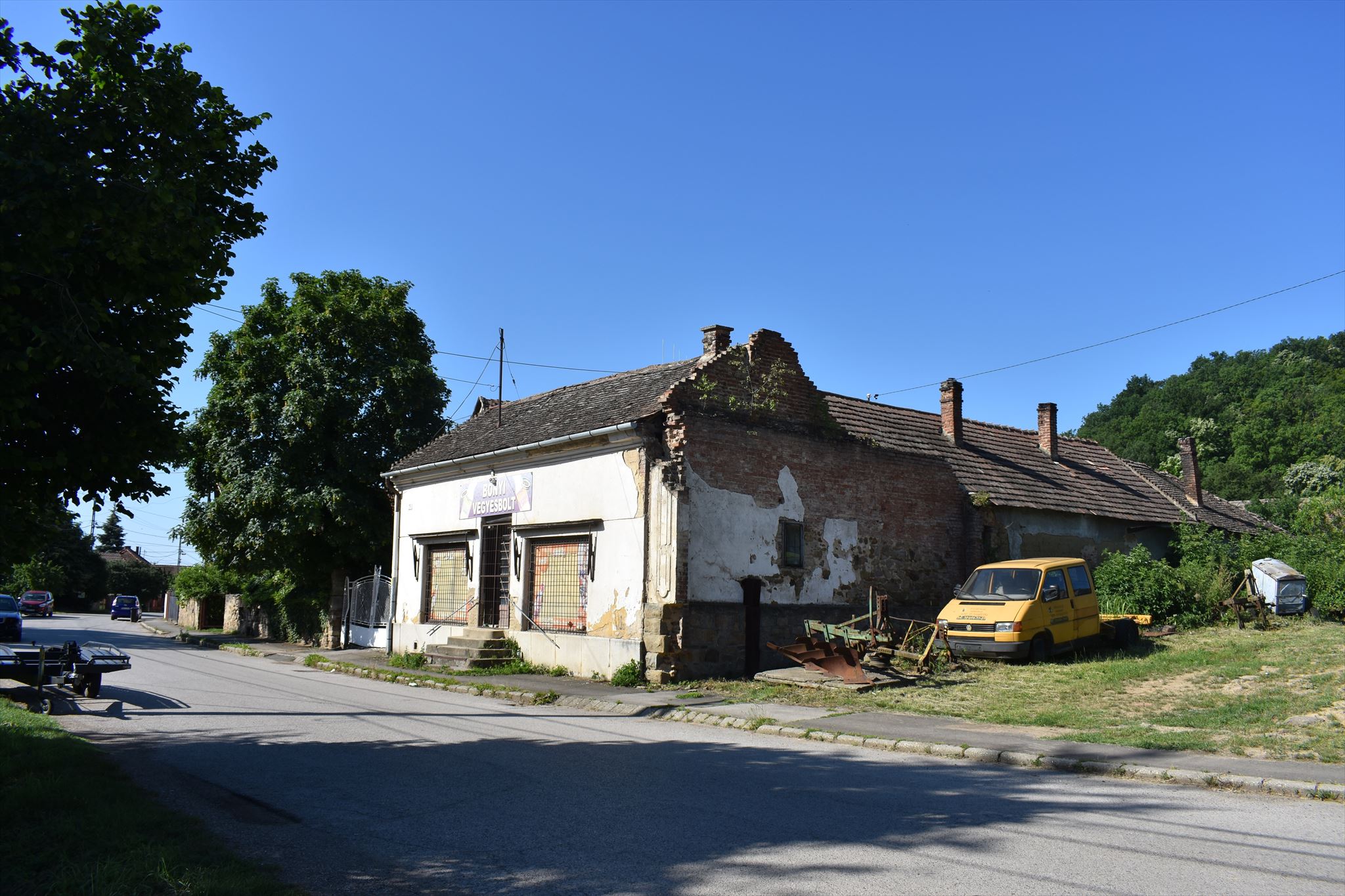
After this, we enter the forest and walk along the stream, still following the green stripe tourist sign. In rainy weather, waterproof shoes are advisable.
STAGE 3 / Old oak with green stripe tourist sign
COORDINATES
N 46°_' _ _
E 18°19’_
We can reach the third point with a 16-minute leisurely walk, crossing the stream four times and leaving two hills behind. On the right-hand side, on a large old oak, we can see a green stripe tourist sign at eye-level.
We get the third number of the northern latitude by adding three to the weight limit number seen on the traffic sign at the entrance of the forest after the second point.
The fourth digit of the northern latitude equals the weight limit number on the traffic sign at the entrance of the forest.
We get the fifth digit of the northern latitude by taking the first digit of the number on the post box of the last house before the entrance of the forest.
The last digit of the eastern longitude can be seen after about 12 minutes of walking from the forest entrance following the green tourist sign, on an old beech tree to the right, on which a forestry sign is placed: the number equals the third character of the first row.
STAGE 4 / Geocache
Motto, message, tip: „As nature takes it back” or the remnants of an abandoned mine - an environmental protection problem without recultivation. The cache is hidden in a cavity formed under the roots of the tree which has grown into the man-made staircase.
After the 3rd point, we leave the tourist path to descend steeply into the valley of the stream; the terrain is more difficult from here on. Here we can discover the remains of the mine buildings - crushed, blown-up slabs of reinforced concrete, stairs, etc.
The third digit of the northern latitude equals the number of root spears visible on the surface at the old oak of the third checkpoint.
We get the fourth digit of the northern latitude if we subtract three from the number of root spears seen on the surface at the old oak of the third checkpoint.
We get the fifth digit of the northern latitude by taking the first digit of the year found in the last row of the white forestry sign painted on the old beech before the third point.
We get the third and fourth digits of the eastern longitude by taking the last two digits of the year seen on the forestry sign and adding one to it.
We get the fifth digit of the eastern longitude by taking the first digit of the same year and multiplying it by two.
We wish you a successful quest and a nice trip!