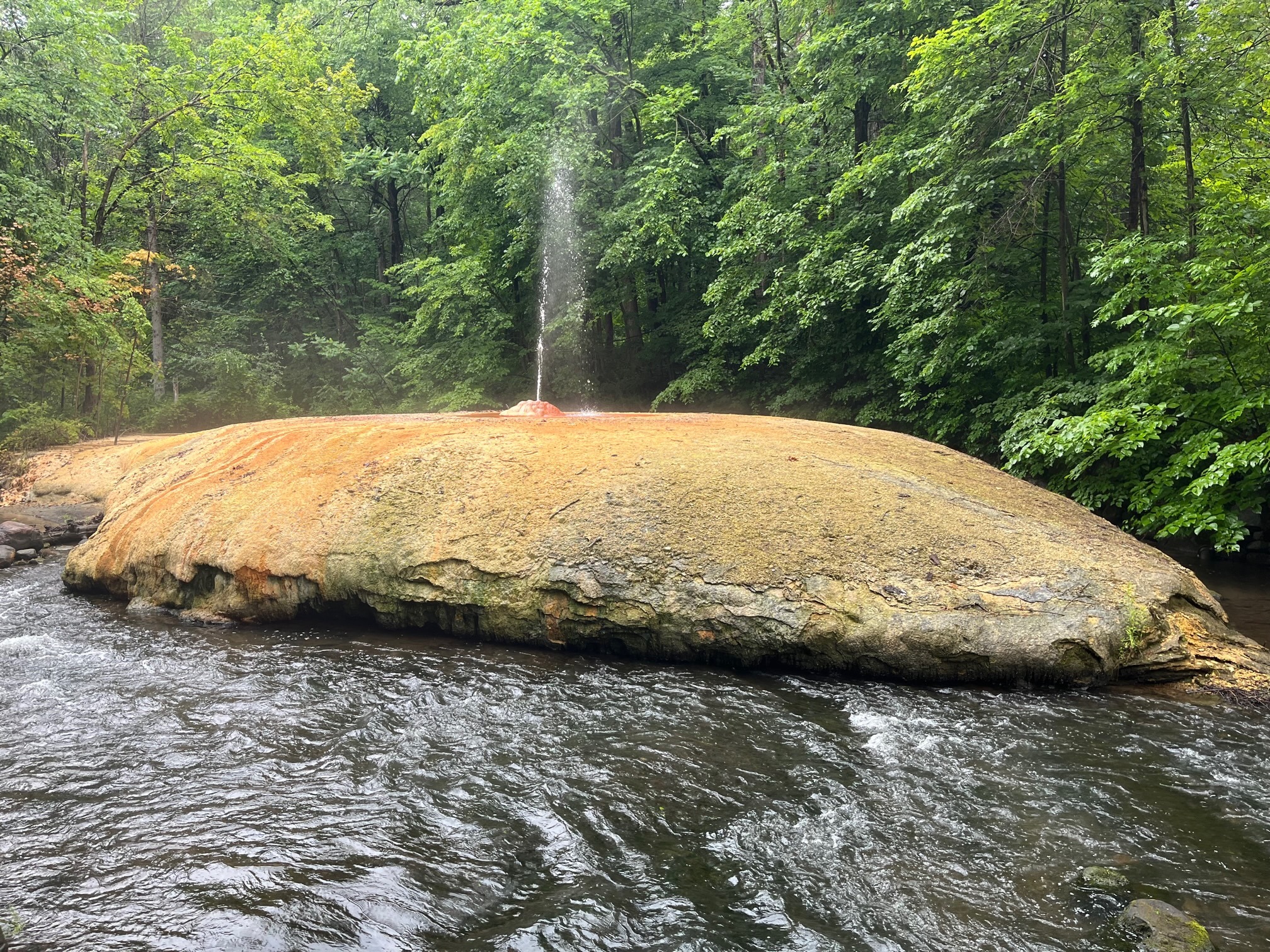
Saratoga Spa State Park, is a captivating destination renowned for its rejuvenating mineral springs and tranquil atmosphere. The park offers a unique blend of natural beauty, rich history, and therapeutic wellness. The park's main attraction is its famous mineral springs, which have drawn visitors seeking their healing properties for centuries. One of the most famous spots within the park is the Island Spouter, which is located on a small rocky island in Geyser Creek. Most of the springs here are naturally carbonated, which gives the water both a unique taste and is the reason that some of them shoot high up into the air.
The sparkling mineral waters for which Saratoga is justly famous originate in limestone bedrock layers about 100 to 1000 feet underground. Limestone is composed of the remains of corals and other sea creatures which lived in the warm shallow tropical sea here 500 to 460 million years ago. The sea deepened and mud was deposited over the limestone 460 to 450 million years ago and was compressed to shale under younger bedrock layers. The shale forms a cap to the mineral waters, which escape to the surface through faults in the bedrock shale and limestone, and from wells drilled down through the shale into the limestone. You may have heard of the term geyser or spouter being used to describe these geologic wonders, but there is actually a difference between the two of them. While the spouters here are caused by the natural carbonation of the water forcing it upwards, geysers are caused by magma heating the water and causing it to shoot into the air. Geyers are also intermittent, while the spouters in Saratoga Spa State Park flow continuously.
The mineral waters are highly carbonated and therefore more acidic than regular water. As they flow through the limestone, they dissolve and hold the rocks minerals in solution. When the water reaches the surface of the earth, its carbon dioxide is released and its acidity is lost. The minerals precipitate out of the water, creating a pale, bumpy formation called tufa. Tufa is mainly made up of calcium carbonate, derived from the limestone through which the water flows. Tufa can take various forms, ranging from small crusts and coatings to larger mounds and terraces. Its appearance is often characterized by a porous and sponge-like texture due to the intricate network of mineral deposits. Over many years, these tufa formations can grow and change as new layers of calcium carbonate continue to accumulate. Tufa formations are not only visually intriguing but also provide important clues about the hydrological and geological history of an area. By studying tufa deposits, geologists can gain insights into the composition of the water, the surrounding rock formations, and even the past climatic conditions that influenced the flow of mineral-rich waters.
Logging Requirements:
- Describe the color, shape, and appearance of the tufa mound. Estimate the volume of the mound.
- The tufa grows on average about 2 inches a year. Assume the mound is symmetrical (you can use the spouter as the centerline), estiamte how long it took for the mound to form.
- Proceed to the waypoint provided where you will find the answers for the next two questions. The tufa builds at a rate of?
- What is the temperature range of the spouters in Saratoga? How do you think temperature influences the rate of formation of the tufa mound?
- Upload a photo taken with the Island Spouter. You don’t have to be in the photo, though it is strongly encouraged.