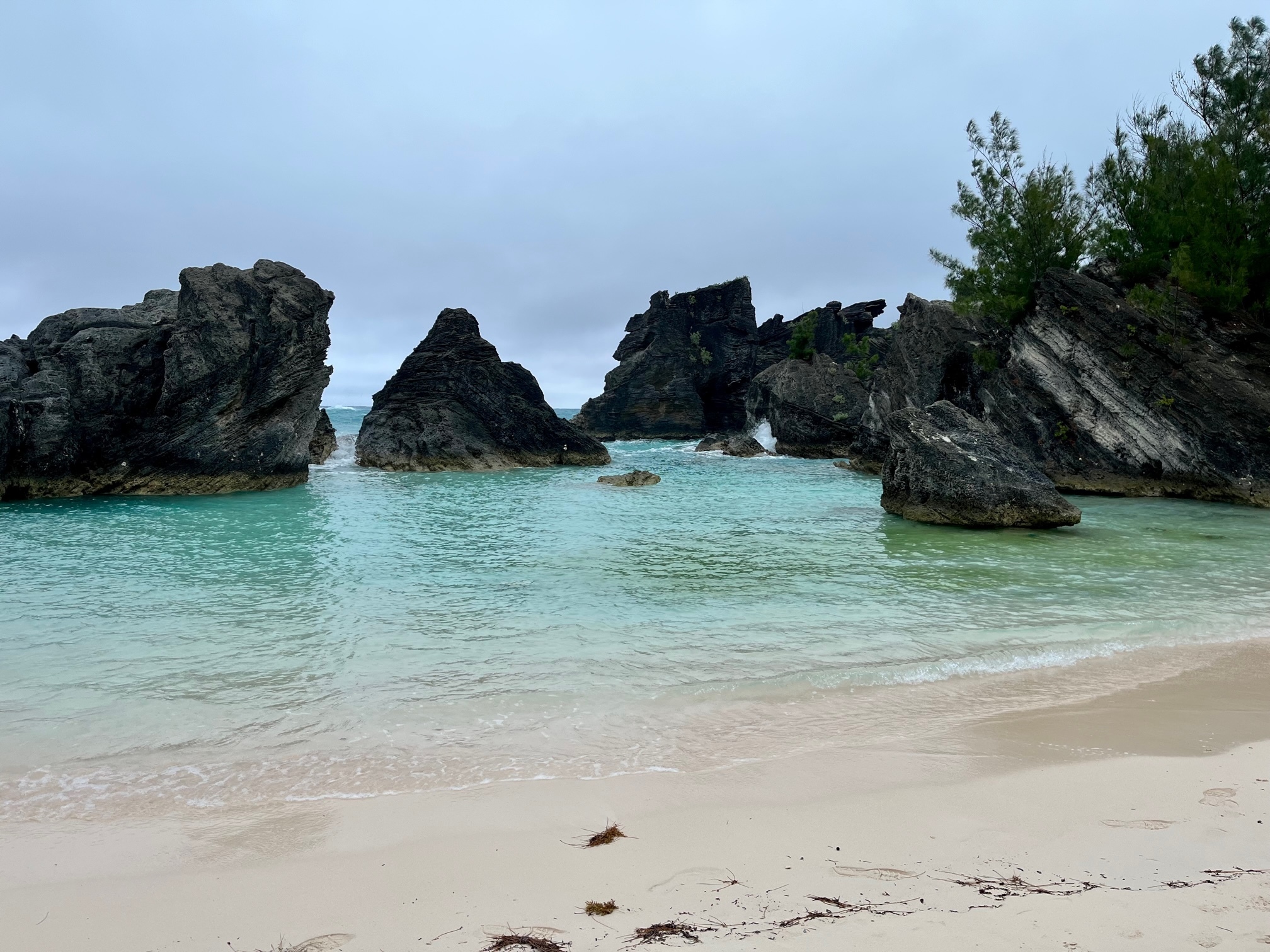
Horseshoe Bay is one of the most famous beaches in Bermuda. Its name originates from its distinctive shape, resembling that of a horseshoe. The beach is famous for its soft, pink sand, a result of crushed coral mixed with white shell particles. With its gentle waves and shallow waters, Horseshoe Bay is perfect for swimming, snorkeling, and even exploring nearby coral reefs. The surrounding cliffs provide stunning panoramic views, making Horseshoe Bay a favorite spot for both locals and tourists seeking tranquility and natural beauty.
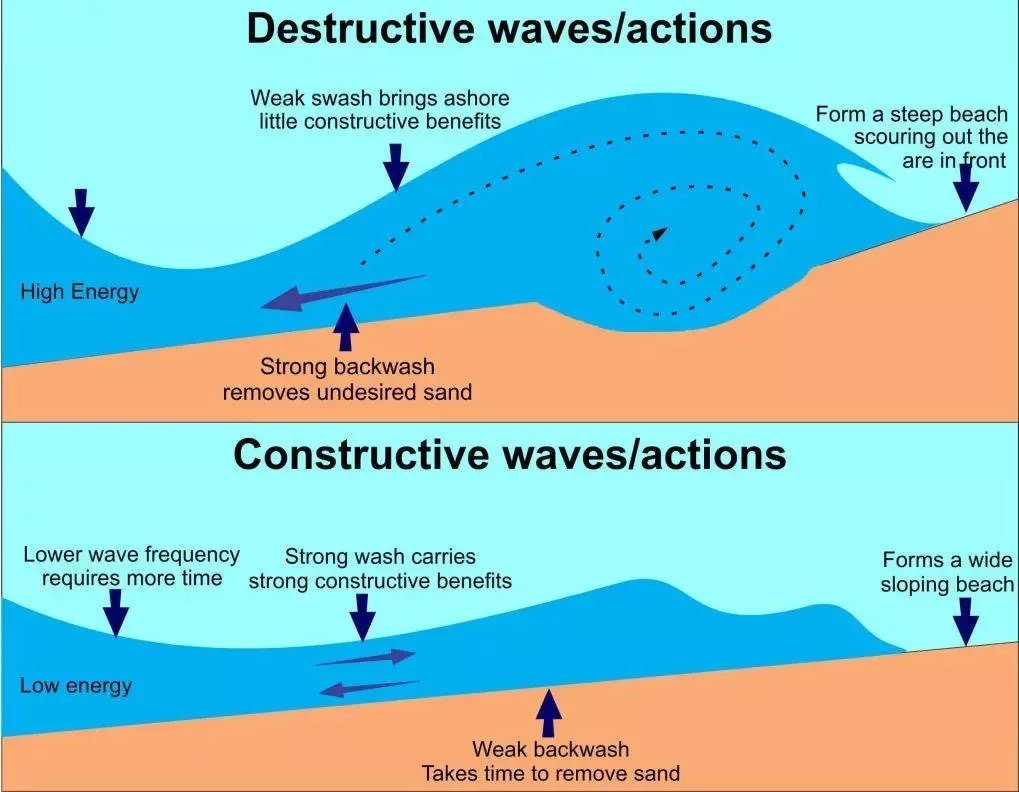
Constructive and destructive waves are two distinct types of coastal wave processes that shape the geology of shorelines. Constructive waves are characterized by a long wavelength and low wave height, gently depositing sediment onto the beach. As these waves approach the shore, they break with less force and carry the sediment towards the coast. Over time, this deposition builds up the beach profile and contributes to the formation of wide sandy beaches and dunes. Constructive waves are generally associated with calm weather conditions, where wave energy is dispersed over a larger area.
On the other hand, destructive waves possess a shorter wavelength and greater wave height. They have a more intense breaking force as they reach the shoreline, causing erosion and removal of sediment from the beach. The backwash of these waves is stronger than the swash, pulling sand and other materials seaward. Destructive waves are often observed during storms or periods of high wind and generate significant wave energy that can erode cliffs, undercut bluffs, and reshape the coastline. The erosive power of destructive waves contributes to the formation of sea caves, sea arches, and other coastal landforms.
Sand can be classified into two categories, abiogenic and biogenic. Abiogenic sand refers to sand that is primarily derived from non-living geological processes. It is typically composed of fragments of rocks, minerals, and other inorganic materials that have been weathered and eroded over time. Abiogenic sand can be found in various coastal and inland environments, such as deserts, riverbeds, and glacial regions. On the other hand, biogenic sand is formed through the activities of living organisms. It is often composed of the skeletal remains or fragments of marine organisms such as coral, shells, and foraminifera. These organisms extract dissolved minerals from the water to build their structures, and when they die, their remains accumulate on the seafloor. Over time, through processes like sediment compaction and cementation, biogenic sand is formed. Biogenic sand is commonly found in coastal areas with abundant marine life, such as coral reefs, shell-rich beaches, and shallow marine environments.
Lastly, it is worth mentioning parrotfish, which are fascinating marine creatures known for their unique role in the production of sand. They vary in size and can range from a few inches to over three feet long, with their appearance showcasing a vibrant array of colors including shades of blue, green, yellow, and pink. These colorful fish play a crucial part in the creation of biogenic sand through a rather unusual process. Parrotfish have specialized teeth that allow them to scrape algae and coral polyps off rocks and coral reefs. While feeding, they inadvertently ingest small pieces of rock and coral along with their food. Inside the parrotfish's digestive system, the ingested rocks and coral undergo a grinding process facilitated by powerful pharyngeal teeth. These teeth help break down the hard calcium carbonate structures, extracting any organic matter for digestion. However, the majority of the indigestible particles, including the pulverized coral and rock fragments, pass through the fish's intestines relatively unchanged. Parrotfish excrete these undigested particles as fine grains of sand. These sandy excreta are often referred to as "parrotfish poop" or "parrotfish sand." The constant feeding and excretion patterns of parrotfish contribute significantly to the production of sediment in reef ecosystems. It is estimated that a single parrotfish can produce several hundred kilograms of sand each year.
Logging Requirements:
- Describe the appearance of the beach in front of you. Do you think constructive, or destructive waves are dominant here? How do you think the types of waves are influenced by the landscape in front of you?
- Look closely at the sand. Do you think it is a result of abiogenic, or biogenic processes? What led you to that conclusion?
- Do you see any parrotfish in the water? Do you see any signs of scrape marks on the rocks? Based on your observations, do you think parrotfish contributed to the formation of this sand? Why or why not?
- Upload a photo with Horseshoe Bay. You don't have to be in the photo, though it is strongly encouraged.