🇬🇧
Stone with cup marks
Cups can also develop naturally by grus or alveolar weathering as well as by weathering of inclusions.
grus weathering
Grus is an accumulation of angular, coarse-grained fragments (particles of sand and gravel) resulting from the granular disintegration by the processes of chemical and mechanical weathering of crystalline rocks (most notably granitoids) generally in an arid or semiarid region. This process is called grus weathering.
alveolor weathering
The mechanism behind alveolar weathering is not exactly determined. It probably occurs as a result of different kinds of weathering in combination with erosion caused by wind and water. This is creating tafoni.
Tafoni (singular: tafone) are small cave-like features found in granular rock such as sandstone, granite, and sandy-limestone with rounded entrances and smooth concave walls, often connected, adjacent, and/or networked. They often occur in groups that can riddle a hillside, cliff, or other rock formation.
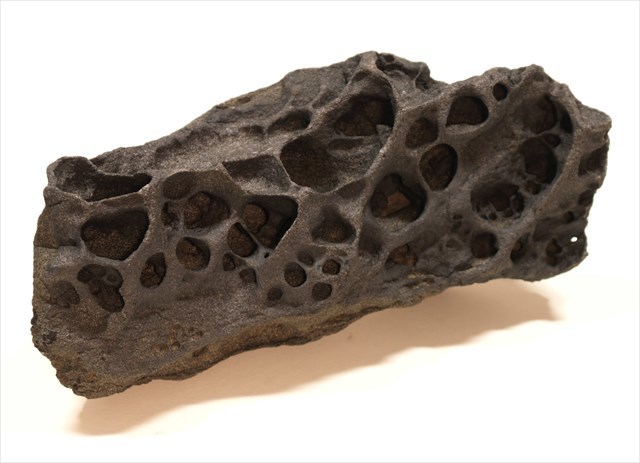
Tafoni, Davis Station, Prydz Bay, Antarctica; sampled during an expedition of research vessel POLARSTERN in 2007 (Hannes Grobe)
Explanations of their formation include salt weathering, differential cementation, structural variation in permeability, wetting-drying, and freezing-thawing cycles, variability in lithology, case hardening and core softening, and/or micro-climate changes and variation (that is, moisture availability).
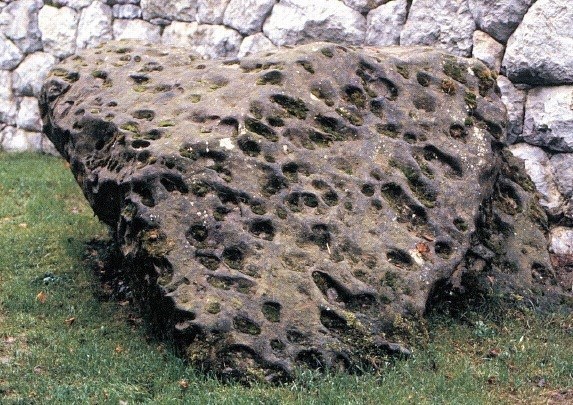
Tafoni at the chapel St.Jost, Ennetbürgen, Switzerland
Weathering of inclusions
A perfect example is the weathering of gelpyrite nodes. This refers to iron or sulphur gravel which occurs as melnikowit pyrit or marcasite in form of balls or nodules in limestone or limy sandstone. In case the source rock erodes pyrite nodes get to the surface, They weather (corrode) pretty fast, much faster than the surrounding limestone. The eroded sulphur gravel gets washed out of the source rock. Hence, an almost hemispherical negative imprint of the nodules remains.
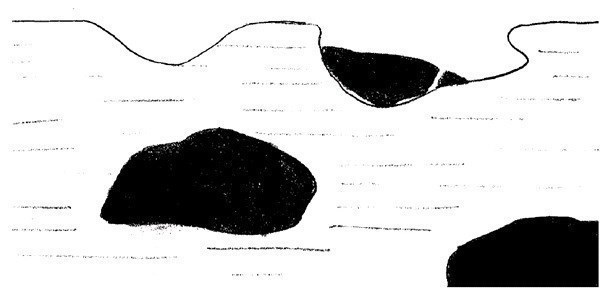
Gelpyrite inclusions at different depths of the rock and stages of weathering: eroded and preserved nodules
Uneven surfaces at the bottom of the cup marks are smoothed by chemical and wind erosion. Similar processes occur at the edges of the cup marks and they appear flattened. Hence, the resulting cup marks can be easily confused with artifical created flat-hemispherical cup marks.
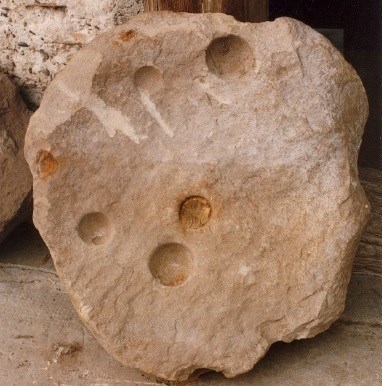
Stone with cup marks in Steinbrunn-le-Haut F. (Foto: Ulrich Büchi)
In order to log the cache, please answer the following questions:
1) Determine the diameter and depth of the largest cup mark and the two cups that together form an 8 (spoiler).
2) Which kind of natural weathering would most likely occur at the stones with cup marks at the given coordinates?
3) Which of the 3 explained kinds of weathering will mainly occur in maritime regions? Justify your answer.
🇨🇳
為了記錄緩存,請回答以下問題:
1) 確定最大杯形標記以及共同形成 8(擾流板)的兩個杯形的直徑和深度。
2) 在給定坐標處帶有杯狀痕蹟的石頭上最有可能發生哪種自然風化?解釋你的答案。
3)這3種解釋的風化作用中哪一種主要發生在海域?證明你的答案合理。
Sources: Information Länsstyrelsen Skåne, Illustrierte Dokumentation über Schalensteine (U. Schwegler), www.wikipedia.de