The Dalton Highway, also known as the James W. Dalton Highway, is a renowned and challenging roadway that stretches over 414 miles in Alaska, United States. Named after an Alaskan engineer, this iconic highway begins north of Fairbanks and extends to Deadhorse near the Arctic Ocean. Originally built as a supply route for the Trans-Alaska Pipeline System, the Dalton Highway traverses remote and rugged terrain, offering breathtaking views of the Alaskan wilderness, including the Brooks Range and vast tundra landscapes. It is famous for its extreme weather conditions, lack of services, and being the only road in the United States to reach the Arctic Ocean. Traveling along the Dalton Highway is a true adventure that attracts adventurous motorists and showcases the raw and untamed beauty of Alaska.
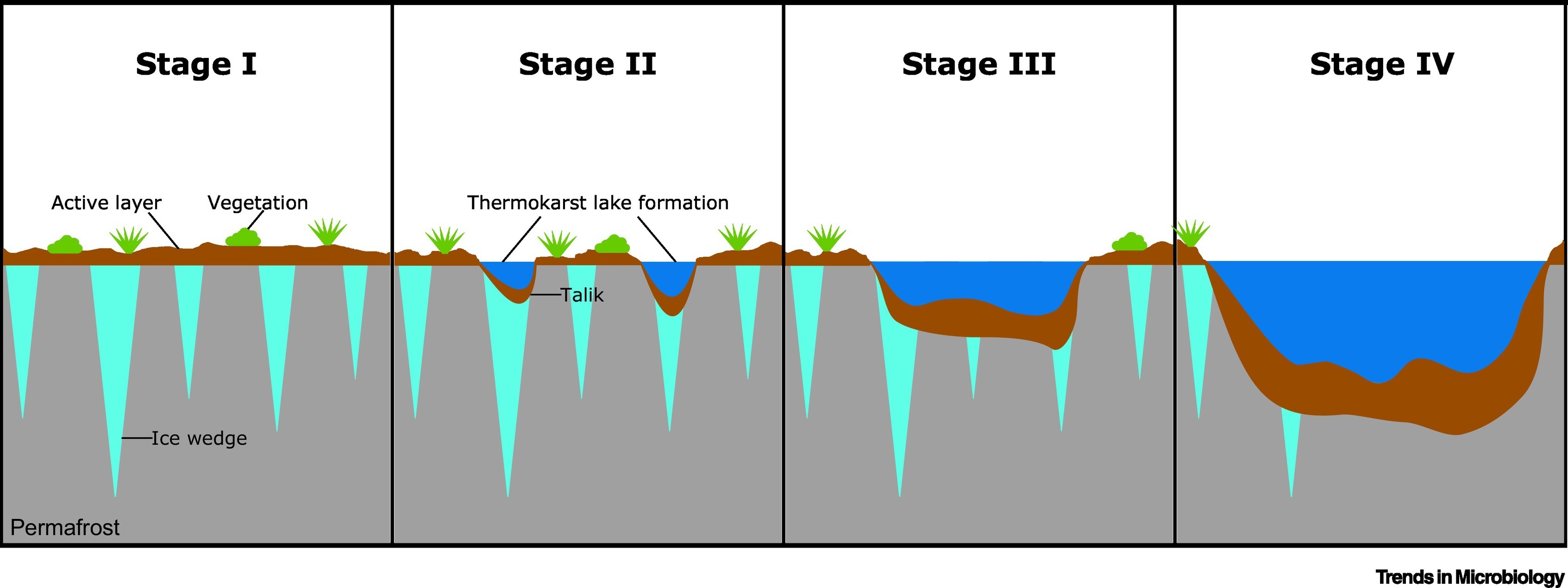
In front of you is an example of a thermokarst in its early stages. Thermokarsts are geological formations that occur in permafrost regions, characterized by the thawing and collapse of ice-rich ground. These features form as a result of the complex interactions between frozen ground, climate conditions, and hydrological processes. The initial stage of thermokarst formation begins with the thawing of ice within the permafrost, leading to ground subsidence and the creation of depressions known as "thaw pits." As thawing continues, these depressions can evolve into larger features, such as "thaw lakes," which are water-filled basins formed by the melting of ice-rich permafrost. Over time, the continued thawing and subsidence can result in the development of more extensive thermokarst landscapes, characterized by interconnected lakes, sinkholes, and irregular landforms. The progressive stages of thermokarst formation not only shape the landscape but also influence hydrological processes, permafrost stability, and the release of greenhouse gases, making them a subject of significant interest in the field of geology and climate research.
The construction of the Dalton Highway has had significant impacts on the underlying permafrost in its vicinity. The highway's construction involved clearing vegetation, excavating the ground, and creating a roadbed, which disrupted the natural insulation provided by vegetation cover and altered the thermal regime of the permafrost. These changes have led to accelerated thawing of the permafrost and subsequent ground settlement in some areas. Additionally, the highway's infrastructure, including bridges and culverts, can create thermal discontinuities that allow heat to penetrate deeper into the ground, further contributing to permafrost degradation. The disturbance of the permafrost has not only affected the stability of the highway itself but also resulted in changes to hydrological processes, such as altered drainage patterns and the formation of thermokarst features. Drunken forests can also be observed, which are intriguing natural phenomena observed in permafrost regions, where the tilting and contorted growth of trees create a visually striking landscape. These unique forests owe their name to the effect of thawing permafrost, which causes the ground to become unstable, leading to the uneven and irregular positioning of trees, as if they were standing in a tipsy manner. Steps can be taken to preserve permafrost, and monitoring and mitigation measures, such as insulation techniques and the use of thermosyphons (heat transfer devices) to promote permafrost stability, have been implemented along certain sections of the Dalton Highway to minimize the impacts on permafrost and ensure the long term sustainability of the roadway.
Logging Requirements:
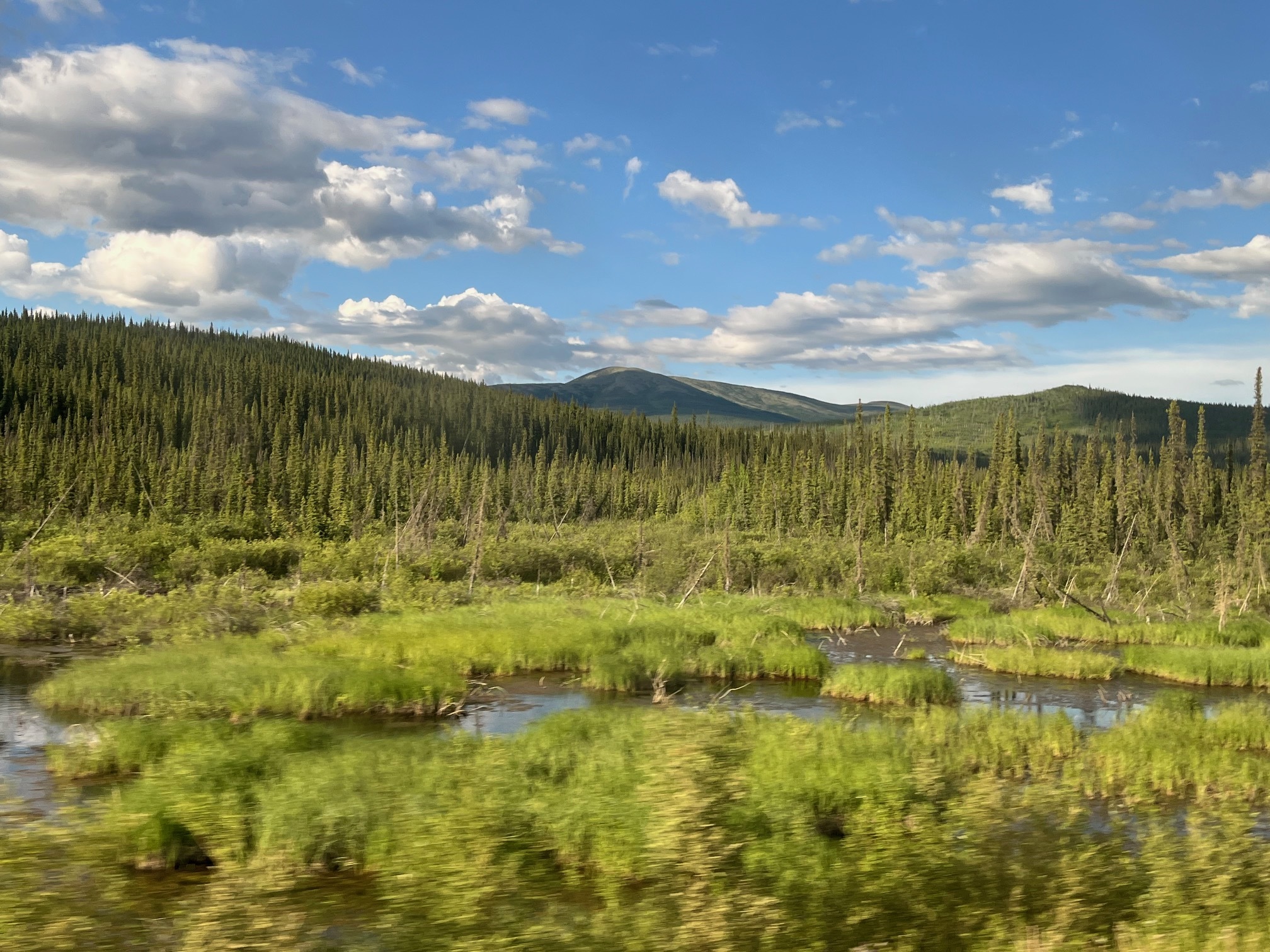
- Describe the landscape in front of you. Based on the chart in the description, which stage of formation would you say this thermokarst is in?
- Looking towards the forest, do you see any evidence of melting permafrost (hint: look for drunken forests, if applicable)?
- Based on what you have learned, do you think this thermokarst is the result of the construction of the Dalton Highway, or do you think it existed here prior to the highway being built?
- Upload a photo with the thermokarst in front of you. You don't have to be in the photo, though it is strongly encouraged.
Sources:
- https://www.cell.com/trends/microbiology/fulltext/S0966-842X%2820%2930091-3
- https://www.britannica.com/science/thermokarst
- https://www.arctictoday.com/thaw-along-alaskas-dalton-highway-shows-how-vulnerable-infrastructure-on-permafrost-is/?wallit_nosession=1
- https://alaskapublic.org/2018/06/20/state-permafrost-melt-from-arctic-broadband-projects-violated-permits/