
Georgia’s unique geographical location is the reason for the diversity of its nature. Moving boulders, cliff pillars, deep canyons, volcanic formations, boiling lakes, and petrified forests – are all examples of impressive natural monuments and the creativity of nature.
Travertine - genesion and conditions
Travertine, which is the main object of interest in this earthcache, is a sedimentary rock formed by the chemical precipitation of calcium carbonate minerals from fresh water, typically in springs, rivers, and lakes. In the broadest sense, travertine includes deposits in both hot and cold springs, including the porous, spongy rock known as tufa, and also the cave features known as speleothems (stalactites and stalagmites).
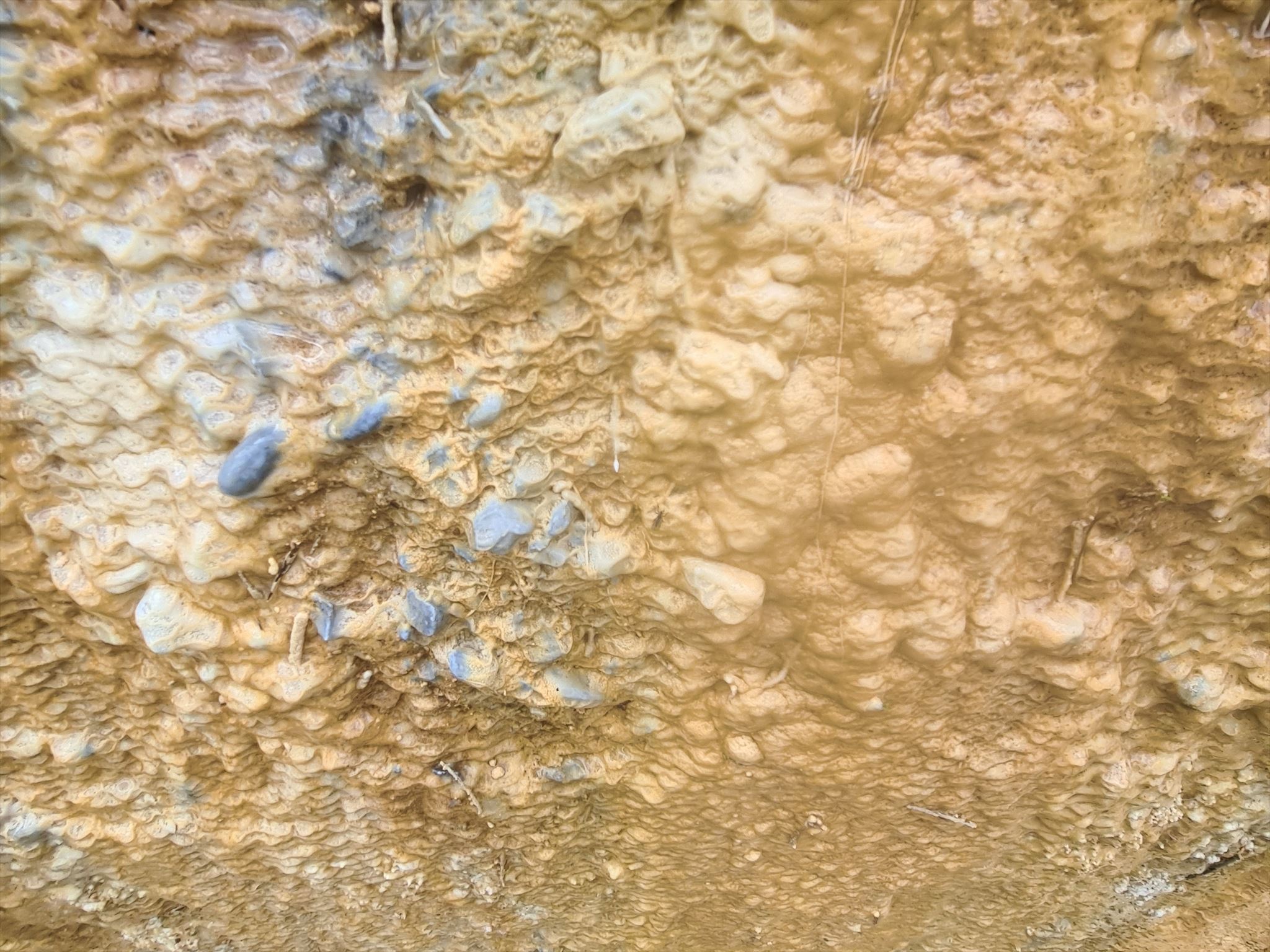
Travertine is often defined as dense rock, sometimes massive but more commonly banded or with a fibrous internal structure, deposited in hot springs. In this more narrow sense, travertine is distinct from speleothems and tufa. Travertine is sometimes also defined by its mode of origin, as rock formed by inorganic precipitation of calcium carbonate minerals onto a surface following exchange of carbon dioxide between the atmosphere and groundwater. Fresh travertines vary widely in their porosity, from about 10% to 70%. Ancient ones may have porosities as low as 2% due to crystallization of secondary calcite in the original pore spaces, while some of the fresh aragonite travertine at Mammoth Hot Springs has a porosity greater than 80%. A porosity of about 50% is typical for cold spring travertine while hot spring travertines have a mean porosity of about 26%. Speleothems have low porosities of less than 15%.
Classification
According to the place of origin, we distinguish the following types:
1. Cave travertine (so-called sinter) – secreted from the waters of karst caves
2. Travertine of streams (so-called pumice stone)
3. Travertine of mineral springs (so-called spring travertine).
Simple geochemistry
The formation of travertine begins when ground water (H2O) containing an elevated concentration of dissolved carbon dioxide (CO2) comes in contact with limestone or other rock containing calcium carbonate (CaCO3). The dissolved carbon dioxide acts as a weak acid, carbonic acid, which dissolves some of the limestone as soluble calcium bicarbonate CaCO3 + H2O + CO2 ⇌ Ca + HCO3.
This is a reversible reaction, meaning that as the concentration of dissolved calcium bicarbonate builds up, the calcium bicarbonate begins to revert to calcium carbonate, water, and carbon dioxide. So long as there is nowhere for the carbon dioxide to go, chemical equilibrium is reached where dissolution of calcium carbonate is balanced by precipitation of calcium carbonate. If the groundwater moves into an environment with a lower concentration of carbon dioxide, some of the carbon dioxide will escape into the environment, disturbing the equilibrium and allowing net precipitation of calcium carbonate to take place:
Ca + HCO3 → CaCO3 + H2O + CO2.
Volcanic activity is the source of carbon dioxide in ground water that emerges from hot springs. When the water reaches the mouth of the spring, it rapidly loses carbon dioxide to the open air and precipitates calcium carbonate around the spring mouth. Travertine formed this way is described as thermogene travertine. This can form spectacular deposits of travertine, such as those of Pamukkale or Mammoth Hot Springs. The carbon dioxide may come from sources deep in the Earth, such as metamorphism of deeply buried rock. The carbon dioxide is carried to the surface by magma and is a major component of volcanic gases.
Both of the major calcium carbonate minerals, calcite and aragonite, are found in hot spring travertines; aragonite is preferentially precipitated when temperatures are high, while calcite dominates when temperatures are lower. When pure and fine, travertine is white, but often it is brown to yellow due to impurities.
Jvari travertine
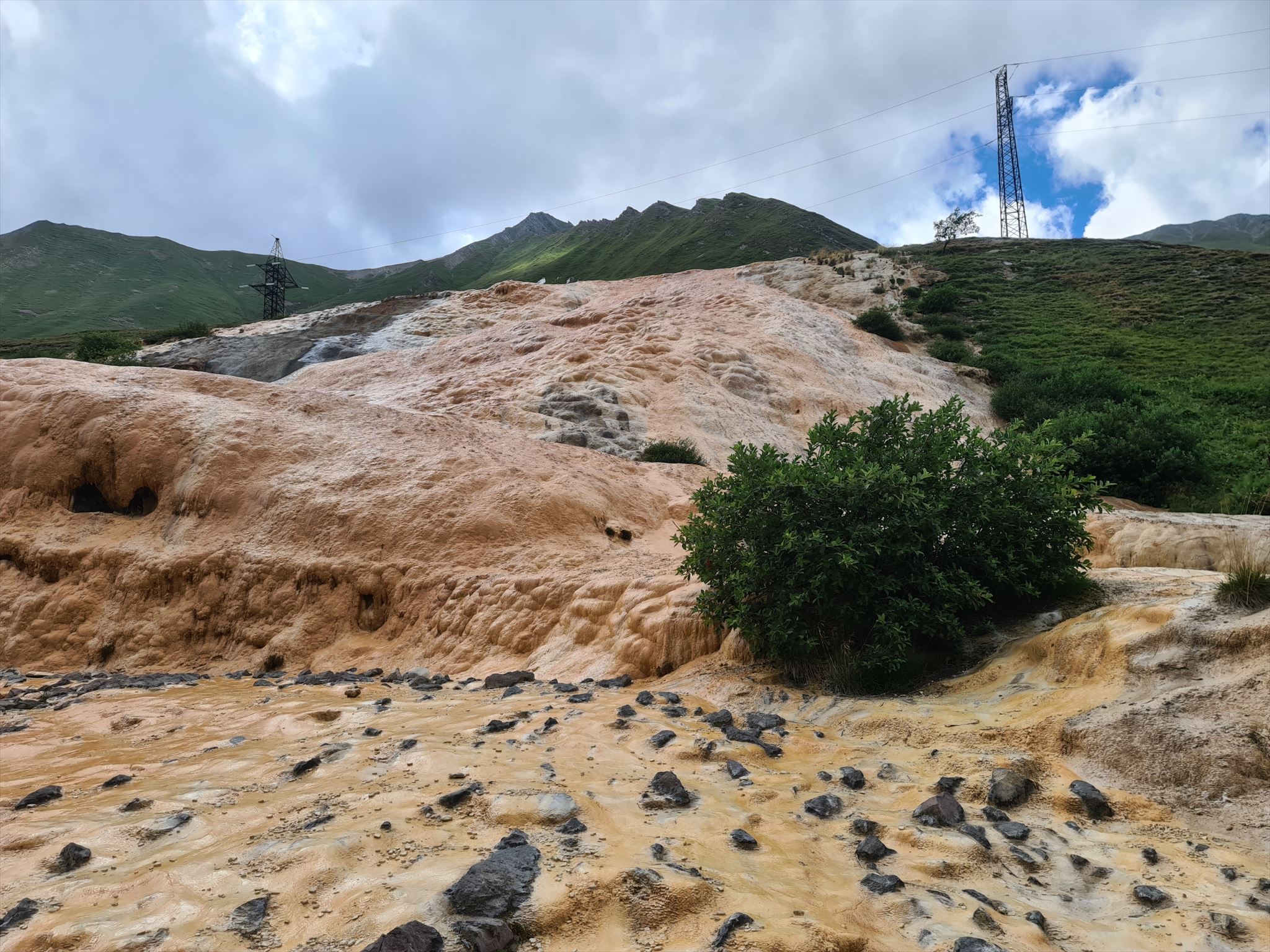
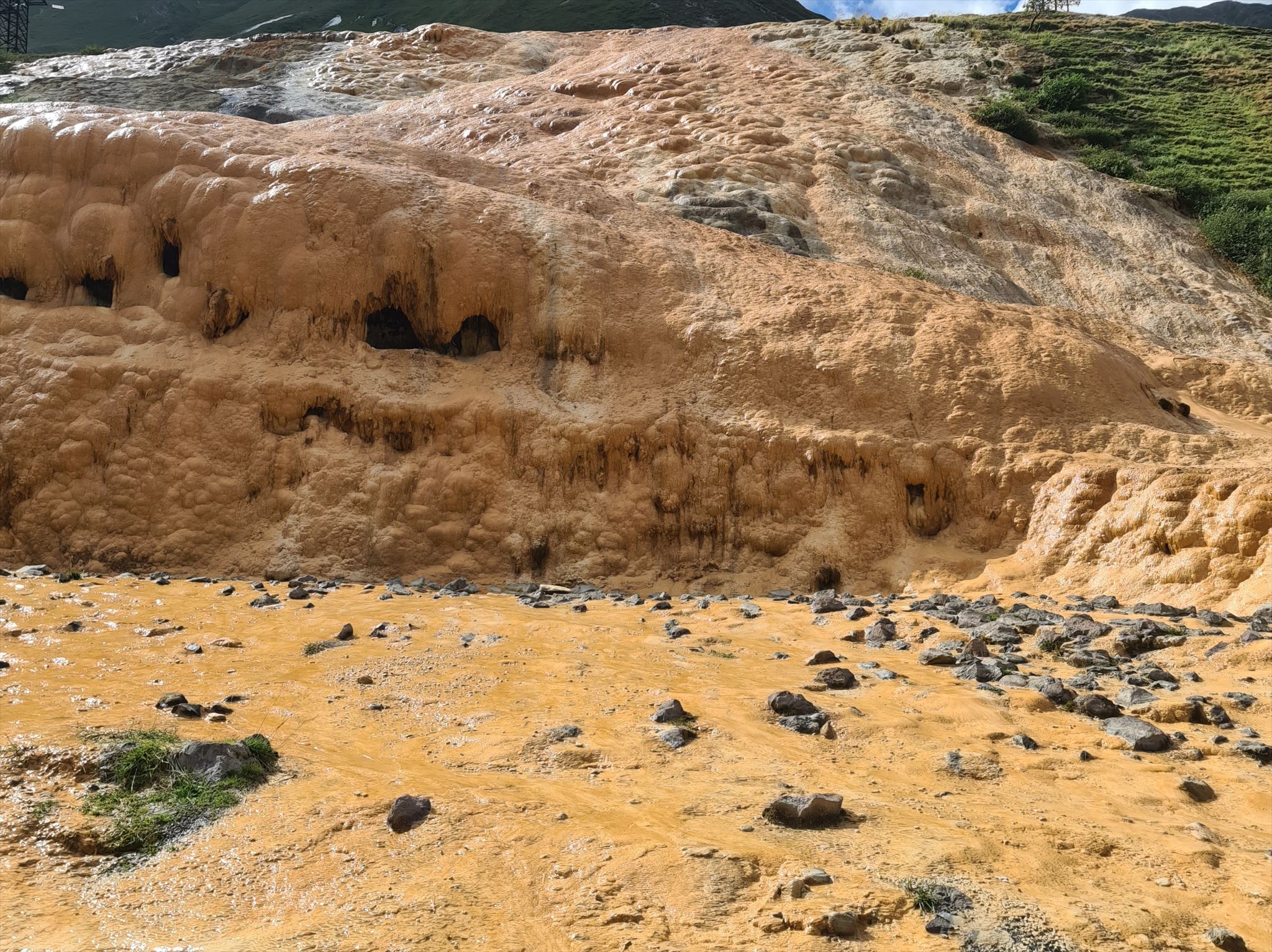
Travertine is found in a few places in Georgia, one of which, is 2,197 meters above sea level, close to the Kobi-Gudauri Road in the Bidara River valley in Kazbegi Municipality.
Here the clear water descends in thin layers, leaving behind beautiful rocks that attract numerous tourists every year. The travertine of Jvari Pass are broad fields that are white in some places, and, due to the mixture of ferrous salts, orange in others.
* * * * * * * * * * * *
Your tasks are:
1) What is travertine, and how is formed?
2) What type of travertine (according to the place of origin, do you think, you are looking at?
3) Describe colours of travertine cascades. Try to think why is the travertine coloured so?
4) Describe the porosity of the travertine, you can see. Is the porosity high or low?
5) Try to estimate the height of the travertine formation.
6) Please post a photo here and add it to your log. It is a proof for me, that you have been here.
* * * * * * * * * * * *
Your right answers send me via message center or email through my profile, than you can log your visit. If your answers aren't correct, I will give you an echo. Please respect a rule - 1 log = 1 email with answers. In that case i will be uncompromising, who will log without sending answers, he will be deleted. It is a proof for me, that you were there and do something for a point. And please no retrespective logs from your sofa!
* * * * * * * * * * * *
 Summary translation via translator, sorry I can't speak georgian. If some kind geocacher would like to translate it, please contact me.
საქართველოს უნიკალური გეოგრაფიული მდებარეობა არის მისი ბუნების მრავალფეროვნების მიზეზი. მოძრავი ლოდები, კლდის სვეტები, ღრმა კანიონები, ვულკანური წარმონაქმნები, მდუღარე ტბები და გაქვავებული ტყეები - ეს ყველაფერი შთამბეჭდავი ბუნებრივი ძეგლებისა და ბუნების შემოქმედების მაგალითებია.
ტრავერტინი - გენეზია და პირობები
ტრავერტინი, რომელიც წარმოადგენს ამ მიწიერი ქეშის ინტერესის მთავარ ობიექტს, არის დანალექი კლდე, რომელიც წარმოიქმნება მტკნარი წყლისგან კალციუმის კარბონატის მინერალების ქიმიური ნალექების შედეგად, როგორც წესი, წყაროებში, მდინარეებსა და ტბებში. ფართო გაგებით, ტრავერტინი მოიცავს საბადოებს როგორც ცხელ, ასევე ცივ წყაროებში, მათ შორის ფოროვანი, სპონგური კლდე, რომელიც ცნობილია როგორც ტუფა, ასევე გამოქვაბულის მახასიათებლებს, რომლებიც ცნობილია როგორც სპელეოთემები (სტალაქტიტები და სტალაგმიტები).
ტრავერტინი ხშირად განისაზღვრება, როგორც მკვრივი კლდე, ზოგჯერ მასიური, მაგრამ უფრო ხშირად ზოლიანი ან ბოჭკოვანი შიდა სტრუქტურით, დეპონირებული ცხელ წყაროებში. ამ უფრო ვიწრო გაგებით, ტრავერტინი განსხვავდება სპელეოთემებისა და ტუფისგან. ტრავერტინი ზოგჯერ ასევე განისაზღვრება მისი წარმოშობის წესით, როგორც კლდე, რომელიც წარმოიქმნება ზედაპირზე კალციუმის კარბონატის მინერალების არაორგანული ნალექების შედეგად, ატმოსფეროსა და მიწისქვეშა წყლებს შორის ნახშირორჟანგის გაცვლის შემდეგ. ახალი ტრავერტინები ძალიან განსხვავდება მათი ფორიანობით, დაახლოებით 10%-დან 70%-მდე. ძველ ფორებს შეიძლება ჰქონდეს 2%-მდე დაბალი ფორიანობა მეორადი კალციტის კრისტალიზაციის გამო თავდაპირველ ფორებში, მაშინ როცა ზოგიერთი ახალი არაგონიტის ტრავერტინს Mammoth Hot Springs-ში აქვს 80%-ზე მეტი ფორიანობა. ფორიანობა დაახლოებით 50% არის ტიპიური ცივი წყაროს ტრავერტინისთვის, ხოლო ცხელი წყაროს ტრავერტინებს აქვთ საშუალო ფორიანობა დაახლოებით 26%. სპელეოთემებს აქვთ დაბალი ფორიანობა 15%-ზე ნაკლები.
კლასიფიკაცია
წარმოშობის ადგილის მიხედვით გამოვყოფთ შემდეგ ტიპებს:
1. გამოქვაბულის ტრავერტინი (ე.წ. სინტერი) – გამოიყოფა კარსტული გამოქვაბულების წყლებიდან
2. ნაკადულების ტრავერტინი (ე.წ. პემზა)
3. მინერალური წყაროების ტრავერტინი (ე.წ. წყაროს ტრავერტინი).
მარტივი გეოქიმია
ტრავერტინის წარმოქმნა იწყება მიწისქვეშა წყლების დროს (H2O) რომელიც შეიცავს გახსნილი ნახშირორჟანგის მომატებულ კონცენტრაციას (CO2) შედის კონტაქტში კირქვასთან ან კალციუმის კარბონატის შემცველ სხვა ქანებთან(CaCO3). გახსნილი ნახშირორჟანგი მოქმედებს როგორც სუსტი მჟავა, ნახშირბადის მჟავა, რომელიც ხსნის კირქვის ნაწილს, როგორც ხსნადი კალციუმის ბიკარბონატი. CaCO3 + H2O + CO2 ⇌ Ca + HCO3.
ეს არის შექცევადი რეაქცია, რაც იმას ნიშნავს, რომ გახსნილი კალციუმის ბიკარბონატის კონცენტრაციის მატებასთან ერთად, კალციუმის ბიკარბონატი იწყებს დაბრუნებას კალციუმის კარბონატად, წყალსა და ნახშირორჟანგად. სანამ ნახშირორჟანგი არსად არის გასასვლელი, ქიმიური წონასწორობა მიიღწევა, სადაც კალციუმის კარბონატის დაშლა დაბალანსებულია კალციუმის კარბონატის ნალექით. თუ მიწისქვეშა წყლები გადაინაცვლებს ნახშირორჟანგის უფრო დაბალი კონცენტრაციის გარემოში, ნახშირორჟანგის ნაწილი გამოვა გარემოში, არღვევს წონასწორობას და კალციუმის კარბონატის სუფთა ნალექის საშუალებას იძლევა:
Ca + HCO3 → CaCO3 + H2O + CO2.
ვულკანური აქტივობა არის ნახშირორჟანგის წყარო მიწისქვეშა წყლებში, რომელიც გამოდის ცხელი წყაროებიდან. როდესაც წყალი წყაროს პირს აღწევს, ის სწრაფად კარგავს ნახშირორჟანგს ღია ცის ქვეშ და აგროვებს კალციუმის კარბონატს წყაროს პირის გარშემო. ამ გზით წარმოქმნილი ტრავერტინი აღწერილია როგორც თერმოგენური ტრავერტინი. ამან შეიძლება წარმოქმნას ტრავერტინის სანახაობრივი საბადოები, როგორიცაა პამუკალეს ან მამონტის ცხელი წყაროები. ნახშირორჟანგი შეიძლება მოდიოდეს დედამიწის ღრმა წყაროებიდან, როგორიცაა ღრმად ჩამარხული ქანების მეტამორფიზმი. ნახშირორჟანგი ზედაპირზე გადადის მაგმათ და წარმოადგენს ვულკანური აირების ძირითად კომპონენტს.
ორივე ძირითადი კალციუმის კარბონატული მინერალი, კალციტი და არაგონიტი, გვხვდება ცხელი წყაროს ტრავერტინებში; არაგონიტი უპირატესად ილექება მაღალი ტემპერატურის დროს, ხოლო კალციტი დომინირებს დაბალი ტემპერატურის დროს. როდესაც სუფთა და წვრილადია, ტრავერტინი თეთრია, მაგრამ ხშირად ის ყავისფერიდან მოყვითალოა მინარევების გამო.
ჯვრის ტრავერტინიe
ტრავერტინი საქართველოში რამდენიმე ადგილას გვხვდება, რომელთაგან ერთ-ერთი ზღვის დონიდან 2197 მეტრზეა, ყაზბეგის მუნიციპალიტეტში, მდინარე ბიდარას ხეობაში, კობი-გუდაურის გზასთან ახლოს.
აქ სუფთა წყალი თხელ ფენებად ეშვება და ტოვებს ულამაზეს კლდეებს, რომლებიც ყოველწლიურად უამრავ ტურისტს იზიდავს. ჯვრის უღელტეხილის ტრავერტინი ფართო მინდვრებია, ზოგან თეთრია, ხოლო შავი მარილების შერევის გამო, ზოგან ნარინჯისფერი..
* * * * * * * * * * * *
შენი ამოცანებია:
1) რა არის ტრავერტინი და როგორ იქმნება?
2) რა ტიპის ტრავერტინს (წარმოშობის ადგილის მიხედვით, როგორ ფიქრობთ, უყურებთ?
3) აღწერეთ ტრავერტინის კასკადების ფერები. შეეცადეთ დაფიქრდეთ, რატომ არის ტრავერტინი ასე შეღებილი?
4) აღწერეთ ტრავერტინის ფორიანობა, ხედავთ. ფორიანობა მაღალია თუ დაბალი?
5) შეეცადეთ შეაფასოთ ტრავერტინის ფორმირების სიმაღლე.
6) გთხოვთ გამოაქვეყნოთ ფოტო აქ და დაამატეთ იგი თქვენს ჟურნალში. ეს ჩემთვის დასტურია, რომ აქ იყავი.
* * * * * * * * * * * *
თქვენი სწორი პასუხები გამომიგზავნეთ შეტყობინებების ცენტრის ან ელ.ფოსტის მეშვეობით ჩემი პროფილის მეშვეობით, ვიდრე თქვენ შეგიძლიათ შეხვიდეთ თქვენს ვიზიტზე. თუ თქვენი პასუხები არ არის სწორი, მე მოგცემთ გამოხმაურებას. გთხოვთ, დაიცვან წესი - 1 ჟურნალი = 1 ელფოსტა პასუხებით. ამ შემთხვევაში მე ვიქნები უკომპრომისო, ვინც პასუხების გაგზავნის გარეშე შევა, ის წაიშლება. ეს ჩემთვის იმის დასტურია, რომ იქ იყავი და რაღაცას აკეთებ. და გთხოვთ, ნუ მორიდებით თქვენი დივანიდან!
* * * * * * * * * * * *