THIS CACHE
It is a micro container with a red cap tied in place on a branch that overhangs the river. Please dont untie the container but instead use a tweezers or similar to extract the log. This cache was placed while seated in a kayak. It is placed without tools but the water levels on the day it was placed were high so it might be a little higher when you visit,
CHALLENGE CACHE
This is a challenge cache. In additional to signing the log book you must also fulfill the challenge before logging a find online. You may sign the logbook before completing the challenge but please don't claim a find online until you qualify. A challenge checker which you can use to see if you qualify is below. Anyone claiming a find who does not meet the criteria will have their log deleted without notice.
THIS CHALLENGE
1) Have found 40 T5 caches.
2) The 40 caches must comprise at least 3 different cache types but can be more than 3.
3) The 40 caches must all have the Boat attribute.
4) All caches and cache types listed on geocaching.com count.

THE SLIPWAY
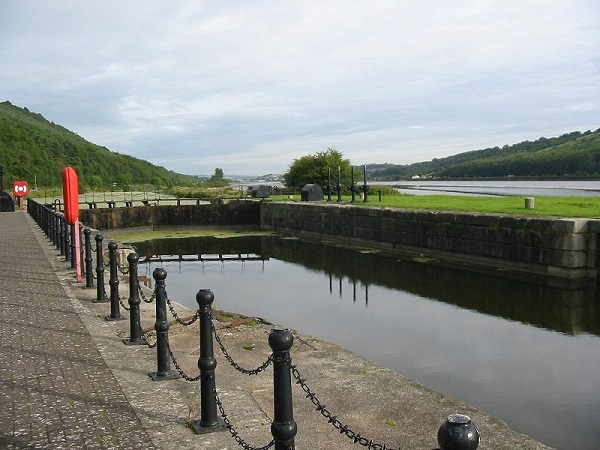
Coordinates have been provided for a slipway halfway along the canal. There is parking there for several cars. There is a barrier across the slipway which is usually locked so while its possible to launch paddle boards and kayaks, lauching a boat might be an issue.
NEWRY CANAL
The newry canal was opened in 1742 and was built to bring coal from Tyrone to the Irish Sea. The coming of railways in the 1850s saw the canal go into decline. While Newry continued to prosper as a port, the traffic on the canal had halved by 1888. Declining income and increasing maintenance costs meant that commecial traffic ceased in 1936. By 1956 the canal was closed as far as Newry and by 1966 the section to Victoria lock was abandoned when Warrenpoint replaced the port of Newry.
Today the lower section is used for fishing with platforms along a 3.5 mile stretch. A greenway walk now stretches from Victoria all the way to Newry. Above Newry the towpath has been incorporated into both the Ulster Way and the National Cycle Network
Safety (mostly kayaking based)
- Be competent in the use of whatever craft you use.
- Wear a personal life jacket or buoyancy aid. The canoe should be sufficiently bouyant to remain afloat if you capsize
- It is recommended not to canoe alone
- A canoe may be difficult to see from a larger craft so carry a whistle
- You do not need to be able to swim a long distance but you should have sufficient water confidence to deal with a capsized boat and get ashore safely
- Carry water and snacks.
- Wear adequate clothing, prolonged immersion in cold water leads to hypothermia, sun even in Ireland can burn quickly on a good day.
- Leave details of your journey with a responsible adult
