If you wish to make arrangements with me, we can do this earthcache together. Cacher discovered how enjoyable this cache was by bringing the ammo can inside and giving the answers verbally.
Print the Flow Charts and Rock Descriptions before doing this cache.
EARTHCACHE REQUIREMENTS
Each cacher must send his/her own answers BEFORE logging a find. ... "Geocachers must complete the tasks before they log the EarthCache as found." (4.3. EarthCache logging tasks)
Enjoy the journey (learning adventure) as well as the destination (smiley earned). Remember to take only pictures and leave only footprints. To get credit for this Earthcache, complete the following tasks:
NOTE: Go to the right side of the garage where you will find a wooden cabinet with a geocaching sign. Cache is located on the shelf.
NOTE: Answers via message -and- log signature picture are required to post a find for this cache.
THE DISCOVERY
While making a path along RT's newly constructed sheds, LN unearthed and split several large rocks. Some of the rocks were quite different from anything we had encountered in this area. These rocks were partially buried. No apparent past landscaping accounted for the rocks being present at this location. Since there isn't a plausible geological reason for these rocks to be present at this location, they were probably brought here although the purpose is unknown.
1. MESSAGE …. How do rocks not native to the area appear?
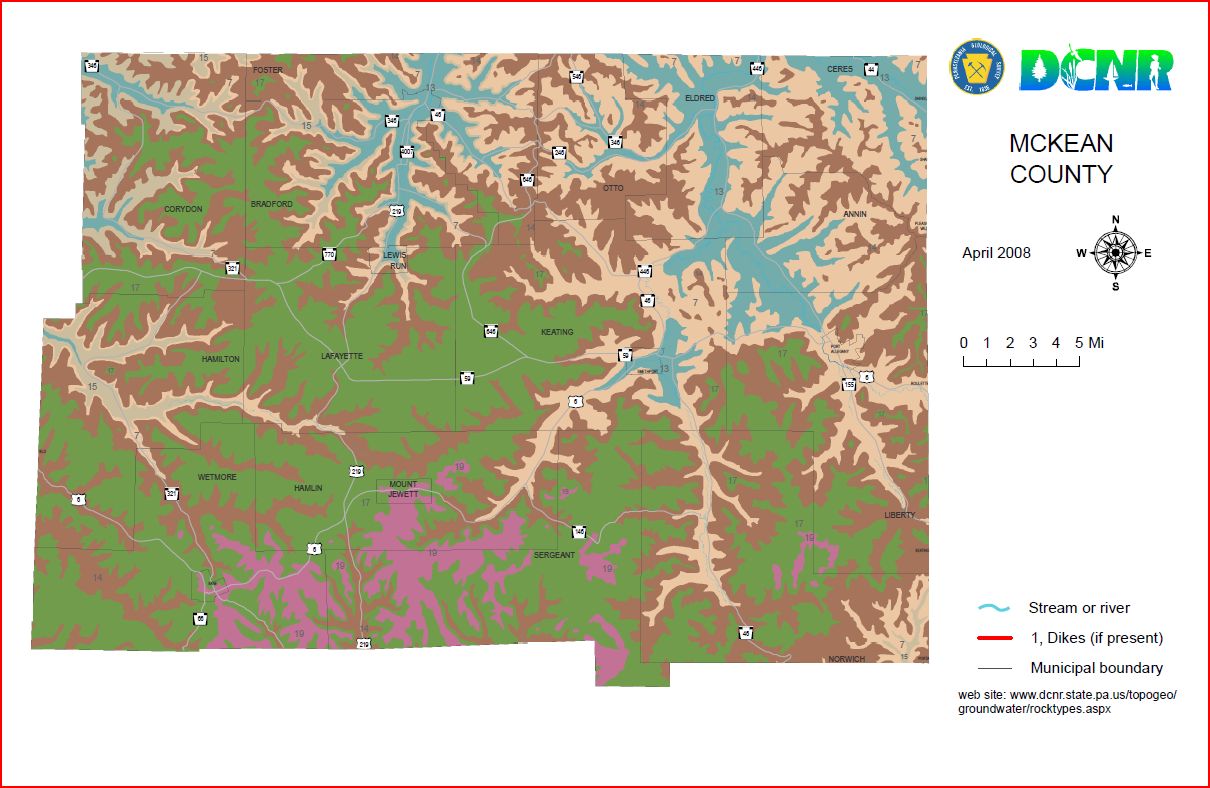
2. MESSAGE …. Based on the map and your observations, which of the rocks at the posted coords are native to the area. Use color/features/key to identify them.
3. MESSAGE …. Describe the appearance of the remaining rocks that do not appear to be part of the native bedrock. How do they differ from the native ones?
LOG …. Take a picture in front of the rocks. This picture is your log signature.
ROCKS
4. MESSAGE …. Using the flow charts and information in the reading, identify each of the 12 rocks by type (example sedimentary) and name (example sandstone).
5. MESSAGE …. One of the sedimentary rocks turns into a metamorphic rock under immense pressure. What are the names of these two rocks?
MINERALS
6. MESSAGE …. What is the difference between a rock and a mineral?
OPTIONAL - Please respect the time and effort involved in finding and creating this earthcache by adding A and B to your log.
A. JOURNEY OF THE MIND ... Science explains what we observe. Relate (in your own words) something you found interesting in the reading. This adds to your learning adventure and your log.
B. JOURNEY OF THE HEART ... Art shares our personal experience of what we see. Share something special you found on site, and why it is special to you ... prose / story / poem / picture. This is a memorable addition to your log and will make other hearts smile.
C. GEODES ... Go to the right side of the garage where you will find a wooden cabinet with a geocaching sign. Cache is on the shelf. Information and questions are at end of page.
D. CRYSTALS ... Go to the right side of the garage where you will find a wooden cabinet with a geocaching sign. Cache is on the shelf. Information and questions are at end of page.
E. LANGUAGE OF STONES ... Select a stone from one of the three wire baskets. Receive an individualized mini-workshop on the Language of Stones (taught to me by Grandmother Twylah) focusing on the stone you selected.
Journeys of Heart and Mind ...
Stories to Touch the Heart and Puzzles to Challenge the Mind / Rainbow Tree Story
NON-NATIVE ROCKS
Usually rocks remain consistent in size and type relative to their native area. Unusual rocks can be found dispersed among the native rocks.
EARTH - Depending on the slope of the land, rocks varying in size from pebbles to boulders slide downhill due to gravity.
AIR - From a relatively harmless windstorm to a tornado or hurricane, rocks varying in size from pebbles to boulders are moved from one place to another either near or far.
FIRE - Volcanoes spew molten rock from within the earth to the surface.
WATER (liquid) - Depending on the amount and force of moving water, rocks varying in size from pebbles to boulders are moved from one place to another either near or far.
WATER (solid) - Glacial erratics are stones and rocks that were transported by a glacier, and then left behind after the glacier melted. Erratics can be carried for hundreds of kilometers, and can range in size from pebbles to large boulders.
MAN - A large variety of stones are moved from quarries all around the world to building and landscaping sites.
NATIVE ROCKS ... The native rocks in this area are sandstone (feels gritty), shale (smells like wet mud when moistened), conglomerate (pieces of other rocks), limestone (fizzes in vinegar).

GEOLOGY
The rocks are probably geologic unit MDso - Shenango Formation through Oswayo Formation, undivided. The formation consists of greenish-gray, olive, and buff sandstone and siltstone, and gray shale in varying proportions.
THANK YOU Victoria V. Neboga | Senior Geologic Scientist | PA Department of Conservation and Natural Resources for the above geology.
ROCK IDENTIFICATION FLOW CHARTS
SEDIMENTARY ROCKS
Bituminous Coal - Calcareous Tufa - Conglomerate - Limestone - Sandstone - Shale

IGNEOUS ROCKS
Basalt - Gabbro - Granite - Obsidian - Pumice - Rhyolite
METAMORPHIC ROCKS
Anthracite - Gneiss - Marble - Quartzite - Schist - Slate
SEDIMENTARY ROCKS - The actions which bring about the formation of this group of rocks are extremely diverse. Most of these rocks are formed of materials which have been moved from their place of origin to the present site of deposition. The original rock material may have been igneous, metamorphic, or sedimentary in origin. Nearly three-fourths of the Earth's surface is covered by sedimentary rocks. Most sedimentary rocks are the result of the precipitation of chemicals or organic accumulations. Sedimentary layers form slowly, usually over millions of years. Sedimentary rocks are the hosts of petroleum deposits, coal deposits, and fossils.
BITUMINOUS COAL - Bituminous Coal is an organic sedimentary rock consisting of compacted plant remains. It is the result of the consolidation of large volumes of organic debris from ancient swamp environments. Bituminous Coal is a soft coal, intermediate between Lignite and Anthracite.
CALCAREOUS TUFA - This rock is formed in or near springs where calcium carbonate dissolved in the water is deposited on plants. twigs, or other loosely consolidated debris. This light porous form of Limestone is also found in bedded deposits called Travertine.
CONGLOMERATE - The Conglomerates are a varied group of rocks which are composed of rounded pebbles, one-fourth inch in diameter or larger, cemented together. The pebbles contained in Conglomerate are frequently Quartz or Quartzite. The cementing material may be iron oxide, silica, calcium carbonate, or clay.
LIMESTONE - The mineral Calcite is the principal component of most Limestones. Most Limestones are of marine origin, formed when accumulations of shelled sea creatures are solidified into rock. Some of the life forms that supply calcium carbonate to Limestones include corals, crinoids, mollusks, and protozoans. When Limestone contains large amounts of defined fossil shells or fossil forms it may be termed Fossil limestone. Shell Limestones include Coquina, a loosely cemented rock consisting entirely of shell fragments.
SANDSTONE - The extremely resistant reaction of Quartz to the action of wind, water, and ice makes it the principal component of sand-sized, weathered material. These Quartz grains are cemented together by silica, carbonate, or iron oxide to form Sandstones. Sandstones are commonly white. red, brown or purple, and will often display banding resulting from successive periods of deposition.
SHALE - The most abundant sedimentary rock is Shale. Shale is formed when silt or clay is solidified into rock. These sediments were deposited by rivers, lakes, or oceans. Many Shales contain fossils, and some contain petroleum and are termed Oil Shale.
IGNEOUS ROCKS - All igneous rocks originate as magmas which are described as molten mixtures of minerals. If the magmas cool beneath the surface of the Earth they are classified as intrusive rocks. Other magmas which reach the surface of the Earth are termed extrusive rocks and are commonly called lavas or volcanic rocks.
BASALT - This is the most common of the dark, heavy, extrusive rocks. It is composed of Pyroxene and Plagioclase Feldspars, but its texture is so fine that these individual minerals are rarely seen. Basalt generally occurs as flows, the result of volcanic eruptions. The upper surfaces of Basaltic flows may contain gas bubbles which form a porous and cinder-like rock called Scoria.
GABBRO - Gabbro is another intrusive igneous rock. It may have a Granite-like texture, but it differs in composition. Gabbro contains Plagioclase Feldspar, Pyroxene, and Olivine. Some occurrences of Gabbro also contain trace amounts of Magnetite and Ilmenite, but Gabbro never contains any Quartz.
GRANITE - This is the most common and best known of the intrusive igneous rocks. Granite cooled deep below the surface of the Earth and has in many cases been eroded and exposed to form mountains. It is generally pink or white, and is composed of varying amounts of Quartz and Feldspar with some Mica and Hornblende.
OBSIDIAN - Obsidian is a natural glass that is formed in an extrusive event when rhyolitic lava is quickly cooled. It appears black; but in thin fragments, it can be translucent or even transparent.
PUMICE - in some cases, an extruded lava will contain a large amount of gases. As these gases are released, they tend to bubble or froth up the lava, and the result is a highly porous or vesicular material called Pumice. Pumice has the same composition as Obsidian, but its porous texture may make it so light that it will even float on water.
RHYOLITE - Rhyolite is a very common extrusive or volcanic rock. It has the same composition as Granite; but due to its rapid cooling, it is a very fine-grained rock in which few mineral crystals are identifiable. Rhyolite occurs as large layered or bedded masses, which are the result of successive volcanic flows.
METAMORPHIC ROCKS - Rocks which have been changed as a result of heat, pressure, or a permeation by other substances are called metamorphic rocks. Sedimentary, igneous, or other metamorphic rocks may be subjected to these changes. The changes may bring about a different crystalline structure, a formation of new minerals, or in some cases a change in texture.
ANTHRACITE - Anthracite is a high-grade form of Coal that has been compacted and purified by metamorphism. Commonly found in folded mountain belts, Anthracite has a submetallic luster and a conchoidal fracture.
GNEISS - This rock appears in extremely varied forms and is difficult to define because of its many origins. In many cases it is the result of metamorphism of intrusive igneous rocks, but many other rocks may be metamorphosed into Gneisses as well. The basic characteristic of Gneiss is that it contains bands of minerals which have segregated during the metamorphic process.
MARBLE - The metamorphism of Limestones and other carbonate-bearing rocks results in the formation of Marbles. Marble will commonly show a recrystallized structure, and may be colored by iron oxides, Serpentine, Epidote, and other minerals.
QUARTZITE - Quartz sandstones which have been subjected to heat and pressure recrystallize to the extent that the sand grains may become indistinguishable. This hard, compact rock is known as Quartzite. Due to their resistance to erosion, Quartzites are among the oldest known exposed rocks. Quartzites exhibit a wide range of colors, from white to red, green, and brown.
SCHIST - Schists are representative of the more highly metamorphosed rocks. They are characterized by having a layered, foliated texture, consisting of a parallel alignment of Micas, Amphiboles, or Pyroxenes. Schists may result from the extreme compaction of Shales, Siltstones, or other sedimentary rocks.
SLATE - Simple metamorphic rocks are formed by a direct alteration of sedimentary rocks. Often this alteration may result from pressure alone and causes a recrystallization. Slate is a metamorphic product of Shale. Slate is generally gray, and is characterized by its ability to be broken along flat sheets, or cleavage planes.
MINERALS
A mineral is a naturally occurring inorganic element or compound having an orderly internal structure and characteristic chemical composition, crystal form, and physical properties. Common minerals include quartz, feldspar, mica, amphibole, olivine, and calcite.
Minerals form when atoms bond together in a crystalline arrangement. Three main ways this occurs in nature are: 1) precipitation directly from an aqueous (water) solution with a temperature change, 2) crystallization from a magma with a temperature change, and 3) biological precipitation by the action of organisms.
A gem is a precious or semi-precious mineral which has been cut and polished.
A rock is an aggregate of one or more minerals, or a body of undifferentiated mineral matter. Common rocks include granite, basalt, limestone, and sandstone.
RESOURCES ... County Rock Maps / Rocks and Minerals / Minerals / Rock Sentinels / Rock Identification Key / Rocks and Minerals Study Guide
------------------------------------------------------------------------------------------------------------------------------------------------
GEODE OR ROCK
1a. MESSAGE …. Determine if the large tan item is a rock or a geode. Explain what characteristics led you to your decision.
1b. MESSAGE …. Determine if the smaller brown item is a rock or a geode. Explain what characteristics led you to your decision.
GEODE LAB
In the ammo can, there is a small geode to break and see what is inside. Place the geode in the sock. Tap with the hammer to break. Empty the sock.
2a. MESSAGE …. Based on your observations, is your geode sedimentary or volcanic?
2b. MESSAGE …. Describe what was inside your geode.
2c. MESSAGE …. Identify what mineral (if any) lined the inside of the rock. See resources if needed.
GEODE QUIZ
3. MESSAGE …. Only four of the following statements are not true. Which are they?
1. The term geode is derived from the Greek word Geoides which means “earthlike.”
2. A geode is a sphere-shaped rock which contains a hollow cavity lined with crystals.
3. The rough exterior of the geode gives an indication of the secrets held within its core.
4. Geodes exhibit a wide range of sizes from inches in diameter to several feet. Most are less than a foot in width.
5. Geodes begin as bubbles in volcanic rock or as animal burrows, tree roots or mud balls in sedimentary rock.
6. Crystal Cave, located in Put-in-Bay Ohio, is the world’s largest geode and it is Ohio’s state rock.
7. Bitaba Birds are now extinct, but they did use geodes to line their nests.
8. The most common dissolved mineral is amethyst.
9. Different types of silica cool at varying temperatures, thus creating layers of different types of mineral crystals.
10. The only difference between a geode and a nodule is that a nodule has a hollow cavity, and a geode is solid.
4. LOG ... Take a picture of what was inside your geode. This picture is your log signature.
THANK YOU Waynescout for asking a question that I had to look up, thus resulting in my learning something new.
GEODE OR ROCK
Geodes typically have a round or oblong shape with a bumpy or lumpy surface. They are often lighter in weight compared to solid rocks of similar size. Additionally, some geodes may exhibit a slight translucency, allowing you to see hints of the crystal formations inside.
GEODES
Geodes are spherical or egg-shaped rocks containing a hollow cavity which is lined with crystals. They form in both igneous and sedimentary rocks. There are two major steps in their formation. STEP 1 - A hollow cavity is formed in the rock. STEP 2 - Minerals are deposited on the walls of the cavity.
Most geodes contain clear quartz crystals, while others have purple amethyst crystals. Still others can have agate, chalcedony, jasper banding or crystals such as calcite, dolomite, celestite, etc. There is no easy way of telling what the inside of a geode holds until it is cut open or broken apart.
Geodes are found only in places that have the right conditions to create them. You're most likely to find geode rocks in deserts, volcanic ash beds, or places with a lot of limestone. Countries that have plentiful geodes include the United States, Mexico, India, Brazil, Madagascar, Namibia, and Uruguay.
VOLCANIC GEODES
The most widely known and sought-after geodes are those that formed in areas of volcanic activity. Voids in basaltic lava flows often are infilled with agate, quartz, opal and other material delivered by hydrothermal water or groundwater. Some voids are spaces occupied by gases that failed to escape the lava flow before its surface crusted over.
Where does all of the gas come from? Some magmas contain a lot of dissolved gas. They can be several percent dissolved gas on the basis of weight. (Think about that - several percent gas by weight!) When these magmas ascend to the surface, the gas expands in proportion to the pressure reduction. When the magma erupts as a lava flow, so much gas is released that not all of it is able to escape. Some of that gas can be trapped in the lava to produce a large cavity when the lava solidifies.
Other voids in solidified lava flows were produced as liquid lava flowed out after the flow was only partially solidified. These small "lava tubes" produce some of the largest and longest geodes. Many cathedral geodes are branches of these lava tubes that later infilled with mineral material. Many of them have the geometry of long tree branches, being nearly a meter in diameter and many meters in length.
SEDIMENTARY GEODES
Geodes in sedimentary rocks are usually found in limestones, dolomites, and calcareous shale. In these deposits a gas-filled void can serve as the opening for geode formation. Shells, tree branches, roots and other organic materials often decay away to leave a void for the formation of mineral materials. These cavities can be filled with quartz, opal, agate or carbonate minerals. They are generally smaller than the geodes formed in volcanic rocks.
Geodes are most easily collected when their host rocks have weathered away. This can occur because basalt, limestones, dolomites, and shales weather much more readily and rapidly than the quartz and chalcedony that typically form the outer layer of a geode. The host rock weathers away and the geodes are left on the surface, washed into a stream, or stranded in a residual soil. In these situations the geodes are easily found and collected. Some geodes are produced by mining the host rock, but that method is difficult, costly, and often damages the geode.
RESOURCES ... Formation of Geodes / Common Minerals Found in Geodes / Breaking Open a Geode / Amazing Geode Formations / Geodes / Bita Bird / Comparing Geodes (Sedimentary vs Igneous)
------------------------------------------------------------------------------------------------------------------------------------------------
Unlike minerals, the definition of crystals allows them to be formed through artificially processes. So, most crystals are also minerals, just not when they are formed through artificial processes. A collection of minerals. These would all either be considered crystals themselves or are made up of crystals. ... Identifying Minerals