 Mitä tarkoittaa poimu?
Geologiassa kiven, asennon, paikan ja rakenteen muuttumista kutsutaan deformaatioksi. Deformaatio johtuu kallioperään kohdistuvasta jännityksestä, jossa kivet altistuvat synnyinoloistaan poikkeavaan paineeseen ja lämpötilaan. Silloin niihin voi syntyä uusia geologisia rakenteita kuten poimuja ja liuskeisuutta.
Poimu on deformaation aiheuttama piirre kalliossa. Se on syntynyt puristusvoiman seurauksena, jolloin vaakatasossa oleva kivikerros kääntyy kaarevaksi. Deformaation eli kallioperän sisäisen puristusvoiman aikana kivet puristuvat yhä tiukemmin toisiinsa, kunnes kivi ei enään kestä puristusvoimaa ja se purkautuu kaarevaksi. Poimujen koko sekä niiden taipumisen suuruus vaihtelee huomattavasti.
Poimut voidaan jakaa taipumisensa perusteella harmonisiin ja disharmonisiin. Harmoninen poimu on muodoltaan säännöllinen tai lähes säännöllinen ja sen muoto on tasaisen aaltoileva. Silloin poimun eri osat ovat samanmuotoiset toisiaan nähden. Disharmoninen poimu sen sijaan, on epäsymmetrinen ja poimun eri osat ovat erikokoiset. Silloin esimerkiksi poimukerroksen paksuus vaihtelee ja aallonharjat ovat erimuotoiset. Näiden lisäksi poimut voidaan luokitella deformaation voimakkuuden eli taipumisen perusteella.
Tämä poimu on tummaa amfiboliittia ja se on muodostunut vaalean ja nuoremman pegmatiittijuonen sisälle siten erottuen hyvin kallion pinnasta. Siinä pitkä amfiboliittijuoni on vaaleassa pegmatiitissa kulkiessaan taipunut.
Kuva poimusta, joka kuvaa osan tutkittavasta alueesta.

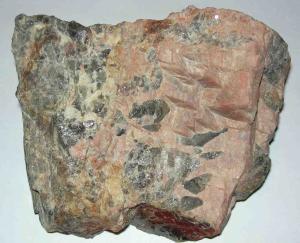
Pegmatiitti
Pegmatiitti on syväkivi, jolla on poikkeuksellisen karkea ja vaihteleva raekoko. Useimmilla pegmatiiteillä on samanlainen koostumus kuin graniiteilla ja niitä tavataankin useimmiten niiden yhteydessä, yleensä juonina. Pegmatiiteistä löytyy joskus hyvin suuria, jopa jalokiven kriteerit täyttäviä kiteitä. Pegmatiitin päämineraalit ovat kalimääsälpä (vaalean ruskea tai ruosteenvärinen), kvartsi (valkoinen tai vaaleanharmaa) ja biotiitti (musta).
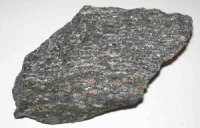
Amfiboliitti
Amfiboliitti on keskirakeinen tumma metamorfinen kivilaji ja usein myös kimalteleva. Se koostuu amfibolista (musta ja ruskea), plagioklaasista (harmaa) ja tummista kiilteistä eli sarvivälkkeestä ja biotiitistä. Amfiboliittia käytetään yleisesti kiuaskivenä ja toisinaan myös rakennuskivenä. Keski-Euroopan kivikautiset ihmiset tekivät amfiboliitista kivikirveitä.
Tehtävät
1) Näkemäsi perusteella, onko kyseinen poimu harmoninen vai disharmoninen. Mihin perustat päätelmäsi?
2) Arvioi tai mittaa pegmatiittijuonen leveys amfiboliittipoimun kohdalta.
Voit logata kätkön lähetettyäsi vastaukset profiilisivun kautta.
 What does a fold mean?
In geology, the change of rock, position, place and structure is called deformation. Deformation is caused by the state of stress on the bedrock, where the rocks are exposed to pressure and temperature different from their birth conditions. In this case, new geological structures such as folds and shale can form in them.
A fold is a feature in rock caused by deformation. It has been formed as a result of compression force, causing the horizontal stone layer to turn curved. During the internal compressive force of the bedrock, the rocks are pressed together more and more tightly, until the rock can no longer withstand the compressive force and it broke into a curve. The size of the folds and the extent of their bending varies considerably. Based on their bending, folds can be divided into harmonic and disharmonic. A harmonic fold is regular or nearly regular in shape and has a smooth wavy shape. Then the different parts of the fold have the same shape relative to each other. A disharmonic fold, on the other hand, is asymmetrical and irregular. Then, for example, the thickness of the corrugated layer varies and the waves have different shapes.
The rock type of the Munkkiniemi fold is dark amphibolite. It has formed inside a pale and younger pegmatite dike and thus stands out well from the rock surface.
The fold at GZ:
Pegmatite
Pegmatite is an igneous rock with an exceptionally coarse and variable grain size. Most pegmatites have a similar composition to granites and are most often found in connection with them, as lenses and plots. Pegmatites often contain very large crystals that even meet the criteria of a gem. The main minerals of pegmatite are feldspar (light brown), quartz (white or light gray) and biotite (black).
Ampibolite
Amphibolite is a medium-grained dark metamorphic rock type. Amphibolite is often also sparkling. It consists of amphibole (black and brown), plagioclase (grey), and dark micas hornblende and biotite. Amphibolite is commonly used as a stove stone and sometimes as a building stone. The Stone Age people of Central Europe made amphibolite stone axes.
Tasks
1) Based on what you see, is this fold harmonic or disharmonic. What do you base your conclusion on?
2) Estimate the width of the pegmatite dike at the amphibolite fold and briefly describe the structure of the pegmatite.
3) Voluntary: Take a photo of you or your personal item at the rock
You can log the cache after sending the answers via profile page.