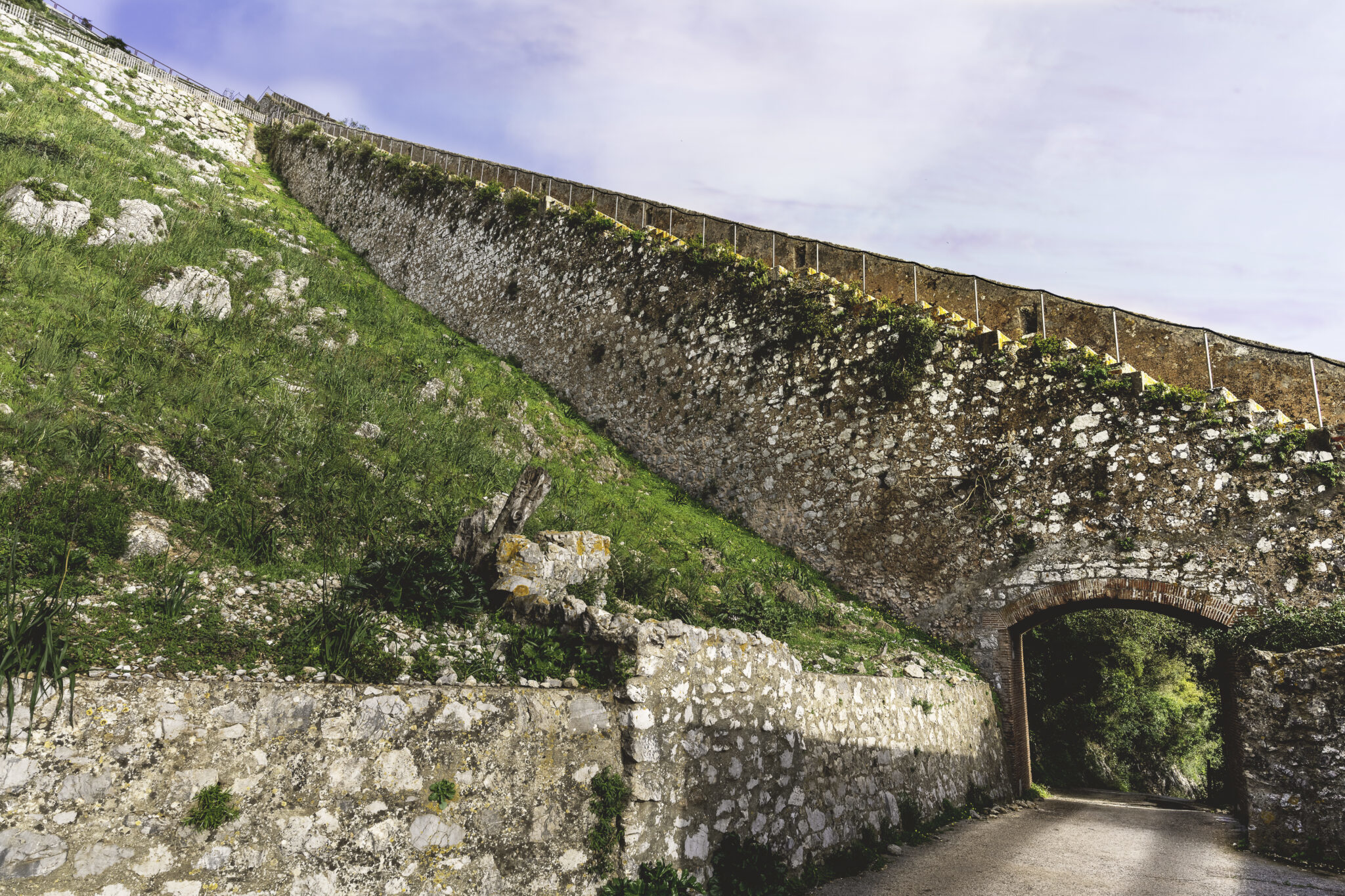
The Charles V Wall stands as an iconic historical fortification in Gibraltar. Constructed during the reign of Holy Roman Emperor Charles V in the 16th century, this wall is a vital part of the extensive defense system established to safeguard the city. Distinguished by its formidable stone construction, bastions, and embrasures, the Charles V Wall showcases the remarkable military engineering of its era. Today, it remains a prominent tourist attraction, offering visitors a captivating insight into Gibraltar's rich history and its strategic significance.
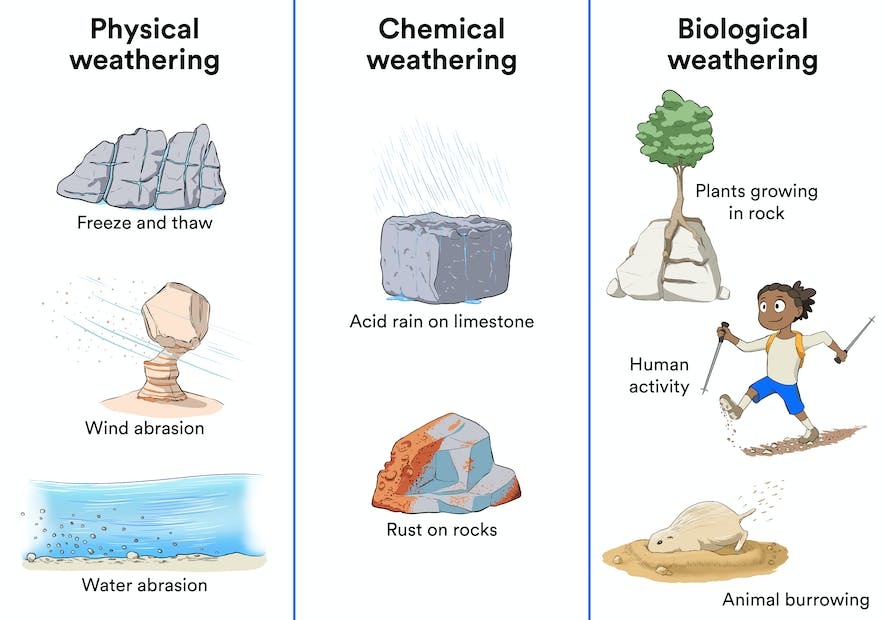
Weathering, the process of breaking down rocks and minerals on the Earth's surface, manifests in three primary forms: physical or mechanical weathering, chemical weathering, and biological weathering. Physical weathering occurs when rocks are fragmented into smaller pieces without any alteration in their chemical composition. Frost wedging is a notable example of this, as water infiltrates cracks in rocks, freezes, and expands, thereby exerting pressure and causing the rocks to split. Exfoliation, another mechanical process, entails the peeling away of outer rock layers due to temperature fluctuations. Additionally, abrasion, a form of physical weathering, occurs when rocks are worn down by the mechanical action of wind, water, or the movement of sediments, resulting in their gradual erosion. Chemical weathering, on the other hand, arises from chemical reactions that modify the mineral composition of rocks. Oxidation is a common mechanism where iron in rocks reacts with oxygen to form rust, leading to the disintegration of the rock. Carbonation is another form of chemical weathering, driven by rainwater's combination with atmospheric carbon dioxide, resulting in carbonic acid formation, which can dissolve minerals like calcium carbonate in limestone. Biological weathering involves the influence of living organisms in rock breakdown. Plant roots can exert mechanical pressure on rocks as they grow, leading to the expansion of cracks and facilitating mechanical weathering. Furthermore, certain organisms such as lichens and mosses produce weak acids that contribute to the chemical weathering of rocks. Additionally, burrowing animals like earthworms and rodents create tunnels through the substrate, further aiding in rock fragmentation.
Logging Requirements:
- Look closely at Charles V Wall, which has been standing here for more than 5 centuries. Describe its appearance. What form(s) of weathering do you think is present here? Which form of weathering do you think has had the greatest impact?
- Does weathering appear to be evenly distributed, or are some areas more weathered than others? If so, why do you think this is the case? Also, is the rate of weathering consistent on both sides of the wall, or does one side appear more weathered than the other?
- Do you think the rate of weathering has remained constant, or has it increased/decreased within the past century? Explain your answer.
- Upload a photo with either yourself or a personal object taken with Charles V Wall, at the posted coordinates. No group photos, each person must upload his/her own photo.