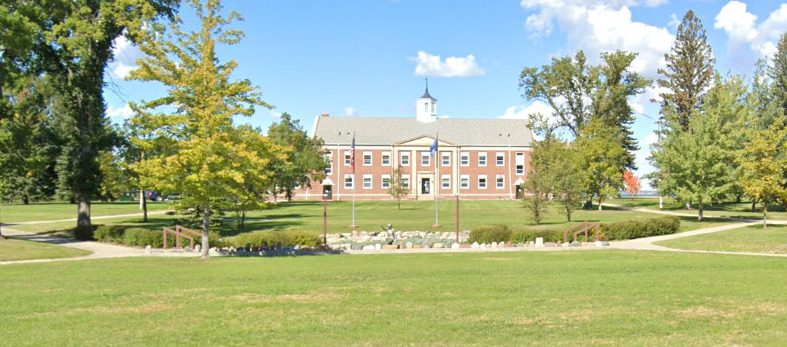
Welcome to what I am calling North Dakota's Bicentennial Rock Garden. Why you may ask do we need another cache at this location? There is already a traditional and adventure lab. Well, those both deal with Misty behind you. What you are interested in with this earthcache is the array of rocks sitting on the ledge.
I have not been able to find out much information on this interesting collection of rocks. I did stop in the library and talk to the city clerk in hopes of gaining more info. These we placed as part of the bicentennial celebration of the United States in 1976. A call went out to the residents of North Dakota that they were looking for 53 rocks from around the state. One from each county. Our own Tick Magnet happened to supply the rock for his county. The rocks were all arraigned in a row with a plaque stating which county they are from. No other information is provided. Several of the rocks are missing their plaques, but enough remain to get a sampling of the geology of this state.
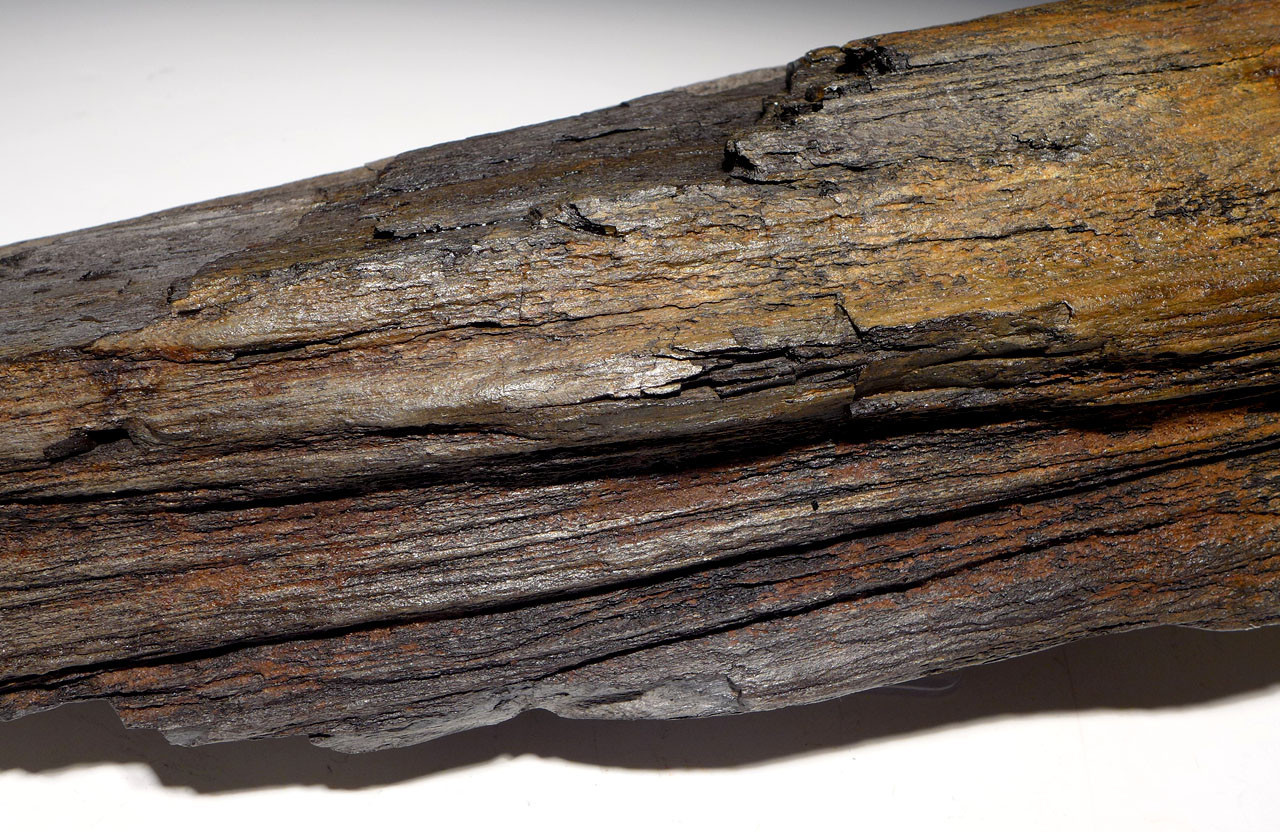
Petrified wood is the name given to a special type of fossilized wood, the fossilized remains of terrestrial vegetation. Petrifaction is the result of a tree or tree-like plants having been replaced by stone via a mineralization process that often includes permineralization and replacement. Petrified wood forms when woody stems of plants are buried in wet sediments saturated with dissolved minerals. The lack of oxygen slows decay of the wood, allowing minerals to replace cell walls and to fill void spaces in the wood.
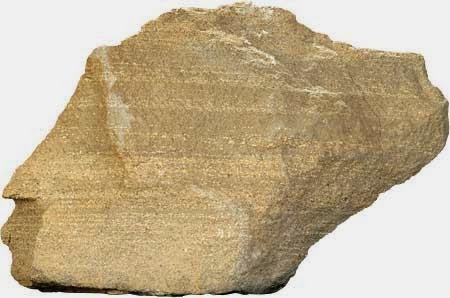
Sandstone is a clastic sedimentary rock composed mainly of sand-sized silicate grains. Most sandstone is composed of quartz or feldspar because they are the most resistant minerals to weathering processes at the Earth's surface. Like uncemented sand, sandstone may be any color due to impurities within the minerals, but the most common colors are tan, brown, yellow, red, grey, pink, white, and black. Since sandstone beds often form highly visible cliffs and other topographic features, certain colors of sandstone have been strongly identified with certain regions.
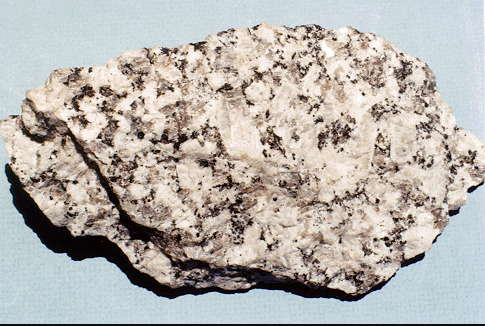
Granite intrusive igneous rock composed mostly of quartz, alkali feldspar, and plagioclase. It forms from magma with a high content of silica and alkali metal oxides that slowly cools and solidifies underground. It is common in the continental crust of Earth, where it is found in igneous intrusions.
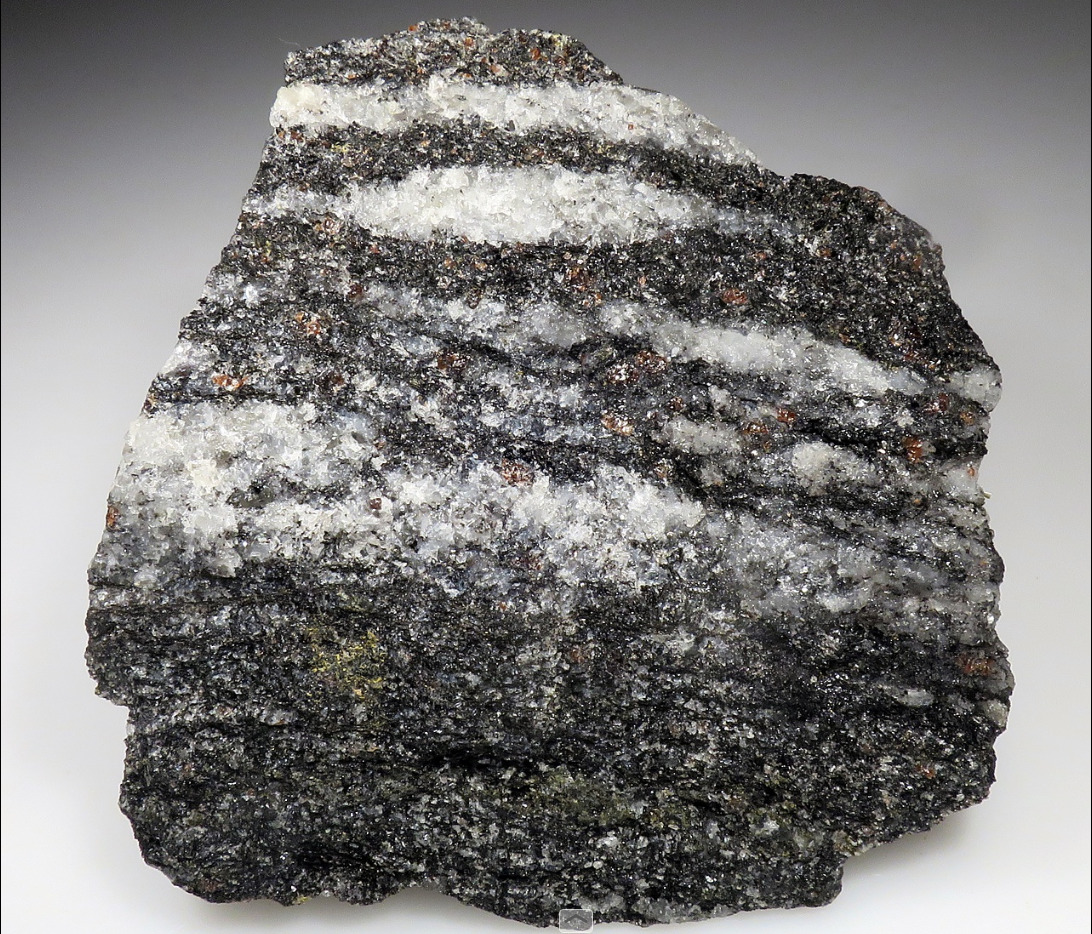
Gneiss is a common and widely distributed type of metamorphic rock. It is formed by high-temperature and high-pressure metamorphic processes acting on formations composed of igneous or sedimentary rocks. Gneiss forms at higher temperatures and pressures than schist. Gneiss nearly always shows a banded texture characterized by alternating darker and lighter colored bands and without a distinct cleavage.
The Mohs scale of mineral hardness is a qualitative ordinal scale, from 1 to 10, characterizing scratch resistance of minerals through the ability of harder material to scratch softer material. Sandstone and gneiss are 6-7, granite is 6-8 depending on the composition, and petrified wood is between 7-8. The larger number, the more erosion resistant the rock is. These rocks have been here for about fifty years, so you won't see much; but look at the writing carved in the rocks and file that away for later.
- What kind of rock did Tick Magnet provide? (Hint, he is from Zap) Based on what you have seen of the different rock formations in the area, do you think this rock is native to North Dakota?
- Name a county that a sample of petrified wood came from. Based on what you have learned, what can you surmise about the climate of the area when the petrified wood was formed?
- What kind of rock did Barnes County donate? Based on your observations of the rock, why do you think it is this particular type?
- There are plenty examples of Sandstone, including from Laura (no name)'s home county. Identify one of them, bonus points for picking her county. What are the characteristics of this particular rock that lead you to believe that it is sandstone?
- Take a look at the rocks from Emmons and Cass Counties. These show two examples of how well and poorly the etchings had weathered. Based on your reading, where are on the mohs scale do this two examples fall and how do the composition of the rock affect the permanence of the letters?
- Please post a photo of either yourself or a personal item in the rock garden with your favorite sample. Be sure to not give away the county it is from.