
Granite is a natural stone, deep igneous rock. They largely form the solid parts of the earth's crust. It is much harder than marble, its hardness is between 6 and 7 on the Mohs hardness scale, it has high density and resistance. Granite consists of several minerals, the main ones being quartz (35%) and feldspar (40%). It is the feldspar in granite that determines its color. Granite stone is most often gray with a blue tint, but it can also be pink, yellow or red. The main feature of granite is its grain size. Granite can be coarse-grained, medium-grained or fine-grained. Small and medium-sized granite stones have lower porosity and are therefore more durable.
Igneous rocks are formed by crystallization, and to a small extent also by vitreous solidification of magma. As the magmatic melt gradually cools, individual rock-forming minerals crystallize and igneous rocks are formed. The character of the rock that is formed from the magma depends not only on the composition of the magma itself, but often also on the physical conditions of the environment in which the magma solidifies. In the deeper parts of the earth's crust, magma solidifies slowly. Under such conditions, rocks with individual, usually already macroscopically distinguishable, minerals are formed. However, if the magma spills onto the earth's surface or the seabed, it cools very quickly. Therefore, there is not enough time for macroscopically observable minerals to form, and minerals are usually only microscopic in size or the magma solidifies into glass. If magma penetrates cracks and fissures in the earth's crust, it solidifies in them in the form of so-called veins
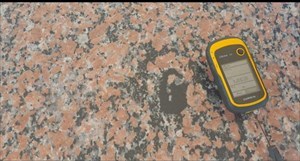
Xenolith means “foreign rock” coming from xenos (foreign) and lithos (stone) in Ancient Greek. A xenolith is a fragment of foreign rock within a host rock. Xenoliths are different from the rock they are found within. If they are similar in nature, then these rocks are called autoliths or cognate inclusions. True xenoliths are always older than their host rocks because they had to already exist as a solid rock fragment when the magma or lava around them solidified. This is not always the case with cognate inclusions. A xenolith is often a rock that was embedded in magma as it was cooling. Magma is the molten rock beneath the Earth’s crust. If the magma rises above the Earth’s surface, for example during a volcanic eruption, it is referred to as lava. Lava is the extrusive equivalent of magma.
Igneous rocks form from magma and lava that has cooled. Xenoliths are different types of rock that are often embedded in igneous rock. Depending on the foreign rock material, the composition of the magma or lava, the temperatures, available time, and many other factors, the xenolith chemically equilibrates with the host rock to varying degrees. Xenoliths are usually easy to recognise because they are often visibly different in composition, density and colour from the encompassing rock. Xenoliths are generally small in size, relative to the overall body of rock. However, xenoliths can range in size from single crystals (xenocrysts) to rock fragments of several metres.
1) How do igneous rocks form and what are xenoliths?
2) Choose one of the xenoliths and describe how it differs in color and texture from the host rock, granite.
3) Add a photo of you or your GPS with the xenolithes to the log.