Totally Findable Tourist Caches
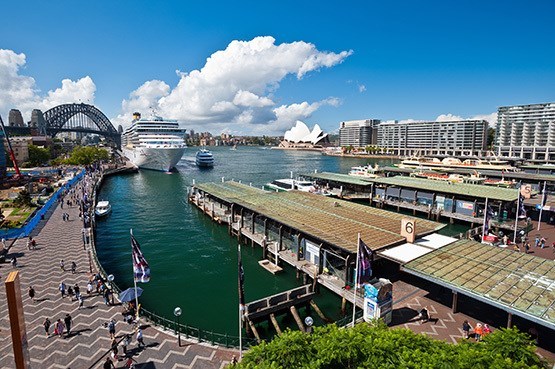
Welcome to Sydney
This series of geocaches is designed primarily with visitors to Sydney in mind who may have limited time and transport options and want a quick and easy find while out enjoying some sightseeing around this beautiful city.
All cache containers will be one of three types; a flat magnetic key case (MKC), a round film canister (FC or MFC for magnetic) or a fake rock (FR).
As always with city caching, the surrounding structures can affect GPS accuracy. If in doubt, use the hint however be mindful that the hint will indicate the type of container used and will be very specific to help you find the cache easily. If you want a challenge to find this cache and don't wish to know exactly where it's hidden, do not look at the hint.
At each location you’ll be given some information about the site you are visiting. I hope you find this information enlightening.
Enjoy!
-------------------------------

Image: The Dictionary of Sydney - Woolloomooloo Bay
Woolloomooloo is the name given to the Yurong Creek valley located immediately east of Sydney Town and the Domain, which later became Sydney’s first suburb. In 1793, when Commissary General John Palmer was granted 100 acres at Woolloomooloo, extending from Woolloomooloo Bay to Oxford Street, he also acknowledged this by naming his house Woollamoola after its Aboriginal name (also recorded as Waalamool, Walla-mool and Wallamoula). This later resulted in the suburb and bay being named Woolloomooloo. Aboriginal people frequented the area to camp, fish, hunt and conduct ceremony.
From this vantage point to your right, you can see the magnificent, heritage listed, grey Finger Wharf extending into the bay. This wharf was earmarked for demolition until local residents and Jack Mundy, president of the union known as the Builders Labourers Federation stepped in and imposed “Green Bans” which prevented the demolition. Eventually, it was decided to redevelop the site into private apartments, a hotel and restaurants. A beautiful part of Sydney’s history was saved.

Garden Island
Image: navy.gov.au
Opposite is Garden Island under the control of the Royal Australian Navy. Garden Island was originally an island in Sydney Harbour, but extension of the base and the construction of a dry dock in the channel between the island and the mainland have resulted in its connection to the mainland shore at Potts Point from the 1940s. The wharves of the naval base now stretch the length of the eastern side of Woolloomooloo Bay, from the suburb of Woolloomooloo to the end of the original island.

Image: Naval Historical Society of Australia
One interesting fact is that Garden Island has the oldest colonial graffiti in Australia. It consists of the letters “WB” and the year “1788”, the year the First Fleet and European settlement arrived in Australia. An early maritime requirement in a new location was the surveying of the waterways, and these were undertaken very quickly after the arrival of the First Fleet. One such survey was carried out by William Bradley, the First lieutenant of HMS Sirius, the flagship of the First Fleet. He was accompanied by a seaman, Frederic Meredith and a marine, Private Joseph Radford. During their survey, they carved their initial into the sandstone on the northern hill of the island – these are still visible today and are the oldest marks made by Europeans in the Sydney area. Bradley is remembered today by the landmark Bradleys Head, on the northern side of Sydney Harbour.
The adjacent swimming pool is named after Andrew "Boy" Charlton, a 16yo Australian freestyle swimmer who won a gold medal in the 1500m freestyle at the 1924 Summer Olympics in Paris. He set five world records and also won a further three silver and one bronze medal in his Olympic career. His youth earned him the nickname "Boy".

Image: The Daily Telegraph
Source: Wikipedia - Woolloomooloo Bay; Naval Historical Society of Australia