IMPORTANT!
This cache is only accessible at low tide. Please check tide times before visiting.
PETRIFACTION BAY
Petrification Bay is a spectacular area of geological interest where you can clearly see outcrops of basalt lava that erupted and flowed down an ancient valley on Flinders Island around 20 million years ago.
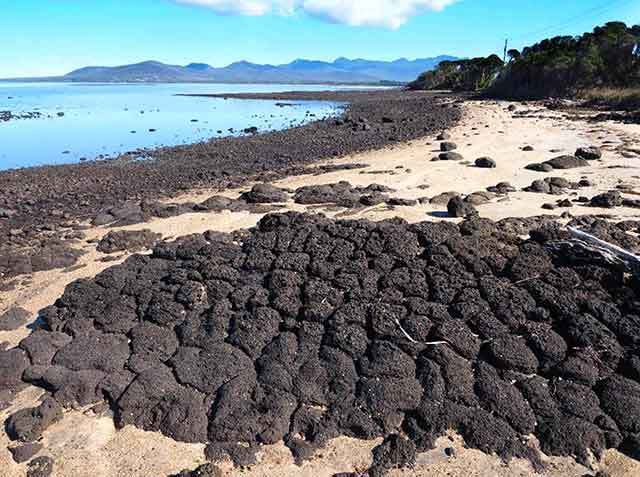
The rock is igneous, which means “formed from fire” and the remains of this ancient furnace can be explored at this impressive location.
BRIEF GEOLOGY
In the period after Tasmania had broken free from Antarctica and commenced its northern drift (about 20 million years ago) basalt flowed freely over Flinders Island. Today, much of this lava is covered over by sand; however, at Petrifaction Bay there is a spectacular outcrop that can be clearly seen at low tide.
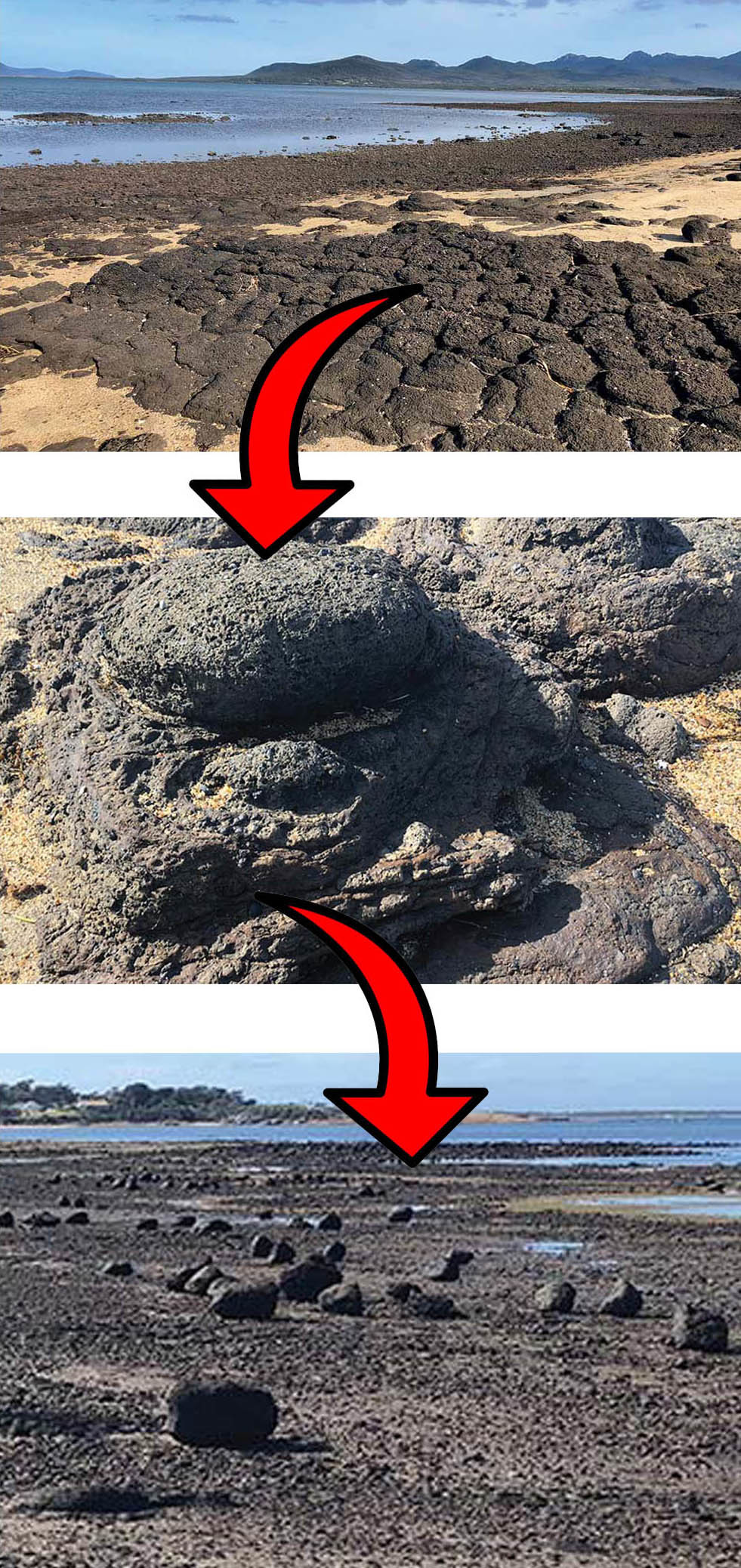
Amongst this outcrop, and scattered around the shoreline, is an impressive boulder field consisting of many boulders ranging in size and shape. These basalt boulders are a result of the basalt lava flow weathering.
When basalt lava flows cool, they tend to form hexagonal cracks, called columnar joints. Weathering from the edges of the hexagonal columns leaves a central unweathered zone which can be exposed by erosion of the more weathered rock. This begins the long journey to become stand alone, rounded rocks.
As you follow the line of rocks from the exposed lava flow across to the west you will see fresh rounded rocks weathering out of the basalt lava flow.
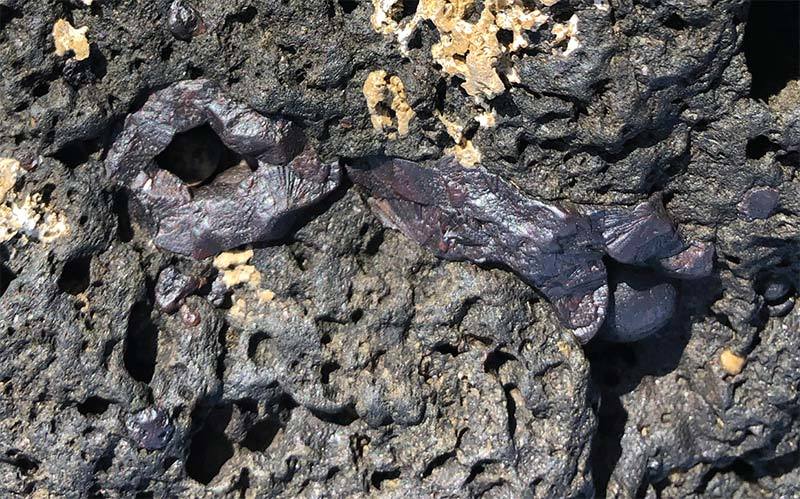
The name Petrifaction Bay comes from the petrified logs which have been found in this area. The logs were deposited in an ancient, swampy valley prior to the eruption of lava. As the lava flowed, hot ground water percolated and replaced the logs with quartz and calcite, forming the petrified wood.
LOGGING REQUIREMENTS
The listed coordinates take you to a prominent exposed outcrop of basalt; however, in order to log this EarthCache, you will need to head out to the nearby boulder field and choose a basalt boulder to study. There are lots to choose from! Then answer the following:
- Is your chosen boulder unique in size or similar to others?
- Describe its shape.
- Describe the texture and compare its texture to the basalt rock at the listed coordinates. Is there any difference and if so, why do you think there is?
- Take a photo of you or your GPS with your chosen boulder (bonus points for locating and photographing any petrified logs).
Please then email, or send a message (through geocaching.com), your answers to the above questions. Feel free to log your find in anticipation - we'll let you know if there are any issues. Logs without the emailed answers may be deleted.