تُعتبر عمّان المدينة البيضاء بامتياز بفضل مبانيها العديدة من الحجر الجيري المحلي.
ومع ذلك، هناك استثناءات مع استخدام الصخور الرخامية المستخدمة في بعض مشاريع تطوير المدينة، وهي فرصة لاكتشاف صخرة مذهلة هي صخرة الجرانيت راباكيفي.
► الجرانيت، وهو صخر QFM
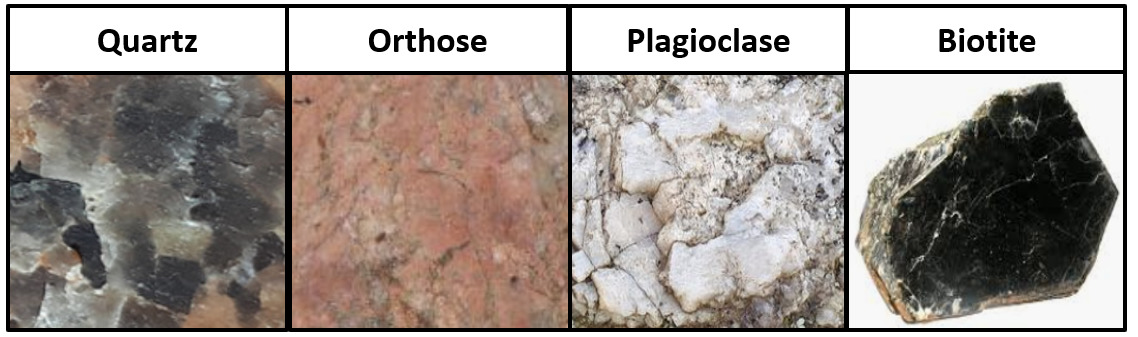
يحتوي الجرانيت عادةً على تركيبة كيميائية رئيسية من 3 معادن يمكن تلخيصها في qfm:
- Q للكوارتز: شفاف، هذا المعدن رمادي داكن اللون بدون أوجه.
- f للفلدسبار: يمكن أن يكون هذا المعدن المعتم أورثوز (فلدسبار البوتاسيوم القلوي الوردي) أو أوليغوكلاز (فلدسبار بلاجيوكلاز أبيض أو رمادي).
- ► M للميكا: غالبًا ما يكون أسود (بيوتايت)، يظهر هذا المعدن في رقائق لامعة ناعمة ولكن هذا المعدن نادرًا ما يكون موجودًا في جرانيت راباكيفي.
► راباكيفي، قبل كل شيء نسيج
~الميزات
تعني كلمة راباكيفي "الصخور القابلة للتفتيت" باللغة الفنلندية لأن المعاملات المختلفة للتمدد الحراري للمعادن المكونة لها تجعل الراباكيفي المكشوف قابل للتفتيت.
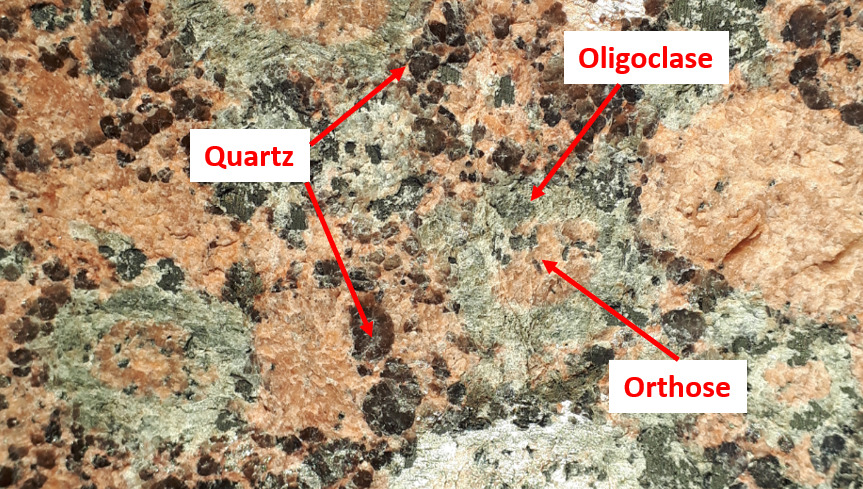
السمة التركيبية العيانية لجرانيت راباكيفي هي غلبة الفينوكريستات الفينوكريستات البيضاوية الشكل الحمراء أو الوردية اللون المحاطة بأوليغوكلازات رمادية أو خضراء شاحبة.
وتسمى البلورات التي يزيد حجمها عن سنتيمتر واحد بالبلورات الفينوكريستية. إن وجود هذا النوع من البلورات يجعل من الممكن إطلاق صفة البورفيرويد على الجرانيت.
ويتراوح قطر هذه الفينوكريستات الفينوكريستية من 1 إلى 5 سم، وغالباً ما تكون البيضاوية كروية تماماً تقريباً.
ويكون قوام القلة قليلة الفلزات المكونة للهالة أدق.
وبين هذه البويضات الفلسبار المكوِّنة للهالة، تتشكل بقية المصفوفة من بلورات كوارتز داكنة أكثر أو أقل من بلورات الكوارتز التي يتراوح حجمها من مليمتر واحد إلى سنتيمتر واحد.
~التكوين
معظم الصهارات المكونة لصخور الراباكيفي قديمة جداً، حيث تبلورت منذ ما بين 1800 و1000 مليون سنة (العصر الوسيط).
وتنتج هذه الصخور البلوتونية عن التبلور الجزئي لصهارة أم واحدة في حجرات صهارية واسعة تقع على عمق يتراوح بين 2 و12 كم تحت سطح الأرض.
وتشكل هذه الصخور صخورًا حموية يزيد قطرها أحيانًا عن 100 كم.
وقد تم هذا التبريد ببطء شديد، مما سمح بتكوين الفينوكريستات (كلما كانت الصهارة أبطأ في التبريد، كانت البلورات أكبر حجماً وأكثر تشكلاً).
يشير تنوي البلاجيوكلاز حول الفلسبار القلوي إلى ظروف خاصة مع تبلور الصهارة الجرانيتية تحت ظروف انخفاض الضغط المرتبطة بتغيرات صغيرة في درجة الحرارة.
~أصناف الراباكيفي الجرانيت الراباكيفي
إن لون وبنية فلدسبار الراباكيفى متباينان تمامًا، حيث يعطي على سبيل المثال
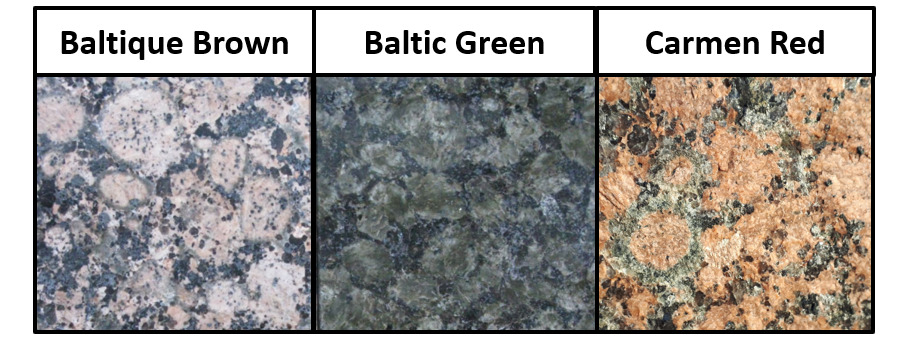
A. الويبورغيت "البني البلطيقي" الذي يُظهر بويضات الفلسبار القلوي الوردي الصافي للغاية في مصفوفة متوسطة الحبيبات. الغالبية العظمى من البويضات محاطة بهالة من القلة القليلة الحبيبات والكوارتز موجود فقط في المصفوفة.
B. ويبرجيت "أخضر بلطيقي" أغمق لونًا من الويبورجيت مع بويضات من الفلسبار القلوي المخضر.
C. البيترلايت "الأحمر الكارمي" الذي يتميز بلون أحمر أكثر وضوحًا وبنسبة كبيرة من الفينوكريستات التقويمية بدون هالات من أوليغوكلازات، وتحيط به مباشرة بلورات الكوارتز على شكل قطرات.
► أسئلة للتحقق من صحة "جرانيت راباكيفي في عمان"
- السؤال 0 : التقط صورة بالأبيض والأسود لنفسك أو لعنصر يحدد هويتك في الموقع ولكن دون إظهار منطقة المراقبة.
يجب إرسال هذه الصورة إلينا مع الإجابات أو إضافتها إلى سجلك.
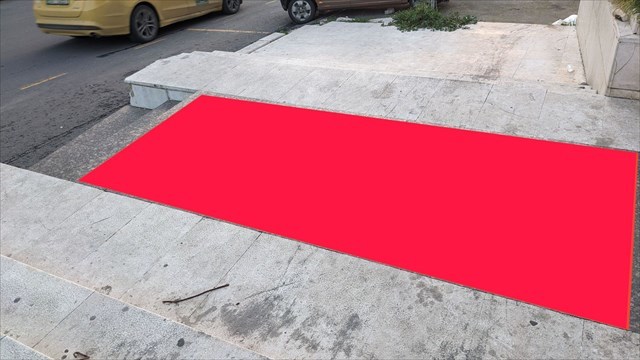
هنا أنت أمام رصيف يقطع الرصيف الممتد من مبنى قديم إلى الطريق (المنطقة الحمراء في الصورة WP1).
- السؤال 1: صف أكبر بلورات الصخرة (الشكل واللون والجانب) واستنتج طبيعتها. اعتماداً على حجم البلورات، قم بتوصيف ظروف تبلور هذه الصخرة.
- السؤال 2 : بوصف ترتيب هذه البلورات الكبيرة والبلورات الأصغر حجماً، صِفْ القوام العياني لهذا الجرانيت.
- السؤال 3 : يأتي هذا النسيج العياني في أنواع مختلفة. من ملاحظاتك السابقة وباستخدام الوصف، حدد الصنف الذي يزين المبنى الذي أمامك.
يمكنك تسجيل هذا المخبأ دون انتظار تأكيدنا، ولكن يجب أن ترسل لنا الإجابات في نفس الوقت، عن طريق البريد الإلكتروني عبر ملفنا الشخصي (fafahakkai) أو عن طريق نظام مركز الرسائل الخاص بموقع geocaching.com.
إذا كانت هناك مشكلة في إجاباتك سنقوم بإخطارك. سيتم حذف السجلات المسجلة بدون إجابات.
تذكير بخصوص "مخابئ الأرض": لا توجد حاوية للبحث عنها ولا سجل للتوقيع عليه. ما عليك سوى الذهاب إلى الموقع والإجابة على الأسئلة المختلفة وإرسال الإجابات إلينا.
With its many local limestone buildings, Amman is the White City par excellence.
However, there are exceptions with the use of marble rocks used in certain city developments, the opportunity to discover an amazing rock, the Granite Rapakivi.
► Granite, a QFM rock
A granite commonly has a major chemical composition of 3 minerals which can be summed up in QFM:
- Q for Quartz: translucent, this mineral is dark gray in color without facet.
- F for Feldspar: this opaque mineral can be Orthose (pink alkaline potassium feldspar) or Oligoclase (white or gray plagioclase feldspar).
- M for Mica: often black (biotite), this mineral is presented in fine shiny flakes but this mineral is hardly present in the rapakivi granite.
► Rapakivi, above all a texture
~ Features
Rapakivi means "friable rock" in Finnish because the different coefficients of thermal expansion of the constituent minerals make the exposed rapakivi friable.
The macroscopic textural feature of Rapakivi granites is a predominance of red or pinkish ovoid orthotic phenocrysts surrounded by gray or pale green oligoclases.
Crystals larger than one centimeter are called phenocrysts. The presence of this type of crystals makes it possible to give the qualifier of porphyroid to granite.
These orthosis phenocrysts are 1 to 5 cm in diameter and the ovoids are often almost perfectly spherical.
The texture of the halo-forming oligoclase is finer.
Between these haloed feldspars ovoids, the rest of the matrix is formed of more or less dark quartz crystals ranging in size from one millimeter to one centimeter.
~ Formation
Most of the magmas forming rapakivi are very old, having crystallized between 1800 and 1000 million years ago (Mesoproterozoic).
These plutonic rocks result from the fractional crystallization of a single parent magma in vast magmatic chambers located between 2 and 12 km below the earth's surface.
They form batholiths sometimes more than 100 km in diameter.
This cooling was done very slowly, allowing the formation of phenocrysts (the slower a magma cools, the larger and more well formed the crystals).
The nucleation of plagioclase around the alkali feldspar suggests particular conditions with crystallization of a granite magma under pressure decrease conditions associated with small variations in temperature.
~ The varieties of Granite Rapakivi
The color and structure of rapakivi feldspars is quite variable, giving for example:
A. "Baltic Brown" Wiborgite showing very clear pink alkaline feldspar ovoids in a medium grained matrix. The vast majority of ovoids are surrounded by a halo of oligoclases and quartz is only present in the matrix.
B. Darker "Baltic Green" Wiborgite with greenish alkaline feldspars ovoids.
C. The "Carmen Red" Pyterlite which is differentiated by a more pronounced red color and by a significant proportion of orthosis phenocrysts without halos of oligoclases, directly surrounded by quartz crystals in the form of drops.
► Questions to validate "Granite Rapakivi in Amman"
- Question 0 : Take a black and white photo of yourself or of an element identifying you on the site but without showing the observation area.
This photo will have to be sent to us with the answers or to be added to your log.
Here you are in front of a pavement cutting across the pavement running from an old building to the road (red area in photo WP1).
- Question 1 : Describe the largest crystals (shape, color, aspect) of the rock and deduce their nature. Depending on the size of the crystals, characterize the crystallization conditions of this rock.
- Question 2 : Describing the arrangement of these large crystals and smaller ones, qualify the macroscopic texture of this granite.
- Question 3 : This macroscopic texture comes in varieties. From your previous observations and using the description, determine the variety adorning the building in front of you.
You can log this cache without waiting for our confirmation,
but you must send us the answers at the same time, by e-mail via our profile (
fafahakkai) or by the system of Message Center of geocaching.com.
If there is a problem with your answers we will notify you.
The logs recorded without answers will be deleted.
Reminder concerning "Earthcaches": there is neither a container to look for nor a logbook to sign. One need only go to the location, answer to the differents questions and send us the answers.
Par ses nombreux bâtiments en roche calcaire locale, Amman est la Ville Blanche par excellence.
Il existe cependant des exceptions avec l'utilisation de roches marbrières utilisée pour le parements de certains bâtiments ou comme revêtements de sol, l'occasion de découvrir une roche étonnante, le Granite Rapakivi.
► Le Granite, une roche QFM
Un granite présente communément une composition chimique majoritaire de 3 minéraux qui peuvent se résumer en QFM :
- Q comme Quartz : translucide, ce minéral est de couleur gris sombre sans facette.
- F comme Feldspath : ce minéral opaque peut être de l'Orthose (feldspath potassique alcalin rose) ou de l'Oligoclase (feldspath plagioclase blanc ou gris).
- M comme Mica : souvent noir (biotite), ce minéral se présente en fines paillettes brillantes mais celui ci est très peu présent dans le granite rapakivi.
► Rapakivi, avant tout une histoire de texture
~ Caractéristiques
Rapakivi signifie «roche friable» en finnois , car les différents coefficients de dilatation thermique des minéraux constitutifs rendent le rapakivi exposé friable.
La caractéristique texturale macroscopique des granites Rapakivi est un prédominance de phénocristaux d'orthose ovoïdes rouges ou rosâtres cerclés d'oligoclases gris ou verts pâles.
On appelle phénocristaux des cristaux dont la taille est supérieure au centimètre. La présence de ce type de cristaux permet de donner le qualificatif de porphyroïde au granite.
Ces phénocristaux d'orthose présentent un diamètre de 1 à 5 cm et les ovoïdes sont souvent presque parfaitement sphériques.
La texture de l'oligoclase formant l'auréole est plus fine.
Entre ces ovoïdes de feldspaths auréolés, le reste de la matrice est formé de cristaux de quartz plus ou moins sombres, avec une teinte rouge et dont la taille va d'un millimètre à un centimètre.
~ Formation
La plupart des magmas formant des rapakivi sont très anciens, ayant cristallisé entre 1800 et 1000 millions d'années (mésoprotérozoïque).
Ces roches plutoniques résultent de la cristallisation fractionnée d'un seul magma parental dans de vastes chambres magmatiques situées entre 2 et 12 km sous la surface terrestre.
Ils forment des batholithes faisant parfois plus de 100 km de diamètre.
Ce refroidissement s'est fait très lentement, permettant la formation des phénocristaux (plus un magma se refroidit lentement, plus les cristaux sont gros et bien formés).
La nucléation du plagioclase autour du feldspath alcalin suggère des conditions particulières avec une cristallisation d'un magma granitique sous des conditions de diminution de pression associées à de faibles variations de température.
~ Les variétés de Granite Rapakivi
La couleur et la structure des feldspaths rapakivi est assez variable, donnant par exemple :
A. La Wiborgite "Baltique Brown" montrant des ovoïdes de feldspaths alcalins roses très clairs dans une matrice à grain moyen. La grande majorité des ovoïdes est entourée d'un halo d'oligoclases et le quartz est uniquement présent dans la matrice.
B. La Wiborgite "Baltic Green" plus sombre avec des ovoïdes de feldspaths alcalins verdâtres.
C. La Pyterlite "Carmen Red" qui se différencie par une couleur rose plus prononcée (tirant sur le rouge) et par une proportion importante de phénocristaux d'orthose sans auréoles d'oligoclases, directement entourés de cristaux de quartz en forme de gouttes.
► Questions de validation pour "Granite Rapakivi à La Valette"
- Question 0 : Prenez une photo en Noir et Blanc de vous ou d'un élément vous identifiant sur le site mais sans montrer la zone d'observation.
Cette photo devra au choix nous être transmise avec les réponses ou être ajoutée à votre log.
Vous voici devant un pavement coupant le trottoir allant d'un ancien bâtiment à la route (zone rouge de la photo WP1).
- Question 1 : Décrivez les plus gros cristaux (forme, couleur, aspect) de la roche et déduisez en leur nature. En fonction de la taille des cristaux, caractérisez les conditions de cristallisation de cette roche.
- Question 2 : En décrivant la disposition de ces gros cristaux et des plus petits, qualifiez la texture macroscopique de ce granite.
- Question 3 : Cette texture macroscopique se décline en variétés. De vos observations précédentes et à l'aide du description, déterminez la variété parant le bâtiment devant vous.
Vous pouvez vous loguer sans attendre notre confirmation,
mais vous devez nous envoyer les réponses en même temps soit par mail via notre profil (
fafahakkai), soit via la messagerie geocaching.com (Message Center).
S'il y a des problèmes avec vos réponses nous vous en ferons part.
Les logs enregistrés sans réponses seront supprimés.
Rappel concernant les « Earthcaches »: Il n'y a pas de conteneur à rechercher ni de logbook à renseigner. Il suffit de se rendre sur les lieux, de répondre aux questions ci-dessus et de nous renvoyer les réponses.