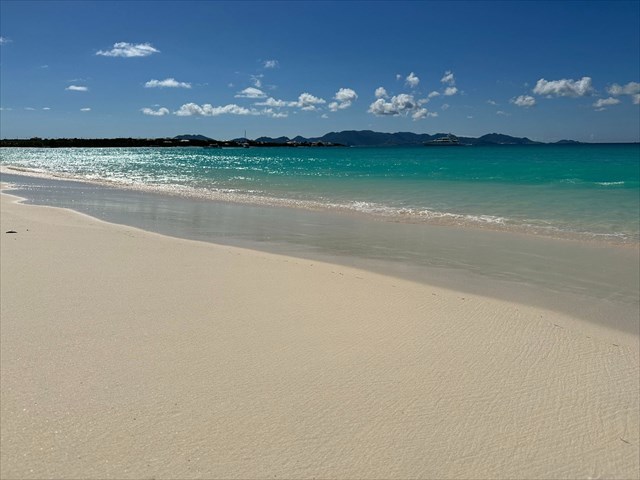
Rendezvous Bay Beach is located on the southern coast of Anguilla and is famous for its white sand and crystal clear turquoise waters. It offers a tranquil escape for visitors seeking relaxation and natural beauty. Fringed by swaying palm trees, Rendezvous Bay Beach provides the perfect setting for sunbathing, swimming, and enjoying the breathtaking sunset views over the horizon.
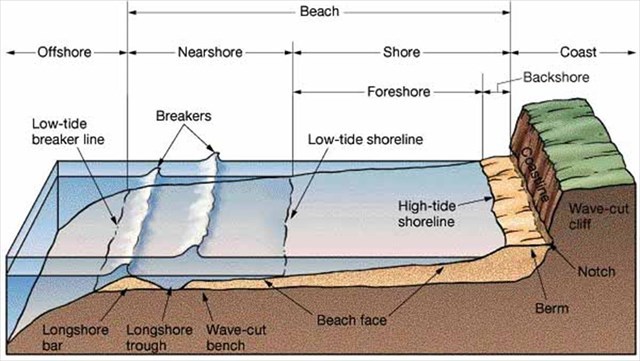
Before we dive into the main lesson on flat coast's, it is important to understand the anatomy of a beach, which can help us understand its geological structure and the processes shaping its formation. A beach typically consists of three main zones: the foreshore, backshore, and nearshore. The foreshore lies between the high and low tide marks and is subject to regular tidal action. It is characterized by sediment deposition and erosion, influenced by wave energy and tidal currents. The backshore extends landward from the high tide mark and is affected by terrestrial processes such as wind, vegetation, and human activity. It often features sand dunes, vegetation, and coastal infrastructure. The nearshore zone extends from the low tide mark to where waves begin to break and is influenced by nearshore currents, wave action, and sediment transport. These components interact to shape the beach's morphology, sediment composition, and ecological characteristics over time.
A flat coast, in geological terms, typically refers to a coastal area characterized by low relief and minimal elevation changes. While some flat coasts may indeed have beaches that appear perfectly flat, others may exhibit gentle slopes or undulations. The key characteristic of a flat coast is the overall lack of significant elevation changes along the coastal landscape. These coastlines are often formed by the deposition of sediments such as sand and gravel by ocean currents, resulting in expansive, gently sloping beaches. Flat coasts often form through the accumulation of sediment transported by longshore drift (coastal process characterized by the movement of water parallel to the shoreline, transporting sediment) and marine currents. The surrounding geology and topography also plays a crucial roles in shaping these coastal landscapes.
Along flat coasts, sediment may be derived from various sources, including nearby cliffs, offshore shoals, or eroding coastal features. Waves and currents redistribute this sediment along the shoreline, gradually building up wide, gently sloping beaches and coastal plains. The absence of rugged terrain or significant elevation changes allows sediment to spread out and accumulate, contributing to the flat coastal morphology. Over time, flat coasts undergo dynamic changes driven by natural processes such as wave action, tidal forces, and wind erosion. Waves continuously reshape the coastline, redistributing sediment and forming features such as sandbars and spits. Tides influence the movement of sediment, while wind erosion can shape coastal dunes and alter the landform. Sea level fluctuations also play a significant role in the evolution of flat coasts. Rising sea levels can lead to increased erosion and coastal retreat, while falling sea levels may result in the progradation or expansion of the shoreline seaward.
Logging Requirements:
- Describe the width and profile of Rendezvous Bay Beach. Based on your observations and the description, would you consider this beach a flat coast? Why or why not?
- Walk several hundred yards along the beach, towards the Reference Point waypoint. How does the width and profile of the beach compare here to what you observed at the posted coordinates? Based on your observations, how do you think this area will look in the future?
- Upload a photo taken at Rendezvous Bay Beach. You don't have to be in the photo, though it is strongly encouraged.