Los Azulejos
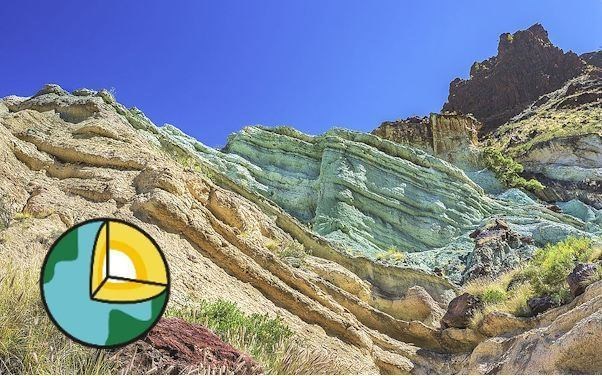
Los Azulejos es una formación
geológica situada en Gran Canaria. Esta formación se encuentra a lo
largo de la carretera GC-200 entre Mogán y La Aldea de San Nicolás, y
es conocida por sus impresionantes colores y estructuras geológicas. El
nombre "Los Azulejos" proviene del parecido de las capas de rocas
con los azulejos tradicionales de cerámica, debido a sus vivos colores
y patrones.
Origen
Volcánico:
Los Azulejos son el resultado de actividad volcánica que tuvo lugar
hace millones de años. La isla de Gran Canaria, como todas las Islas
Canarias, se formó a partir de erupciones volcánicas submarinas que
eventualmente emergieron por encima del nivel del mar.
Estratificación:
La formación muestra una clara estratificación con capas de diferentes
colores. Estas capas son principalmente tobas volcánicas, que son rocas
formadas a partir de la compactación y cementación de cenizas
volcánicas. Los colores varían desde tonos verdes y azules hasta
rojizos y amarillos, dependiendo de la composición mineral de cada capa.
Mineralogía:
- Verde y Azul: Estos colores se deben a la presencia de minerales como
la clorita y la glauconita, que se forman en condiciones hidrotermales.
- Rojo y Amarillo: Estos tonos son indicativos de oxidación de
minerales de hierro, como la hematita y la limonita.
Procesos Erosivos:
Con el tiempo, la acción del agua y el viento ha esculpido la
formación, creando patrones únicos y revelando las capas internas de la
roca. La erosión diferencial también contribuye a la variedad de formas
que se pueden observar en Los Azulejos.
Para las tareas de este Earthcache, tienes que ir a la zona de las
coordenadas y observar Los Azulejos.
PREGUNTAS
Para poder registrar como
encontrado este Earthcache, nos tenéis que mandar un correo (podéis
hacerlo
desde nuestro perfil de usuario) con las respuestas a las siguientes
preguntas. Podéis loguear el earthcache sin haber recibido
nuestra respuesta. Si no recibimos el correo con las respuestas
correctas, el log podrá ser borrado sin previo aviso.
1.- Cuál de las
siguientes afirmaciones es correcta:
A) Loz azulejos son artificiales, de cemento para crear un atractivo
turístico en la isla.
B) Loz azulejos son rocas volcánicas pintadas de azul.
C) Los azulejos son de orígen volcánico, el color azul es debido a la
presencia de minerales como la clorita y la glauconita.
D) Los azulejos es de donde se fabricaban los azulejos del cuarto de
baño antiguamente.
2.-
Observa de cerca los azulejos. Describe con tus palabras qué textura
tienen, el color y por qué crees que tienen este color.
3.
- En las coordenadas puedes ver distintas capas en la pared de roca de
distintos colores. ¿A qué es debida esta diferencia de colores? Razona
tu respuesta.
4.-
FOTO. Hazte una fotografía en Los Azulejos. Si no quieres salir,
un papel
con tu nick o tu GPS será válido. Recuerda que esta fotografía es
OBLIGATORIA para demostrar que has visitado este Earthcache.
Si no recibimos las respuestas, el log será
borrado sin previo aviso.
También podrán ser borrados todos los
logs que no incluyan la fotografía obligatoria de la pregunta 4 (desde
la actualización de las guidelines de junio de 2019, la fotografía
puede ser obligatoria para demostrar que se ha visitado el sitio).
No
olvides que estás dentro de un entorno natural, hay que respetarlo y
cuidarlo.
Gracias por vuestra
comprensión y esperemos que disfrutéis del lugar.

ENGLISH VERSION
Los Azulejos (ENG)
Los Azulejos is a geological
formation
located in Gran Canaria. This formation is along the GC-200 road
between Mogán and La Aldea de San Nicolás and is known for its
impressive colors and geological structures. The name "Los Azulejos"
("The Tiles" in Spanish) comes from the resemblance of the rock layers
to traditional ceramic tiles, due to their vivid colors and patterns.
Volcanic
Origin:
Los Azulejos are the result of volcanic activity that took place
millions of years ago. The island of Gran Canaria, like all the Canary
Islands, was formed from underwater volcanic eruptions that eventually
emerged above sea level.
Stratification:
The formation shows clear stratification with layers of different
colors. These layers are mainly volcanic tuffs, which are rocks formed
from the compaction and cementation of volcanic ash. The colors range
from green and blue to reddish and yellow, depending on the mineral
composition of each layer.
Mineralogy:
- Green and Blue: These colors are due to the presence of minerals such
as chlorite and glauconite, which form under hydrothermal conditions.
- Red and Yellow: These tones indicate the oxidation of iron minerals,
such as hematite and limonite.
Erosive Processes:
Over time, the action of water and wind has sculpted the formation,
creating unique patterns and revealing the internal layers of the rock.
Differential erosion also contributes to the variety of shapes that can
be observed in Los Azulejos.
For the tasks of this Earthcache, you need to go to the coordinates
area and observe Los Azulejos.
QUESTIONS
To log this Earthcache as found, you need to send us an email
(you can do it
from our user profile) with the answers to the following questions.
You can log the Earthcache without having received our response. If we
don't receive the email with the correct answers, the log may be
deleted without prior notice.
1.- Which of the following statements is correct:
A) Los Azulejos are artificial, made of cement to create a tourist
attraction on the island.
B) Los Azulejos are volcanic rocks painted blue.
C) Los Azulejos are of volcanic origin, the blue color is due to the
presence of minerals such as chlorite and glauconite.
D) Los Azulejos are where bathroom tiles were made in the past.
2.-
Observe the tiles closely. Describe in your own words what texture they
have, the color and why you think they have this color.
3.
- At the coordinates, you can see different layers in the rock wall of
different colors. What is the reason for this difference in colors?
Explain your answer.
4.-
PHOTO. Take a photo of yourself with Los Azulejos. If you don't want to
appear, a piece of paper
with your nickname or your GPS will be OK. Remember this photo is
REQUIRED to prove that you have visited this Earthcache.
If we don't receive the answers, the log
will be deleted without prior notice.
All logs that don't include the
required photo in question 4 may also be deleted (since the June 2019
guidelines update, the photo may be required to prove that you have
visited the place).
Don't
forget you are in a natural environment, you have to respect it and
take care of it.
Thank you for your
understanding and we hope you enjoy the place.