東京駅改札内の「東北・山形・秋田・北海道・上越・北陸新幹線 南のりかえ口」を出て、8段の階段を下りたあたりの柱の石材の中に、カニ化石があります。
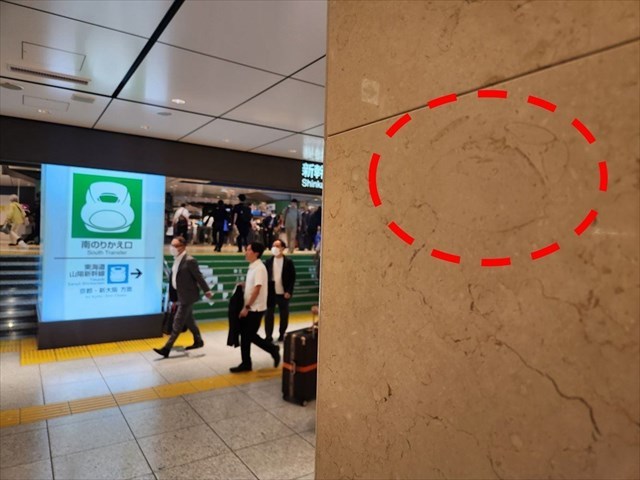
石材の中で見られる化石としては、アンモナイトやべレムナイトなどが有名ですが、石材の中からカニの化石が見つかるのは国内では非常に珍しいことです。カニやエビの仲間である十脚類の化石は、全地質時代を通じて約3500種が知られています。アメリカの古生代デボン紀(約3億8000年前)のものが、最古の化石とされています。
このアースキャッシュのfoundログをつけるためのタスクは、以下のとおりです。
タスク1.以下の問題の答えをキャッシュオーナーにメッセージで送ってください。
Q1. カニが化石として残されていることから、この石材はカニが生息していたような海で堆積した地層であることが推定できます。このように、その地層が堆積した環境の推定に役立つ化石のことを何と呼ぶでしょうか?
Q2. この柱には、カニの化石以外に、地層が堆積した時代の推定に役立つ化石が見られます。それは、以下のどれでしょうか。
A. 三葉虫(古生代) B. アンモナイト(中生代) C. 貨幣石(新生代)
タスク2.公開座標付近で化石と一緒にあなた又はあなたのGPSrの写真を撮って、ログにアップロードしてください。
===== English =====
A crab fossil can be found in a stone pillar at the bottom of eight steps after exiting the "Tohoku, Yamagata, Akita, Hokkaido, Joetsu & Hokuriku Shinkansen South Transfer" inside the Tokyo Station ticket gates.
Ammonites and belemnites are well-known fossils found in stone, but it is very rare in Japan to find crab fossils in stone. Fossils of about 3,500 species of decapods, which are related to crabs and shrimps, are known throughout all geological periods. The oldest decapod fossil is believed to be from the Devonian Period of the Paleozoic Era (about 380 million years ago) in the United States.
Tasks for logging “found” on this EarthCache are as follows:
Task 1. Please geo-message your answers for the question below to cache owner.
Q1. The fact that the crab is preserved as a fossil suggests that this lithic material was deposited in a sea that would have been inhabited by crabs. What do we call a fossil that helps us estimate the environment in which the stratum was deposited?
Q2. In addition to the crab fossil, there is another fossil in this pillar that can help us estimate the age at which the stratum was deposited. Which of the following is it?
A. Trilobite (Paleozoic) B. Ammonite (Mesozoic) C. Nummulite (Cenozoic)
Task 2. Upload pictures of yourself and/or your GPSr with the fossil(s) near the posted coordinates.