|

🇷🇴 Acest EarthCache vă va arăta secretul geologic din centrul orașului București.
🇬🇧 This EarthCache will show you the geological secret in the city centre of Bucharest.
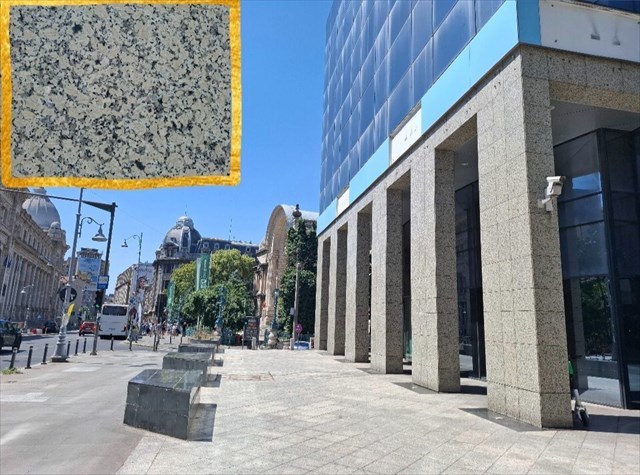
Magmatick rock
🇷🇴 Granitul este un tip comun de rocă magmatică. Roca magmatică este unul dintre cele trei tipuri principale de roci, celelalte fiind sedimentare și metamorfice. Roca magmatică se formează prin răcirea și solidificarea magmei sau a lavei. Rocile magmatice se pot forma cu sau fără cristalizare fie sub suprafață ca roci intruzive (plutonice), fie la suprafață ca roci extruzive (vulcanice). Este compus în principal din trei minerale: cuarț, feldspat și mica. Aceste cristale se formează atunci când magma, bogată în minerale dizolvate, se răcește lent sub pământ. Pe măsură ce magma se răcește, mineralele din ea încep să se cristalizeze. Cu toate acestea, atunci când procesul de răcire este treptat, cristalele au timp să devină mai mari decât mineralele din jur, creând fenocristale, acestea contrastează puternic în dimensiune cu masa de fond care o înconjoară; aceasta implică un raport de dimensiune de cel puțin aproximativ 5:1. Fenocristele oferă informații prețioase despre condițiile în care s-a format roca și despre istoria activității vulcanice din zonă. Fenocristele euedrice sunt caracterizate prin fețe de cristal bine definite și margini ascuțite, ceea ce indică faptul că au suficient spațiu pentru a crește liber în magma înainte ca aceasta să se solidifice. Pe de altă parte, fenocristalele anedrice nu au fețe distincte de cristal și par neregulate ca formă, ceea ce sugerează că s-au format într-un spațiu restrâns sau într-un mediu cu răcire rapidă, unde creșterea cristalelor a fost împiedicată.
🇬🇧 Granite is a common type of igneous rock. Igneous rock is one of the three main rock types, the others being sedimentary and metamorphic. Igneous rock is formed through the cooling and solidification of magma or lava. Igneous rock may form with or without crystallisation either below the surface as intrusive (plutonic) rocks or on the surface as extrusive (volcanic) rocks.
It is composed mainly of three minerals: quartz, feldspar, and mica. These crystals form when magma, rich in dissolved minerals, cools slowly underground. As the magma cools, the minerals within it start to crystallise. However when the cooling process is gradual, the crystals have time to grow larger than the surrounding minerals creating phenocrysts, they contrast sharply in size with the enclosing groundmass; this implies a size ratio of at least about 5:1.
Phenocrysts provide valuable information about the conditions under which the rock formed and the history of volcanic activity in the area. Euhedral phenocrysts are characterised by well-defined crystal faces and sharp edges, indicating that they had enough space to grow freely within the magma before it solidified. On the other hand, anhedral phenocrysts lack distinct crystal faces and appear irregular in shape, suggesting that they formed in a confined space or in a rapidly cooling environment where crystal growth was hindered.
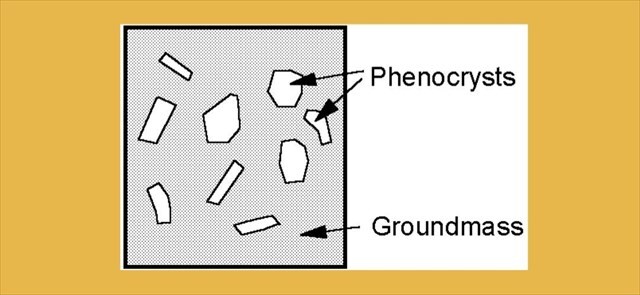
Phenocrysts 🇷🇴 Fenocristalele sunt cristale mari și bine dezvoltate de minerale care se găsesc într-o matrice fină sau vitroasă a rocilor vulcanice. Ele se formează în rezervorul magmatic înainte de erupție, atunci când magma cristalizează lent în scoarța terestră. Odată ce are loc erupția și magma se răcește rapid, restul materialului nu mai are timp să formeze cristale și rămâne fin granular sau amorf.
Mineralele care formează cel mai frecvent fenocristale sunt feldspații, cuarțul, olivina, amfibolii și piroxenii, iar dimensiunea lor poate varia de la câțiva milimetri la câțiva centimetri. Fenocristalele oferă informații importante despre istoria sistemului magmatic, deoarece compoziția lor chimică și zonalitatea reflectă schimbările condițiilor de cristalizare. Geologii le studiază folosind metode petrografice și microsonde electronice pentru a analiza compoziția și caracteristicile de creștere.
Prezența fenocristalelor este tipică pentru rocile porfirice, cum ar fi andezitele, riolitele sau bazaltele, unde creează o textură caracteristică punctată. Existența lor poate indica un proces de cristalizare în două faze, în care fenocristalele se formează mai întâi prin răcire lentă în profunzime, urmată de o răcire rapidă în timpul ascensiunii magmei la suprafață. Studiul fenocristalelor ajută la reconstruirea istoriei proceselor magmatice și a condițiilor în care magma s-a format și a erupt. 🇬🇧 Phenocrysts are large, well-developed mineral crystals found in a fine-grained or glassy matrix of volcanic rocks. They form in a magmatic reservoir before the eruption, when magma slowly crystallizes deep within the Earth's crust. Once the eruption occurs and the magma cools rapidly, the remaining material does not have enough time to form crystals and remains fine-grained or amorphous.
The most common minerals forming phenocrysts include feldspars, quartz, olivine, amphiboles, and pyroxenes, with sizes ranging from a few millimeters to several centimeters. Phenocrysts provide important information about the history of the magmatic system, as their chemical composition and zoning reflect changes in crystallization conditions. Geologists study them using petrographic methods and electron microprobes to analyze their composition and growth characteristics.
The presence of phenocrysts is typical of porphyritic rocks such as andesites, rhyolites, or basalts, where they create a characteristic spotted texture. Their existence can indicate a two-stage crystallization process, in which phenocrysts first form through slow cooling at depth, followed by rapid cooling during magma ascent to the surface. The study of phenocrysts helps reconstruct the history of magmatic processes and the conditions under which magma formed and erupted.
🇷🇴 "Buldum" olarak oturum açmak için lütfen bu soruların yanıtlarını profilim aracılığıyla bana gönderin:
1) Descrieți cu propriile cuvinte formarea fenocristilor. 2) Ce culori poți vedea când te uiți la cristale? 3) Adăugați în jurnal o fotografie cu dvs. sau cu GPS-ul dvs. cu fenocristale pe coordonate.
🇬🇧 For log as "found it" please send me answers for those questions via my profile:
1) Describe in your own words the formation of phenocrysts. 2) What colours can you see when you look at the crystals? What is their average size? 3) Add a photo of yourself or your GPS with phenocrysts on the coordinates to the log.
🇷🇴 După trimiterea răspunsurilor, vă rog să înregistrați imediat jurnalul, mulțumesc.
🇬🇧 Please log the cache immediately after sending your answers, thanks.
Photos by DanielKotmel, 2024. Sources- https://www.sciencedirect.com/topics/earth-and-planetary-sciences/phenocryst
https://www.britannica.com/science/quartz
https://learningzone.oumnh.ox.ac.uk/crystal-shape

|