|

🇲🇩 Acest EarthCache vă va arăta secretul geologic din orașului Chișinãu.
🇬🇧 This EarthCache will show you a geological secret in the city of Chisinau.
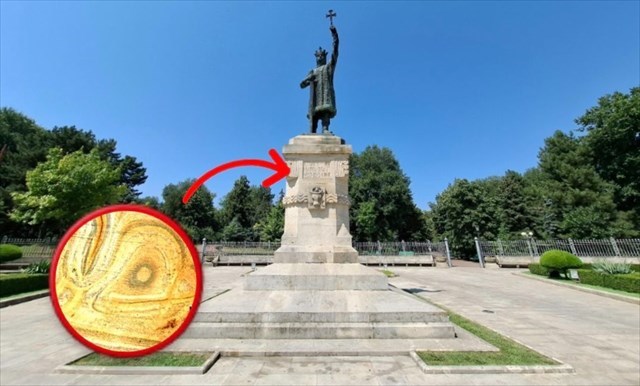
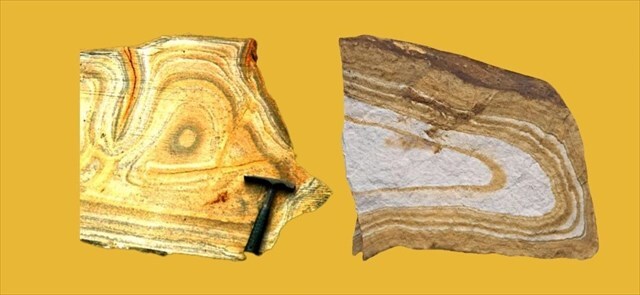
Liesegang Bands
🇲🇩 Fenomenul inele Liesegang a fost studiat pe larg și au fost propuse mai multe teorii pentru a explica formarea modelului. Una dintre cele mai vechi teorii propuse a fost teoria maturizării lui Ostwald, care sugerează că formarea benzilor se datorează diferenței de solubilitate dintre precipitat și mediu. Conform acestei teorii, particulele de precipitat mai puțin solubile migrează către mediul mai solubil, ducând la formarea benzilor.
O altă teorie propusă pentru a explica inelele Liesegang este teoria reacției-difuzie, care se bazează pe principiile cineticii chimice și difuziei. Conform acestei teorii, modelul periodic este rezultatul interacțiunii dintre cinetica reacției și difuzia reactivilor în mediu. Teoria reacției-difuzie a fost studiată pe larg și a fost folosită pentru a explica formarea modelelor într-o varietate de sisteme, inclusiv sisteme biologice.
🇬🇧 The Liesegang rings phenomenon has been studied extensively, and several theories have been proposed to explain the pattern formation. One of the earliest theories proposed was the Ostwald's ripening theory, which suggests that the formation of the bands is due to the difference in solubility between the precipitate and the medium. According to this theory, the less soluble precipitate particles migrate towards the more soluble medium, leading to the formation of the bands.
Another theory proposed to explain the Liesegang rings is the reaction-diffusion theory, which is based on the principles of chemical kinetics and diffusion. According to this theory, the periodic pattern is a result of the interplay between the reaction kinetics and the diffusion of the reagents in the medium. The reaction-diffusion theory has been extensively studied and has been used to explain the formation of patterns in a variety of systems, including biological systems.
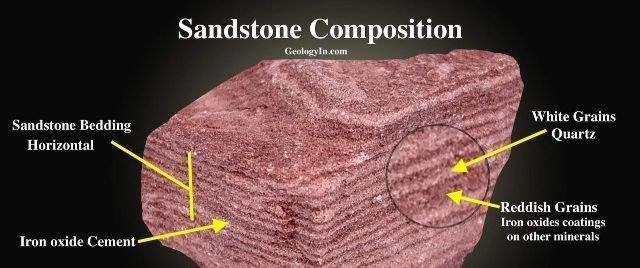
Sandstone
🇲🇩 Gresia se formează în primul rând prin descompunerea rocilor bogate în silice și prin sortarea pe termen lung a boabelor, timp în care materialul instabil, în special părțile mai moi, a fost erodat și particulele mai fine au fost spălate. Gresiile silicice se găsesc în mod obișnuit în locurile unde a existat abraziune prelungită și sortare a boabelor, cum ar fi în sedimentele de pe plaje (inclusiv cele de la lacurile mari) sau în medii deșertice (gresii formate prin compactarea nisipurilor eoliene).
Culoarea gresiilor depinde de obicei de natura materialului de legare care leagă boabele de cuarț. Prezența CaCO3 sau a caolinului conferă o nuanță albicioasă gresiilor, cele care conțin Fe2O3 au o culoare roșiatică, prezența hidroxidului de fier le conferă o culoare maro sau galben ruginit, iar prezența glauconitei creează o nuanță verzuie.
🇬🇧 Sandstone is primarily formed through the decomposition of rocks rich in silica and the long-term sorting of grains, during which the unstable material, especially the softer parts, was eroded and the finer particles were washed away. Silicic sandstones are typically found in places where there has been prolonged abrasion and sorting of grains, such as in sediments on beaches (including those at large lakes) or in desert environments (sandstones formed by the compaction of eolian sands).
The color of sandstones usually depends on the nature of the binding material that connects the quartz grains. The presence of CaCO3 or kaolin imparts a whitish hue to the sandstones, those containing Fe2O3 have a reddish color, the presence of iron hydroxide gives them a brown or rusty yellow color, and the presence of glauconite creates a greenish tint.
🇲🇩 Pentru a vă conecta ca „L-am găsit”, vă rugăm să-mi trimiteți răspunsurile la aceste întrebări prin profilul meu:
1) Descrieți ce sunt fenomenele Liesegang și cum se formează. 2) Observați fenomenele pe coordonatele inițiale. Ce forme vezi? Cum diferă fenomenele de stânca din jurul lor? 3) Adaugă o fotografie cu tine sau cu GPS-ul tău cu Liesegang Phenomena pe coordonatele în jurnal.
🇬🇧 For log as "found it" please send me answers for those questions via my profile:
1) Describe what are Liesegang bands and how are they formed. 2) Observe the bands on the base of the statue on the initial coordinates. What shapes do you see? How do the bands differ from the sandstone around them? 3) Add a photo of yourself or your GPS with Liesegang bands on the coordinates to the log.
🇲🇩 După trimiterea răspunsurilor, vă rog să înregistrați imediat jurnalul, mulțumesc.
🇬🇧 Please log the cache immediately after sending your answers, thanks. Photos by DanielKotmel, 2024. Zdroje -
https://www.britannica.com/science/Liesegang-ring
https://www.chemistryworld.com/education/the-chemistry-of-liesegang-rings/3007143.article
https://www.geology.com/rocks/sandstone.shtml

|