*** PORKY ***
Porcupines (PORKY) are rodents with a coat of sharp spines, or quills, that protect them against predators. The term covers two families of animals, the Old World porcupines and New World porcupines. Both families belong to the Hystricognathi branch of the vast order Rodentia, both display similar coats of quills, but they still are quite different and are not closely related.
The New World porcupines are indigenous to North America and northern South America. They live in wooded areas and can climb on trees, where some species spend their entire lives. They are less strictly nocturnal than their Old World relatives, and generally smaller. In taxonomic terms they form the family Erethizontidae.
Porcupines are the third largest of the rodents, behind the capybara and the beaver. Most porcupines are about 25–36 in (64–91 cm) long, with an 8–10 in (20–25 cm) long tail. Weighing 12–35 lb (5.4–15.9 kg), they are rounded, large and slow. Porcupines come in various shades of brown, gray, and the unusual white.
Porcupines are only occasionally eaten in western culture, but are very popular in Southeast Asia, particularly Vietnam, where the prominent use of them as a food source has contributed to significant declines in their populations.
More commonly, their quills and guardhairs are used for traditional decorative clothing. For example, their guardhairs are used in the creation of the Native American "porky roach" headdress. The main quills may be dyed, and then applied in combination with thread to embellish leather accessories such as knife sheaths and leather bags. Lakota women would harvest the quills for quillwork by throwing a blanket over a porcupine and retrieving the quills it left stuck in the blanket.
Porcupine quills have recently inspired a new type of hypodermic needle. Thanks to backward-facing barbs on the quills, when used as needles, they are particularly good at two things – penetrating the skin and remaining in place. The presence of barbs acting like anchors makes it more painful to remove a quill that has struck into the skin of predator. Source: Wikipedia
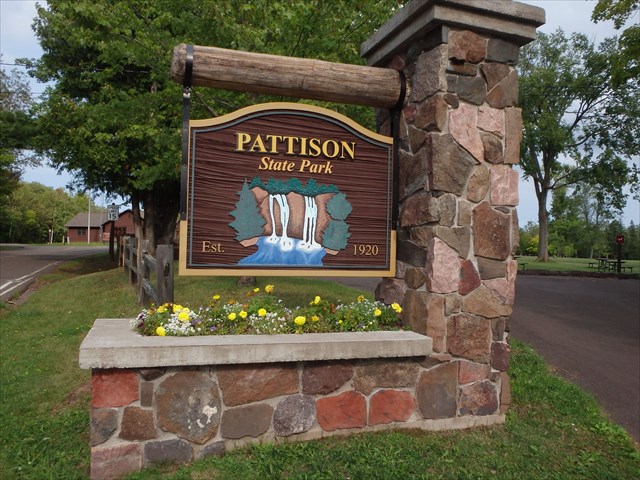
The Geocache Notification Form 2500-118 has been approved by the Pattison State Park Manager, Gervase Thompson, of the Wisconsin DNR.