|

🇨🇿 Přijměte pozvání na mojí další EarthCache z Pragensis série. Tentokrát vás seznámím s horninou zvanou travertin. 🇬🇧 I invite you to my next EarthCache from the Pragensis series. This time I will introduce you to a rock called travertine.
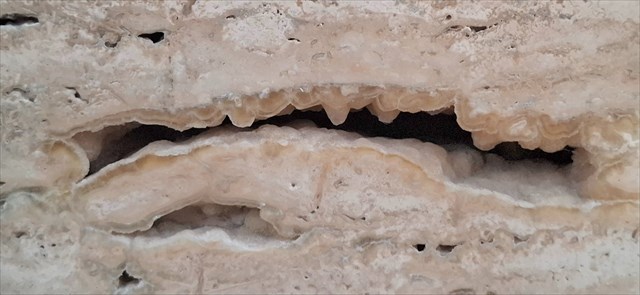
Travertin / Travertine
🇨🇿 Travertin je sedimentární hornina, která vzniká srážením uhličitanových minerálů z roztoku v podzemních a povrchových vodách a geotermálně vyhřívaných horkých pramenů. Má často vláknitý nebo soustředný vzhled a existuje v bílých, tříslových, krémově zbarvených a dokonce i rezavých variantách. Vzniká procesem rychlého srážení uhličitanu vápenatého, často u ústí horkého pramene nebo ve vápencové jeskyni.
Podobné (ale měkčí a extrémně porézní) usazeniny vytvořené z vody o okolní teplotě jsou známé jako opuka. Moderní travertin vzniká z geotermálně vyhřívaných přesycených alkalických vod se zvýšeným pCO2. Při vynoření vody odplyňují CO2 v důsledku nižšího pCO2, což má za následek zvýšení pH. Srážky mohou být zesíleny faktory vedoucími ke snížení pCO2, například interakce vzduch-voda u vodopádů může být důležitá, stejně jako fotosyntéza.
Kalcit i aragonit často tvoří důležitou část skladby travertinu. Aragonit se sráží přednostně při vysokých teplotách, zatímco kalcit dominuje při nižších teplotách. Když je travertin čistý a jemný, je bílý, ale často kvůli nečistotám je hnědý až žlutý.
🇬🇧 Travertine is a terrestrial sedimentary rock formed by the precipitation of carbonate minerals from solution in groundwater and surface waters and geothermally heated hot springs. It often has a fibrous or concentric appearance and exists in white, tan, cream-colored, and even rusty varieties. It is formed by the rapid precipitation of calcium carbonate, often at the mouth of a hot spring or in a limestone cave.
Similar (but softer and extremely porous) deposits formed from ambient-temperature water are known as marl. Modern travertine is formed from geothermally heated, supersaturated alkaline waters with an elevated pCO2. As the waters emerge, they degas CO2 due to the lower pCO2, resulting in an increase in pH. Because the solubility of carbonate decreases with increasing pH, precipitation occurs. Precipitation can be enhanced by factors leading to a decrease in pCO2, for example, air-water interaction at waterfalls may be important, as may photosynthesis.
Both calcite and aragonite often form an important part of the travertine composition. Aragonite precipitates preferentially at high temperatures, while calcite dominates at lower temperatures. When travertine is pure and fine, it is white, but often due to impurities it is brown to yellow.
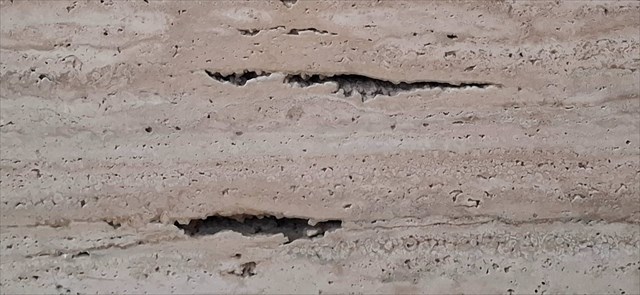
Pórovitost / Porosity
🇨🇿 Travertin je nápadně pórovitá hornina, protože vzniká srážením kalcitu z minerálních pramenů. Póry se tvoří v důsledku uvolňování oxidu uhličitého, což zanechává prostorné dutiny uvnitř horniny. Pórovitost ovlivňuje jak pevnost travertinu, tak i jeho nasákavost.
V rámci pozorování jednotlivých dutin travertinu lze pozorovat krystaly kalcitu a méně často aragonitu, které se vylučují ze zbytkových roztoků. Často se zde nacházejí i vysrážené oxidy železa (goethit, limonit), které dodávají hornině žlutohnědé zbarvení. V některých případech se vyskytuje také sádrovec nebo vrstvy opálu.
Pórovitost travertinu umožňuje dodatečné vyplňování dutin minerály a zásadně tak ovlivňuje vzhled horniny. Sekundárně se mohou tvořit mikrokrystalky křemene nebo jílové minerály, které mění travertinu jeho pevnost a barvu.
🇬🇧 Travertine is a remarkably porous rock because it is formed by the precipitation of calcite from mineral springs. Pores are formed due to the release of carbon dioxide, which leaves spacious cavities inside the rock. Porosity affects both the strength of travertine and its absorbency.
During the observation of individual travertine cavities, calcite and less often aragonite crystals can be observed, which are secreted from residual solutions. Precipitated iron oxides (goethite, limonite) are often found here, which give the rock a yellowish-brown color. Gypsum or layers of opal are also present in some cases.
The porosity of travertine allows additional filling of cavities with minerals and thus fundamentally affects the appearance of the rock. Microcrystals of quartz or clay minerals can be formed secondarily, which change the travertine's strength and color.
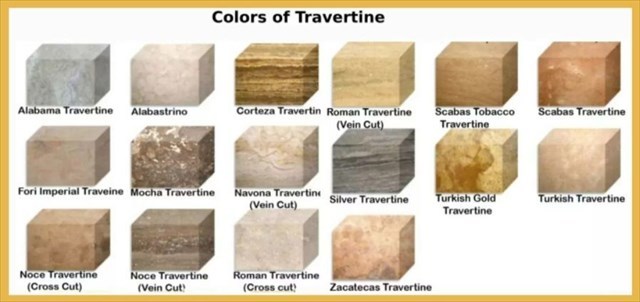
(https://www.geologyin.com/2024/04/travertine-properties-durability-uses.html)
Typy / Types
🇨🇿 Travertin se může pochlubit unikátní kresbou a celou řadou barevných tónů. Jeho odstíny se pohybují od světlé béžové přes hnědou, červenou až po světle šedou. Barva i kresba jsou ovlivňovány lokalitou těžby travertinu a také klimatickými podmínkami dané lokality. Kromě barvy se dá tato hornina rozlišovat i texturou a strukturou a to na následující typy -
Vrstevnatý travertin vzniká usazováním minerálů v jasně definovaných vrstvách, které mohou vykazovat různé barvy a textury. Tento typ je často používán v architektuře pro svou estetickou hodnotu.
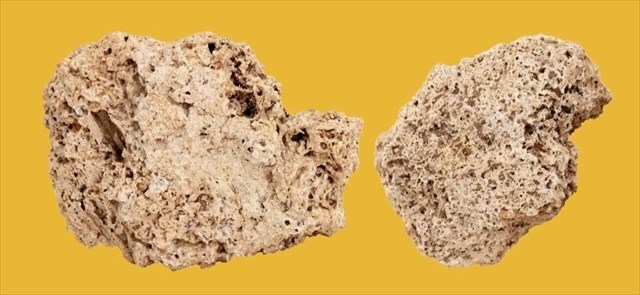
Pórovitý travertin charakterizuje vysoký podíl dutin a kanálků, které vznikají během srážení minerálů. Pórovitost dává travertinu lehkou strukturu a větší absorpční schopnosti.
Krystalický travertin má výrazně krystalickou strukturu, kde jsou minerální krystaly, jako je kalcit nebo aragonit, jasně viditelné. Krystalický travertin bývá hustší a tvrdší než jiné typy a je ceněn pro svou pevnost a estetiku.
🇬🇧 Travertine boasts a unique pattern and a range of color tones. Its shades range from light beige to brown, red, and light gray. Both the color and the pattern are influenced by the travertine mining location as well as the climatic conditions of the given location. However, apart from its color, travertine can also be distinguished by its texture and structure, and these are the following types -
Layered travertine is formed by the deposition of minerals in clearly defined layers, which can exhibit different colors and textures. This type is often used in architecture for its aesthetic value.
Porous travertine is characterized by a high proportion of cavities and channels, which are formed during the precipitation of minerals. Porosity gives travertine a light structure and greater absorption capabilities.
Crystalline travertine has a distinctly crystalline structure where mineral crystals such as calcite or aragonite are clearly visible. Crystalline travertine tends to be denser and harder than other types and is prized for its strength and aesthetics.
🇨🇿 Pro zalogování jako "found it" mi musíte na email přes profil poslat odpovědi na následující otázky a úkoly:
1) Vysvětlete vlastními slovy, co je to travertin a za jakých podmínek vzniká.
2) Dotkněte se jedné z travertinových desek na úvodních souřadnicích. Jak byste popsali její povrch?
3) Pozorujte v travertinu jednotlivé póry a dutiny. Popište, zda jsou něčím vyplněné a charakterizujte jejich tvar.
4) Do logu nahrajte fotku sebe nebo vaší GPS s travertinem na úvodních souřadnicích. 🇬🇧 For log as "found it" please send me answers for those questions via my profile:
1) Explain in your own words what travertine is and under what conditions it is formed.
2) Touch one of the travertine slabs at the initial coordinates. How would you describe its surface?
3) Observe the individual pores and holes in the travertine. Describe whether they are filled with something and characterize their shape.
4) Upload a photo of yourself or your GPS with the travertine at the initial coordinates to the log.
🇨🇿 Prosím, logujte ihned po odeslání odpovědí, díky. 🇬🇧 Please log in immediately after sending your answers, thanks.
Photos by DanielKotmel, 2025. Sources -
Travertine Properties [online]. Dostupné z https://www.britannica.com/science/travertine [cit. 01. 02. 2025].
Travertine Geology [online]. Dostupné z https://geologyscience.com/rocks/sedimentary-rocks/non-clastic-sedimentary-rock/travertine/ [cit. 01. 02. 2025]
Liptovské travertiny [online]. Dostupné z https://www.stoplusjednicka.cz/liptovske-travertiny-kamen-zrozeny-z-vrici-vody [cit. 01. 02. 2025]

|