Welcome to the Onondaga Escarpment, a stunning natural feature that showcases millions of years of geological history! As you stand here, you’re looking at the remnants of an ancient landscape formed by dynamic geological processes. The escarpment’s exposed rock layers reveal the long history of Earth’s evolution, giving you a window into the past.
Geological Features: The Onondaga Escarpment is a prominent feature in the landscape, which stretches from Lake Huron in the west to the Hudson River Valley in the east. It is formed primarily from limestone, dolostone, and shale deposits. The rocks you see today were laid down in a shallow, warm sea that once covered this region during the Devonian Period, about 380 to 400 million years ago. As you explore the escarpment, you'll notice distinct, horizontal layers in the rock—these layers tell the story of different environmental conditions throughout the Devonian era.
Limestone and Dolostone Layers: The thick, creamy-colored limestone layers that form much of the escarpment were deposited in shallow seas and are rich in fossilized marine life, including corals, brachiopods, and trilobites. The dolostone layers, which often appear as darker, more crystalline rocks, were formed when magnesium-rich waters altered the original limestone.
Shale Layers: In places, you’ll encounter shale, a fine-grained sedimentary rock, which indicates periods of quieter water, such as when the sea was deeper and less disturbed by currents.
Fossils: Look closely at the rock layers. If you spot fossils, they are remnants of the creatures that once lived in these ancient seas. Fossils can be found embedded within the limestone layers—most commonly marine fossils like brachiopods, corals, and trilobites.
The Geological History: The Onondaga Escarpment formed as part of the larger Appalachian Orogeny, an event where tectonic forces folded and uplifted large sections of the Earth's crust. Over millions of years, the region was shaped by cycles of sea-level changes, climate fluctuations, and erosion.
At its peak, the sea that covered this area was teeming with marine life. As the seas retreated and the land rose, the once-deep oceans gave way to more terrestrial environments. Over time, these processes of sedimentation, compression, and chemical changes formed the distinct layers you can observe today. These layers were further exposed by erosion, revealing the dramatic escarpment we see now.
What to Observe:
Layered Rock Formations: As you walk along the escarpment, pay close attention to the visible layers in the rock. These layers represent different periods of time and environmental conditions. The distinct horizontal lines mark where one type of sediment or rock was deposited on top of another.
Fossils in the Limestone: The Onondaga Limestone is rich in fossils. Look closely at the exposed rock surfaces, especially along cracks or weathered areas, where fossils might be more visible. You might see brachiopods, corals, or even ancient fish remains. The fossils provide a snapshot of the marine life that thrived here millions of years ago.
Erosion Patterns: Notice the way the rock layers have eroded. In some areas, the softer shale has eroded away more quickly, leaving behind harder limestone and dolostone outcrops. This creates a "stair-step" appearance in the landscape, where the escarpment rises in tiered formations.
View of the Surrounding Landscape: As you look beyond the escarpment, you'll notice how the landscape changes. The escarpment marks a distinct change in topography between the high plateau above and the lower lands below. In the distance, you may see the gentle curve of rolling hills. The landscape's form is a result of both the ancient seas and the more recent processes of erosion and glaciation.
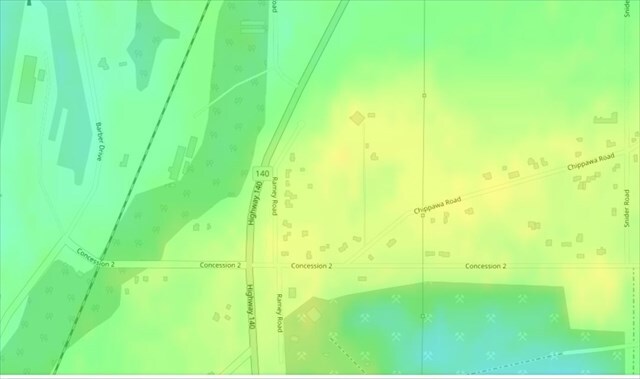
To log this EarthCache, please message me with the answers to the following questions, using the information that you find on the cache page and at the actual site.
1. Layer Identification: Describe at least two different layers you can observe along this rock outcroppinge escarpment. What are the differences in color and texture? Do you see a "stair-step" appearance here?
2. Fossils: If you spot any fossils, what type of fossil is it? (Provide a description or a photo, if possible!)
3. Erosion Features: Describe the erosion patterns you see. Are there areas where the rock is crumbling away, leaving behind jagged edges? How do the rock types seem to erode differently?
4. Visit Stage 2. What is your elevation?
5. Visit Stage 3 What is your elevation?
I hope that you found this earthcache interesting and educational.
Have fun and happy earthcaching!