
Welcome to my Earthcache! An Earthcache is a special type of geocache where there is no container to find - instead you are looking for a unique geological feature of the area and need to answer questions, as well as posting a picture, in order to claim the find. The goal of this Earthcache is to educate visitors about The Marcellus Formation, how and when it got here, and why it's important. All observations can be made from public areas. There is no reaspon to tresspass.
EARTHCACHE REQUIREMENTS
As with all of my ECs, I am not looking for PhD thesis level responses, but I am hoping that you take some time to enjoy the area and learn something new. Please include a list of all cachers with your answer, if answering for more than one caching name. There is no need to send individual answers.
To claim a 'find' for this Earthcache you must answer the following questions and send your answers in a message or email to the owner using the link at the top of the page. You can log your find with a photo at GZ. Send your answers to the tasks. I will be in contact if there is a problem, no need to wait for a response as long as the required photo is included in your log.
Observational Task
At the posted coordinates you will be standing in front of a shale wall, that is part of something called the Marcellus formation. Look at this wall of shale before you, and use your observations to answer the following questions:
Questions to Answer
1. Standing directly at GZ, estimate the height and width of the shale outcroppings visible along this road (hint: it's more than 10 feet!!)
2. Describe the color and layer depth of the shale you see - does it match the description of Marcellus shale ilocated below? Why or why not?
3. Is there any evidence of layers of material that aren't part of the Marcellus formation, such as soils, different types of rocks, or different layers exist either above the Marcellus formation, or blow the Marellus formation in this location? Why or why not?
4. Mandatory: Include a photograph of yourself, your GPS, a signature item, thumbs up, etc at the posted coordinates with the shale wall in the background. You do not need to show your face in the photo, but your photo must be unique to you. If you are caching with a group you can use the same photo, but each log must upload a photo.
Geology Lesson:
McKean is the principal oil-producing county of Pennsylvania with most of its production coming from the world famous Bradford Field in the north central part of the county. Natural gas is the principal product in the southern part of the county. But, WHY does it produce so much oil and gas?
Oil and gas are fossil fuels used for nearly every aspect of modern life. They’re formed from prehistoric plants and other organisms that died millions of years ago, via a process that involves heat, pressure and time. Many oil and gas fields were formed during the Mesozoic Era, between 252 and 66 million years ago. This era is also called the “Age of Dinosaurs,” but it’s a common misconception that fossil fuels were formed from their remains. In fact, these fuels are derived from algae, plankton, bacteria and plants. These organisms lived both on land and in lakes and oceans - during the Mesozoic, Pangaea began to break apart. The geological forces responsible for the breakup formed large rift valleys in the eastern part of the state. These areas of Pennsylvania were covered in huge lakes during the Late Triassic, which resulted in the algae, bacteria and plants being deposited.
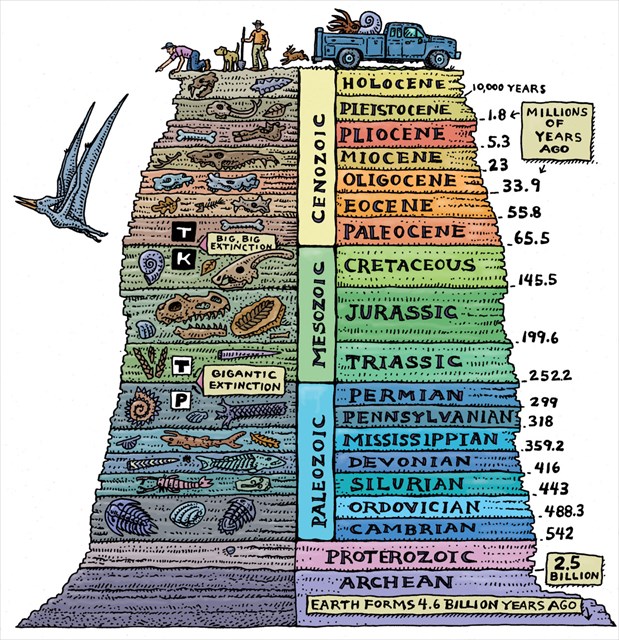
When they died, they either sank to the lake floors or ended up there after being carried to the lake by a river. After sinking to the lake bottom or seabed, they were often buried by layers of sediment. Over time, this organic material and sediment were compacted and became what’s known as source rocks.
These Source Rocks Include... Marcellus Shale!
Source rocks are sedimentary rocks—often shale or mudstone. This particular area of Pensylvannia is part of the Marcellus Formation or the Marcellus Shale - a Middle Devonian age unit of sedimentary rock.

The Marcellus consists predominantly of black shale and a few limestone beds, with some concentrations of iron pyrite. Like most shales, it tends to split easily along the bedding plane. Lighter colored shales in the upper portion of the formation tend to split into small thin-edged fragments after exposure. The total organic content of the Marcellus ranges from less than 1% in eastern New York, to over 11% in the areas near where you are standing.
The Marcellus shale is a type of rock that can wear away easily. It is usually found in low areas between the Appalachian ridges, creating valleys of soft rolling hills, such as the Alleghany mountains seen around Bradford. The surfaces made from this rock are often covered in soil that has washed down from higher, tougher rocks around it. The soil on top of the Marcellus rock and the layers above it is deep, has no stones, and is great for farming.
When scientists looked at the soil from the Marcellus rock, they found that it contained minerals like quartz and different types of clay. The soft Marcellus rock can also change the way rivers and streams flow. For example, rivers like Aquashicola Creek and McMichael Creek run straight through these valleys and are molded by the river flow.
The Marcellus Shale is often found on top of another type of rock called the Onondaga Formation, which was created during the Early Devonian. The area where these two rocks meet can look different; sometimes it’s a clear line, sometimes it gradually changes, and other times it looks like part of it has worn away.
The Marcellus formation does contain some fossils, which are a source of organic material. This formation contains enough organic material that, when subjected to heat and pressure over millions of years, can generate hydrocarbons.
Hydrocarbons are natural chemical compounds made up of hydrogen and carbon. Oil and gas are two types of hydrocarbons. The type of fuel generated by the source rock depends on the kind of organic matter it contains, as well as how much heat and pressure were involved in the rock’s burial history.
One such type of hydrocarbon is Pennsylvania Grade Crude Oil - a type of sweet crude oil. It is found primarily in the Appalachian basin and comes from the organic matter contained in Marcellus formation shale. Pennsylvania grade crude oil can be broken down into gasoline, kerosene, fuel oil, gas oil, wax distillate, cylinder stock (or bottoms) and other refined products such as white oil and paraffin.
This EarthCache has been prepared by a proud:
