|

🇨🇿 Vítejte u mé další EarthCache! Tentokrát vás seznámím se zkamenělými amonity v samotném centru Plzně. 🇬🇧 Welcome to my next EarthCache! This time I will introduce you to ammonite fossils in the center of Pilsen.
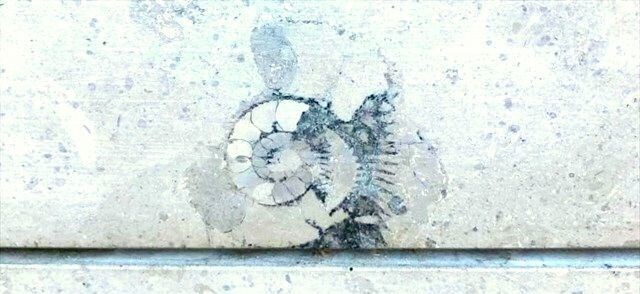
Vápenec / Limestone
🇨🇿 Vápenec je sedimentární hornina, která se z většiny skládá z minerálu zvaný kalcit (uhličitan vápenatý, CaCO3). Tato hornina je výsledkem dlouhodobého usazování organických materiálů, jako jsou korály, lastury a kostry malých mořských organismů, jakož i chemických usazenin z vody bohaté na vápník.
Vápenec vzniká za pomoci sedimentace, kdy se materiál pod vlivem tlaku a chemických reakcí proměňuje v kámen. Tento proces může trvat miliony let a výsledkem je hornina, která uchovává stopu dávných mořských ekosystémů.
Rozmanitost vápenců je obrovská, od čistě bílých přes šedé až po černé, v závislosti na příměsích, jako jsou jíl, písek nebo organické látky. Ve vápenci se mohou vyskytovat také fosilie, které můžeme pozorovat na obkladu budovy.
🇬🇧 Limestone is a sedimentary rock that is mostly composed of the mineral calcite (calcium carbonate, CaCO3). This rock is the result of the long-term deposition of organic materials such as corals, shells and skeletons of small marine organisms, as well as chemical deposits from calcium-rich water.
Limestone is formed by sedimentation, when material is transformed into stone under the influence of pressure and chemical reactions. This process can take millions of years and the result is a rock that preserves the traces of ancient marine ecosystems.
The variety of limestones is enormous, from pure white to gray to black, depending on impurities such as clay, sand or organic matter. Fossils can also occur in limestone, which we can observe on the cladding of a building.
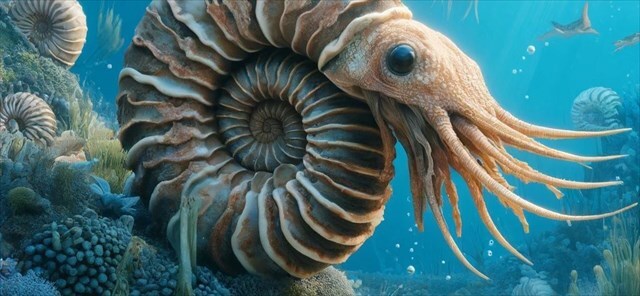
(AI generated image)
Amoniti / Ammonites
🇨🇿 Ammonoidy (neboli amoniti) jsou vyhynulou skupinou mořských měkkýšů ze třídy hlavonožců (Cephalopoda), podtřídy Ammonoidea. Jsou bližší příbuzní současným koleoidům (chobotnicím, sépiím, krakaticím) než nautiloidům, jako je Nautilus. Objevili se v devonu a vyhynuli na konci křídy v důsledku hromadného vymírání.
Amoniti žili ve spirálovitých schránkách rozdělených na komory, přičemž jejich tělo bylo v poslední komoře u otvoru. Jak rostli, vytvářeli nové, větší komory vpředu a izolovali ty starší. Tyto dutiny fungovaly jako plovák, přičemž sifon umožňoval regulovat množství plynu nebo kapaliny uvnitř a tím ovládat vztlak a pohyb ve vodě.
Schránky amonitů měly různé tvary a zdobení – od hladkých a rýhovaných po žebrované a ostnité. Většina druhů měla spirálovitě stočenou schránku, ale existovaly i částečně zatočené či rovné formy, nazývané heteromorfní. Tyto rozdíly ukazují na jejich přizpůsobivost a rozmanitost v prehistorických mořích.
🇬🇧 Ammonoids (also known as ammonites) are an extinct group of marine mollusks belonging to the class Cephalopoda, subclass Ammonoidea. They are more closely related to modern coleoids (octopuses, cuttlefish, and squids) than to shelled nautiloids like Nautilus. They first appeared in the Devonian period and went extinct at the end of the Cretaceous due to a mass extinction event.
Ammonites lived in spiral shells divided into chambers, with their bodies occupying the last chamber near the opening. As they grew, they built larger chambers at the front and sealed off the older ones. These chambers acted as buoyancy tanks, with a siphon allowing them to regulate the amount of gas or liquid inside, controlling their flotation and movement in the water.
Ammonite shells varied in shape and ornamentation, ranging from smooth and grooved to ribbed and spiny. Most species had tightly coiled shells, but some developed partially coiled or even straight forms, known as heteromorphic ammonites. These variations highlight their adaptability and ecological diversity in prehistoric oceans.
Zkameněliny / Fossils
🇨🇿 Fosilie jsou pozůstatky pravěkých organismů, které se nám dochovaly do současnosti. Zkamenělinou (tzv. fosilií) může být jak otisk v kameni (nepravá fosilie), tak kosti dinosaurů, či zkamenělé kmeny dávných stromů. Za fosilii je považován jakýkoliv, ať už celý, anebo neúplný pozůstatek živočišného či rostlinného původu starší více než 10 000 let (Pleistocén a dříve). Pozůstatek nám musí však podávat alespoň základní představu o tvaru a stavbě pravěkého organismu. Fosilie jsou tedy hmotné doklady existence života, který byl v geologické minulosti na naší planetě.
Nejčastěji vznikají tak, že živočich nebo rostlina uvízne v usazeninách, obvykle pod vodou. I když se masité části těla takto pohřbených živočichů rychle rozloží, tvrdé složky, kosti a skořápky zůstanou zachovány, v některých případech prakticky bez poškození. Většinou však prosakující voda částečně nebo úplně zanese spáry a dutiny různě zabarvenými minerály, a promění je v kámen. Tento proces se nazývá mineralizace, nebo fosilizace a má následující typy - (1) Silicifikace. Tekutina bohatá na oxid křemičitý vyplňuje struktury fosílie a v důsledku toho mohou vznikat velmi podrobné fosílie. Z této tekutiny bohaté na oxid křemičitý se tvoří krystaly křemene.
(2) Pyritizace. V tekutině převládá minerální síra a ve strukturách fosílie se mohou tvořit krystaly pyritu.
(3) Karbonizace. Minerály vápník, hořčík a občas železo nasycují fosílii, obvykle mohou tvořit kulatou strukturu kolem fosílie. 🇬🇧 Fossils are the remains of prehistoric organisms that have survived to this day. The fossil can be either stone (fossil fossil) or bones of dinosaurs, or fossilized tribes of ancient trees. Any fossil, whether whole or incomplete, of animal or plant origin older than 10,000 years (Pleistocene and earlier) is considered to be fossil. However, the remnant must give us at least a basic idea of the shape and construction of the prehistoric organism. Fossils are material evidence of the existence of life that was in the geological past on our planet. Fossils are the remains of organisms from the geological past that have survived to the present. In order for such a thing to happen at all, certain conditions and processes must exist that will allow and cause the formation of fossils and thus the retention of the remains of dead organisms.
They are most often formed when an animal or plant gets stuck in sediments, usually under water. Although the fleshy parts of the bodies of animals buried in this way decompose quickly, the hard components, bones and shells remain, in some cases practically undamaged. Mostly, however, the seeping water partially or completely fills the joints and cavities with differently colored minerals, turning them into stone. This process is called mineralization wich has following types - (1) Silicification. This is where the silica rich fluid fills the structures of the fossil, and as a result very detailed fossils can occur. Quartz crystals form from this silica rich fluid.
(2) Pyritisation. This is where the mineral suflur is predominent in the fluid, and pyrite crystals can form in the structures of the fossil.
(3) Carbonate. This is where the minerals calcium, magnesium and occasionally iron saturate the fossil, commonly these can form a round structure around the fossil.
🇨🇿 Pro zalogování jako "found it" mi musíte na email přes profil poslat odpovědi na následující otázky a úkoly:
1) Vysvětlete vlastními slovy, jak probíhá proces vzniku zkamenělin.
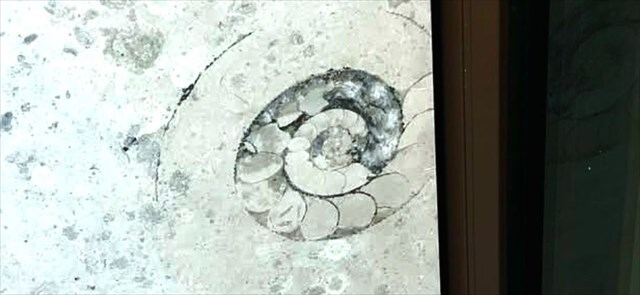
2) Pozorujte schránky amonitů na obkladu na úvodních souřadnicích. Jak byste charakterizovali jejich vzhled a tvar?
3) Na základě vašeho pozorování na místě určete, s jakým typem mineralizace se zde setkáváme [1, 2, 3].
4) Do logu nahrajte fotku sebe nebo vaší GPS s amonity na úvodních souřadnicích. 🇬🇧 For log as "found it" please send me answers for those questions via my profile:
1) Explain in your own words how the process of fossil formation occurs.
2) Observe the ammonite shells on the tile at the initial coordinates. How would you characterize their appearance and shape?
3) Based on your observations on site, determine what type of mineralization is encountered here [1, 2, 3].
4) Upload a photo of yourself or your GPS with the ammonites on the initial coordinates to the log.
🇨🇿 Prosím, logujte ihned po odeslání odpovědí, díky. 🇬🇧 Please log in immediately after sending your answers, thanks.
Photos by DanielKotmel, 2025. Sources -
Ammonite [online]. Dostupné z https://www.britannica.com/topic/Ammonite [cit. 01. 04. 2025)
Fossils [online]. Dostupné z https://www.britannica.com/science/fossil [cit. 01. 04. 2025]
Fossilization [online]. Dostupné z https://www.digitalatlasofancientlife.org/learn/the-process-of-fossilization/ [cit. 01. 04. 2025]
Sedimentary rock [online]. Dostupné z https://education.nationalgeographic.org/ resource/sedimentary-rock/ [cit. 01. 04. 2025]

|