Logging Requirements:
- Examine the stone closely and describe the color, texture, and grain size of the Merrivale Granite.
- Next, describe any xenolith(s) that are visible. Make sure to mention physical characteristics (size, color, shape...etc). What can the relative abundance of xenoliths tell is about the magma at the time of formation of the stone?
- Upload a photo with either yourself or a personal object at the Abraham Lincoln Statue. If caching in a group, the photo must prove each person visited the site.
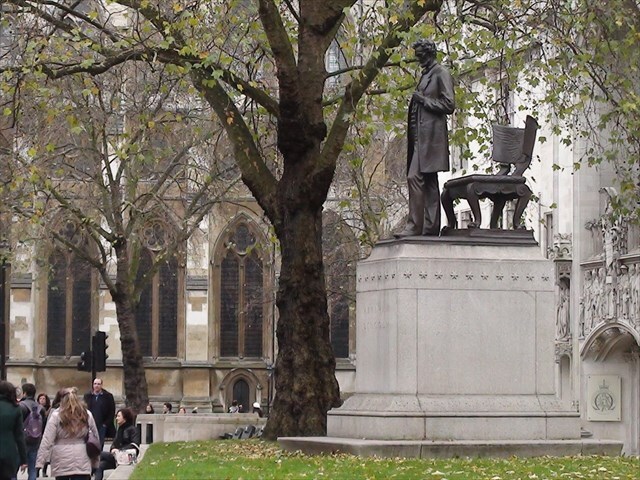
The Abraham Lincoln statue in Parliament Square is a bronze copy of Augustus Saint-Gaudens’ 1887 “Standing Lincoln” in Chicago. Lincoln is shown rising from a classical style chair, caught in a moment of thought just before speaking. The statue was unveiled in 1920 as a gesture of peace and goodwill, marking one hundred years of peace between the U.S. and the U.K. after the War of 1812.
The base of the Abraham Lincoln Statue was constructed from Merrivale Granite, which was quarried in Merrivale, Devon, United Kingdom. Merrivale Granite is part of the Dartmoor Granite, which formed during the late stages of the Variscan orogeny (mountain building event) around 280 million years ago. During this time, intense tectonic activity caused parts of the Earth's crust to melt, which produced large bodies of molten rock. One of these magma bodies rose slowly through the crust but didn’t reach the surface, instead cooling and solidifying underground to form granite. This process is known as plutonism, and occurred over a long period allowing minerals within the magma to crystallize and lock together as the rock hardened.
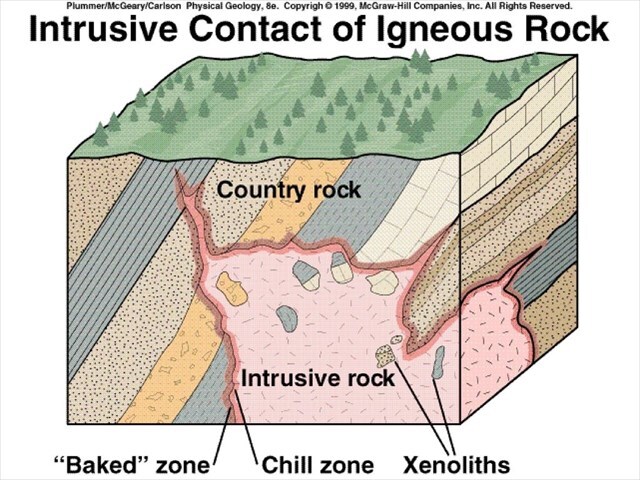
Xenoliths are fragments of rock that become trapped within a body of magma before it cools and solidifies. These foreign pieces come from the surrounding rock layers that the magma pushes through as it rises. Their formation depends on several factors including the temperature and composition of the magma, the type of surrounding rock, and how quickly the magma is moving. For example, if the magma isn’t hot enough to completely melt the surrounding rock, pieces can break off and survive the journey, becoming enclosed in the solidified igneous rock as xenoliths. Also, more resistant rocks (such as quartzite or peridotite) are less likely to melt and more likely to survive as xenoliths, while softer or more reactive rocks may partially dissolve or alter. Lastly the speed at which magma moves also matters, since faster moving magma gives the fragments less time to melt or react, which increases the chances that they remain preserved.