Skip to content

GTGS: Die geologische Form des Klusfelsens EarthCache

Hidden : 1/6/2026
Difficulty:
1 out of 5
Terrain:
3 out of 5

Size: Size:   other (other)

Join now to view geocache location details. It's free!

Watch

How Geocaching Works

Please note Use of geocaching.com services is subject to the terms and conditions in our disclaimer.

Geocache Description:


The german version of the listing is followed by an english one for our international visitors.

🇩🇪

GeoTour Goslar - Irgendwas mit Kaiser, Herz und Adler

Willkommen in Goslar am schönen Harzrand. Schön, dass du unsere Geotour besuchst.

(dieser Cache) Die geologische Form des Klusfelsens
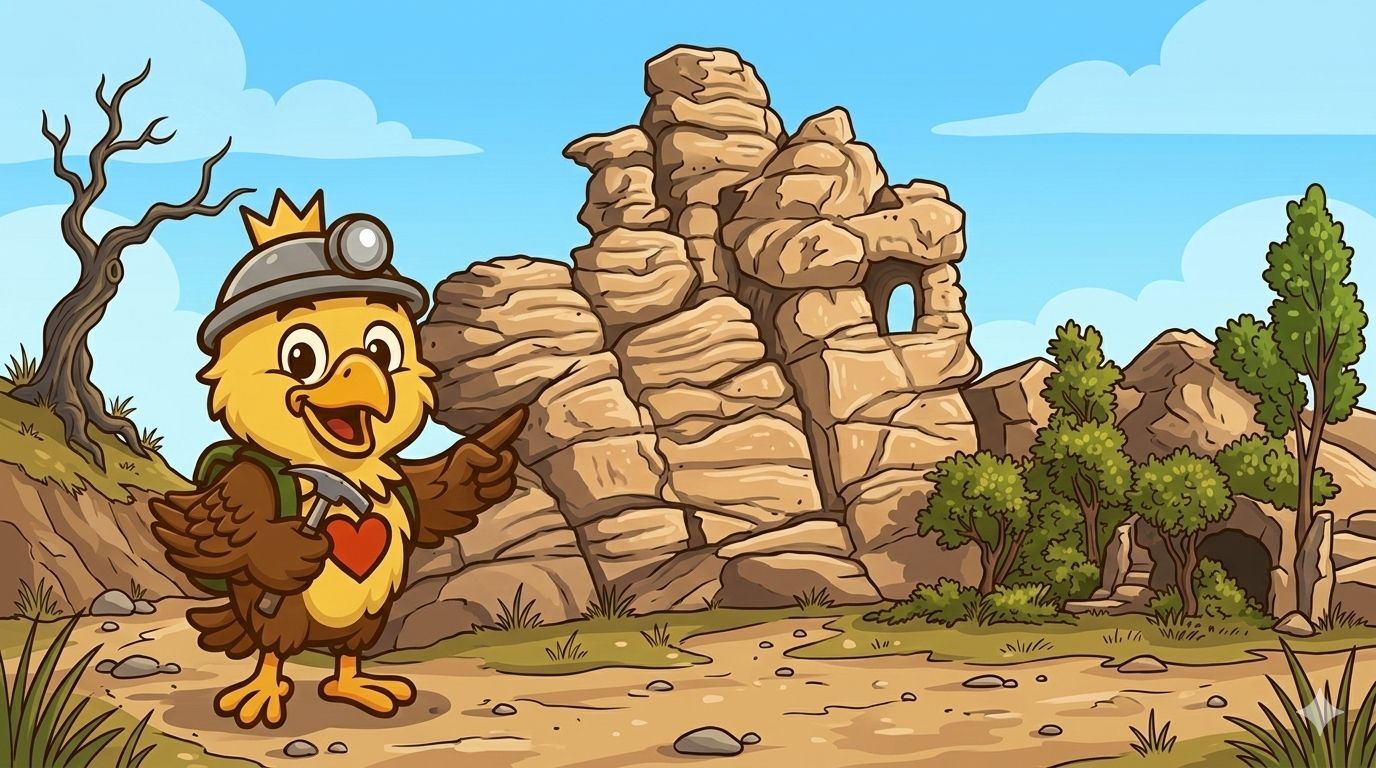
Illustration zum Cache

Fragen – nutzt den Wegpunkt für die Beantwortung der Fragen + den Weg hoch zur Kluskapelle.

1) Beschreibe mir den Klusfelsen anhand seiner Farbgebung und Oberflächenstruktur.

2) Bei dem Klusfelsen handelt es sich geologisch gesehen um eine Felsrippe. Welche Eigenschaften hat der Klusfelsen, dass dieser eindeutig als Felsrippe zugeordnet werden kann? Als Hilfe hilft die Abgrenzung zu den anderen vorgestellten Formen im Listing.

3) Schau dir den Sandsteinfelsen aus der Nähe an. Nutze dafür die Wege oberhalb der Kluskapelle. Beschreibe, wie grob oder fein die Körner des Sandsteins sind und wie porös (löchrig) er ist. Schlussfolgere anschließend, warum der Sandsteinfelsen trotz Wind und Wetter (Erosion) nicht so leicht abgetragen wird.

4) Mache ein Foto von dir selbst oder eines persönlichen Gegenstandes mit dem Klusfelsen im Hintergrund ohne direkt zu spoilern. Hinweis: Nach den neuen Regeln darf ein Foto wieder gefordert werden und ich finde es gehört beim EarthCache einfach dazu.

BESCHREIBUNG

Der Klusfelsen

Der Klusfelsen bei Goslar ist eine markante, bis zu 20 Meter hohe und rund 50 Meter lange Sandsteinformation, die sich deutlich aus dem umgebenden Gelände erhebt. Der Felsen besteht aus Hils-Sandstein der Unterkreidezeit (vor etwa 110 Millionen Jahren), der ursprünglich in einem flachen Meeresbereich abgelagert wurde. Tektonische Bewegungen im Alttertiär führten zu einer Aufstellung der Schichten, sodass der Sandstein heute nahezu senkrecht steht. Das widerstandsfähige, verkieselte Gestein enthält unter anderem das grünliche Mineral Glaukonit, ein Hinweis auf die damalige küstennahe Ablagerungsumgebung.

Geologisch betrachtet kann der Klusfelsen als typische Felsrippe beschrieben werden. Diese Form entsteht, wenn harte, steilgestellte Gesteinsschichten durch Erosion freigelegt werden, während weichere Nachbarschichten abgetragen werden. Auch beim Klusfelsen blieb der widerstandsfähige Sandstein als schmaler Rücken stehen, wodurch die heutige, beeindruckende Gestalt entstand.

Der Klusfelsen ist heute als Geotop geschützt und darf weder bestiegen noch beschädigt werden, um seine geologische und kulturhistorische Bedeutung zu bewahren.

Geologische Formen von Sandsteinfelsen im Harz

Im Harz gibt es viele verschiedene Arten von Sandsteinfelsen, die durch Bewegung der Erdkruste (Tektonik), durch die Eigenschaften des Gesteins und durch Verwitterung entstanden sind. Diese Felsen unterscheiden sich in Form, Entstehung und Aussehen. Zu den wichtigsten gehören Felsrippen, Felsnadeln, Felswände und Schichtrippen.

Felsrippe
Eine Felsrippe ist ein langer, schmaler Felsrücken aus festem, oft stark verkieseltem Sandstein. Sie entsteht, wenn sich harte Gesteinsschichten bei Bewegungen der Erdkruste aufstellen und durch Erosion freigelegt werden. Während weichere Nachbarschichten abgetragen werden, bleibt die widerstandsfähige Schicht als Rippe stehen.

Felsnadel
Eine Felsnadel ist ein schmaler, hoch aufragender Fels, der meist einzeln steht. Sie entsteht, wenn Wasser, Frost oder Wind das Gestein entlang von Spalten und Klüften langsam aushöhlen. So bleiben einzelne schlanke Türme aus besonders festem Sandstein zurück – typische Erscheinungen in Regionen mit starker tektonischer Bewegung.

Felswand
Eine Felswand ist eine große, steile oder sogar senkrechte Felsfläche. Sie besteht oft aus mehreren festen Sandsteinschichten, die durch weichere Lagen getrennt sind. Solche Wände entstehen, wenn Gestein durch Brüche oder die Bildung von Tälern freigelegt wird. Auch hier bestimmen Klüfte und Schichtgrenzen den Verlauf der Wand.

Schichtrippe
Eine Schichtrippe besteht aus mehreren steilgestellten Sandsteinbänken, die parallel zueinander verlaufen und als schmale Rücken aus der Landschaft herausragen. Zwischen ihnen liegen meist weichere Gesteine, die schneller verwittern. Diese typischen Strukturen bilden ganze Schichtrippenlandschaften mit abwechselnden Rücken und Mulden.

Quellen

https://de.wikipedia.org/wiki/Klusfelsen

https://www.naturpark-harz.de/files/rvh/downloads/geopark_infotafeln/Infotafeln%20alle%20LM/03_3_Klusfelsen_2021.pdf

https://www.lbeg.de/extras/geologie/downloads/geotope/Klusfelsen.pdf
Buch: Landschaften lesen

Über die GeoTour

Goslar vereint auf besondere Weise Geschichte, Landschaft und Technik. Die historische Altstadt, das Erzbergwerk Rammelsberg und das Oberharzer Wasserregal bilden gemeinsam ein einzigartiges Ensemble, das als UNESCO-Weltkulturerbe ausgezeichnet wurde und bis heute die Entwicklung der Region sichtbar macht.

Diese Geotour ist aus der Geocaching-Community heraus entstanden. Sie wurde von engagierten Cacherinnen und Cachern entworfen, entwickelt und getragen – mit dem Ziel, die Besonderheiten Goslars auf abwechslungsreiche Weise erlebbar zu machen und bekannte wie weniger bekannte Orte miteinander zu verbinden. Und unser Maskottchen Adelhard wird dich dabei begleiten.

Goslar ist immer eine Reise Wert, weil hier Treffen sich mehrere.

Wenn du Lust hast, teile doch deine schönsten Goslar-Momente in den sozialen Medien: #meingoslar #geocachinggoslar

Zusätzliche Informationen zu diesem Cache

🅿️ Um Schwie­rig­kei­ten mit An­woh­nern, Be­hör­den, Forst usw. aus dem Weg zu ge­hen, parkt bit­te an den an­ge­ge­be­nen Park­ko­or­di­na­ten und lauft zur Do­se.

📸 Dies ist ein vir­tu­el­ler Cache/Earth-Cache. Für das Log muss ein Fo­to ge­macht und hoch­ge­la­den wer­den.


🇬🇧

GeoTour Goslar - Something about Emperor, Heart, and Eagle

Welcome to Goslar at the beautiful edge of the Harz. We’re glad you are visiting our GeoTour.

(this Cache) The geological form of the Klus Rock

Illustration zum Cache

Questions – use the waypoint to answer the questions + the path up to the Klus Chapel.

1) Describe the Klus Rock based on its coloration and surface structure.

2) From a geological perspective, the Klus Rock is a rock ridge. What characteristics does the Klus Rock have that allow it to be clearly classified as a rock ridge? As a guide, it may help to distinguish it from the other forms presented in the listing.

3) Take a close look at the sandstone rock. To do this, use the paths above the Klus Chapel. Describe how coarse or fine the sandstone grains are and how porous (full of holes) it is. Then conclude why the sandstone rock is not easily eroded despite exposure to wind and weather.

4) Take a photo of yourself or a personal object with the Klus Rock in the background without directly giving it away. Note: According to the new rules, requesting a photo is allowed again, and I think it is simply part of an EarthCache.

DESCRIPTION

The Klus Rock

The Klus Rock near Goslar is a striking sandstone formation, up to 20 meters high and about 50 meters long, which rises prominently from the surrounding terrain. The rock consists of Hils sandstone from the Lower Cretaceous period (around 110 million years ago), which was originally deposited in a shallow marine environment. Tectonic movements during the early Tertiary period caused the layers to tilt, so that the sandstone now stands almost vertically. The resistant, silicified rock contains, among other things, the greenish mineral glauconite, an indication of the former near-coastal depositional environment.

From a geological point of view, the Klus Rock can be described as a typical rock ridge. This form develops when hard, steeply inclined rock layers are exposed by erosion while softer adjacent layers are worn away. In the case of the Klus Rock, the resistant sandstone remained as a narrow ridge, creating its present impressive shape.

Today, the Klus Rock is protected as a geotope and must not be climbed or damaged in order to preserve its geological and cultural-historical significance.

Geological Forms of Sandstone Rocks in the Harz

In the Harz Mountains, there are many different types of sandstone rock formations formed by movements of the Earth’s crust (tectonics), the properties of the rock, and weathering processes. These rocks differ in shape, origin, and appearance. The most important types include rock ridges, rock needles, rock walls, and stratified ridges.

Rock Ridge
A rock ridge is a long, narrow rock crest made of solid, often strongly silicified sandstone. It forms when hard rock layers are tilted by movements of the Earth’s crust and exposed by erosion. While softer neighboring layers are worn away, the resistant layer remains as a ridge.

Rock Needle
A rock needle is a narrow, towering rock that usually stands alone. It forms when water, frost, or wind gradually erode the rock along cracks and fissures. This leaves behind slender towers of particularly hard sandstone—typical features in regions with strong tectonic activity.

Rock Wall
A rock wall is a large, steep or even vertical rock face. It often consists of several solid sandstone layers separated by softer strata. Such walls form when rock is exposed through fractures or the formation of valleys. Joints and layer boundaries also determine the course of the wall.

Stratified Ridge
A stratified ridge consists of several steeply inclined sandstone beds running parallel to each other and protruding as narrow ridges from the landscape. Between them are usually softer rocks that weather more quickly. These characteristic structures form entire ridge landscapes with alternating crests and depressions.

Sources

https://de.wikipedia.org/wiki/Klusfelsen

https://www.naturpark-harz.de/files/rvh/downloads/geopark_infotafeln/Infotafeln%20alle%20LM/03_3_Klusfelsen_2021.pdf

https://www.lbeg.de/extras/geologie/downloads/geotope/Klusfelsen.pdf
Buch: Landschaften lesen

About the GeoTour

Goslar uniquely combines history, landscape, and technology. The historic old town, the Rammelsberg ore mine, and the Upper Harz Water Management System together form a unique ensemble, recognized as a UNESCO World Heritage Site, and still reveal the development of the region today.

This GeoTour originated from the geocaching community. It was designed, developed, and supported by dedicated cachers, with the goal of showcasing Goslar’s special features in an engaging way and connecting both well-known and lesser-known locations. And our mascot Adelhard will accompany you along the way.

Goslar is always worth a visit, because it is a place where many paths meet.

If you like, feel free to share your favorite Goslar moments on social media: #meingoslar #geocachinggoslar

Additional Information on this Cache

🅿️ To a­void dif­fi­cul­ties with lo­cal re­si­dents, au­tho­ri­ties, for­es­try, etc., please park at the in­di­ca­ted park­ing co­or­di­nates and walk to the con­tai­ner.

📸 This is a vir­tu­al cache/earth cache. For log­ging, a pho­to must be ta­ken and up­load­ed.


Adelhards Freunde – Das Team hinter der GeoTour Goslar sind (in alphabetischer Reihenfolge):
Antonia1710, baumbart2, ccc aR, dedi1510, Dennis994, Golgafinch, Grüne_Harzhexe, heduck, innina, JFrederik, Khamssin, LosSchilleros, oupio, pargada, per4man, postfranz, rangarius, Röder, schotti1, Sibylle4, SigmaAlphaPi, tassimo – unterstützt durch das MachMit!Haus Goslar.

GeoTour Coin


Entwurf / artist's impression

🇩🇪   Wer eine bestimmte Anzahl an Caches dieser GeoTour findet, kann eine exklusive GeoTour-Coin während der Öffnungszeiten in der Touristinformation (GOSLAR marketing gmbh), Historisches Rathaus, Markt 1, 38640 Goslar, erwerben. Aktuelle Informationen dazu findest du auf Adelhards Profil.

🇬🇧   Find a certain number of GeoTour caches to become eligible for an exclusive GeoTour coin, available during opening hours at the Tourist Information (GOSLAR marketing gmbh), Historisches Rathaus, Markt 1, 38640 Goslar. For the latest information, please check Adelhard’s profile.

Additional Hints (No hints available.)