
🪨 EarthCache: Fossils and Weathering in Uxmal
📍 Location: Uxmal Archaeological Site, Yucatán, Mexico
🌍 Geological Background: Fossils in the Building Limestone
The Pyramid of the Magician was built from local limestone – a biogenic sedimentary rock formed from the remains of marine organisms. What makes this especially interesting is that fossil structures can often be seen in the building stones, such as coral fragments, shells, or microscopic organisms (foraminifera). These fossils date back to a time when the Yucatán Peninsula was entirely submerged under a tropical shallow sea.
🔍 Visible Geological Features in the Structure
If you closely observe the stone surface of the pyramid, you can find many geologically interesting features:
-
Fossil inclusions: Small shells, coral remains, or calcified cavities – sometimes with concentric patterns.
-
Sedimentary structures: In some stones, you may notice thin layers or horizontal lines – indicating sediment deposition.
-
Stylolites (occasionally): Zigzag-shaped, dark lines in the rock that may have formed through pressure dissolution.
⛏️ Weathering – The Breakdown of Stone

Here is an example where the weathering is clearly visible.
Limestone is susceptible to different types of weathering:
-
Mechanical weathering: e.g. due to temperature changes or rainfall – causes cracks and flaking.
-
Chemical weathering: caused by acid rain or pollutants – forms soluble compounds and black crusts.
-
Biological weathering: plants, mosses, or lichens release acids that break down the stone.
These processes gradually lead to the erosion of structures, including the Pyramid of the Magician.
📝 Logging Tasks
-
Fossil observation: Search the stone surface for fossil structures in the limestone.
→ Describe what you see (shape, size, appearance). What kind of organism could it have been?
-
Sedimentary structures: Do you notice horizontal lines, layers, or other features that indicate sedimentation?
→ Describe their shape, orientation, and likely origin.
-
Geological context: Explain in your own words why fossil structures are visible in the building stone. How did they get there?
-
Identify weathering: Can you see black crusts, vegetation, or damage? Assign your observation to one type of weathering and justify your answer.
📸 Logging Requirements
- Send me your answers via the message centre.
- Upload a photo showing yourself or a personal item (e.g. GPS device, notebook, mascot). Your cache name must also be visible (e.g. on a piece of paper).
- Logs without answers and without a photo will be deleted.
⚠️ Note: All questions must be answered, and the photo uploaded. Incomplete logs will be deleted.

🪨 EarthCache: Fósiles y Meteorización en Uxmal
📍 Ubicación: Zona Arqueológica de Uxmal, Yucatán, México
🌍 Contexto Geológico: Fósiles en la Caliza de Construcción
La Pirámide del Adivino fue construida con caliza local – una roca sedimentaria biogénica formada a partir de restos de organismos marinos. Lo que hace esto especialmente interesante es que a menudo pueden observarse estructuras fósiles en las piedras del edificio, como fragmentos de coral, conchas o microfósiles como los foraminíferos. Estos fósiles datan de una época en la que la península de Yucatán estaba completamente sumergida bajo un mar tropical poco profundo.
🔍 Rasgos Geológicos Visibles en la Estructura
Si observas de cerca la superficie de piedra de la pirámide, puedes identificar varios rasgos geológicos interesantes:
-
Inclusiones fósiles: Pequeñas conchas, restos de coral o cavidades calcificadas – a veces con estructuras concéntricas.
-
Estructuras sedimentarias: En algunas piedras pueden observarse capas delgadas o líneas horizontales – indicio de deposición de sedimentos.
-
Estilolitos (ocasionalmente): Líneas oscuras en zigzag que podrían haberse formado por disolución bajo presión.
⛏️ Meteorización – La Descomposición de la Roca
Aquí puedes ver un buen ejemplo donde la meteorización es claramente visible.
La caliza es sensible a diferentes tipos de meteorización:
-
Mecánica: por cambios de temperatura o lluvias – provoca grietas y desprendimientos.
-
Química: causada por lluvia ácida o contaminantes – forma compuestos solubles y costras negras.
-
Biológica: las plantas, musgos o líquenes liberan ácidos que descomponen la piedra.
Estos procesos provocan con el tiempo la erosión de las estructuras, incluida la Pirámide del Adivino.
📝 Tareas para Registrar el Caché
-
Observación de fósiles: Busca estructuras fósiles en la superficie de la piedra caliza.
→ Describe lo que ves (forma, tamaño, apariencia). ¿Qué tipo de organismo podría haber sido?
-
Estructuras sedimentarias: ¿Ves líneas horizontales, capas u otras estructuras que indiquen sedimentación?
→ Describe su forma, orientación y posible origen.
-
Contexto geológico: Explica con tus propias palabras por qué se pueden ver fósiles en la piedra del edificio. ¿Cómo llegaron allí?
-
Identificación de meteorización: ¿Ves costras negras, vegetación o daños? Asígnalos a un tipo de meteorización y justifica tu observación.
📸 Condiciones de registro
- Envíame las respuestas a través del Centro de mensajes.
- Sube una foto tuya o de un objeto personal (por ejemplo, un GPS, una libreta o una mascota). Tu nombre de geolocalizador también debe ser visible (por ejemplo, en una hoja de papel).
- Los registros sin respuestas ni foto se eliminarán.
⚠️ Nota: Todas las preguntas deben ser respondidas y la foto debe subirse. Los registros incompletos serán eliminados.

🪨 EarthCache: Fossilien und Verwitterung in Uxmal
📍 Standort: Archäologische Zone Uxmal, Yucatán, Mexiko
🌍 Geowissenschaftlicher Hintergrund: Fossilien im Baukalkstein
Die Pyramide des Zauberers wurde aus regionalem Kalkstein erbaut – einem biogenen Sedimentgestein, das sich aus den Überresten von Meereslebewesen gebildet hat. Besonders spannend: Im verbauten Gestein sind häufig fossile Strukturen zu erkennen, wie etwa Korallenfragmente, Muschelschalen oder mikroskopisch kleine Organismen (Foraminiferen). Diese Fossilien stammen aus der Zeit, als die Yucatán-Halbinsel noch vollständig von einem tropischen Flachmeer bedeckt war
🔍 Sichtbare geologische Merkmale im Bauwerk
Wenn du die Oberfläche des Gesteins an der Pyramide genau betrachtest, kannst du viele geologisch interessante Merkmale erkennen:
-
Fossile Einschlüsse: Kleine Muscheln, Korallenreste oder kalkige Hohlräume – teils mit konzentrischer Struktur.
-
Sedimentstrukturen: In manchen Steinen lassen sich dünne Lagen oder horizontale Linien erkennen – ein Hinweis auf Ablagerungsschichten.
-
Stylolithen (vereinzelt): Zickzackartige, dunkle Linien im Gestein, die durch Drucklösung entstanden sein können.
⛏️ Verwitterung – Der Zerfall des Gesteins
Hier ein Beispiel wo die Verwitterung deutlich zu sehen ist.
Kalkstein ist empfindlich gegenüber verschiedenen Verwitterungsarten:
- Mechanische Verwitterung: z. B. durch Temperaturwechsel oder Regen – verursacht Risse und Abplatzungen.
- Chemische Verwitterung: durch sauren Regen oder Schadstoffe – bildet lösliche Verbindungen und schwarze Krusten.
- Biologische Verwitterung: Pflanzen, Moose oder Flechten geben Säuren ab, die den Stein zersetzen.
Diese Prozesse führen langfristig zur Erosion der Bauwerke, auch der Pyramide des Zauberers.
📝 Logging-Aufgaben
-
Fossilien-Sichtung: Suche am Bauwerk nach fossilen Strukturen im Kalkstein.
→ Beschreibe, was du siehst (Form, Größe, Aussehen). Welche Art von Organismus könnte es gewesen sein?
-
Sedimentstrukturen: Entdeckst du horizontale Linien, Schichten oder andere Strukturen, die auf die Ablagerung hindeuten?
→ Beschreibe ihre Form, Orientierung und vermutete Entstehung.
-
Geologischer Bezug: Erkläre in eigenen Worten, warum in diesem Bauwerk fossile Strukturen zu sehen sind. Wie kamen diese in den Stein?
- Witterungsspuren erkennen: Gibt es schwarze Krusten, Pflanzenbewuchs oder Schäden? Ordne sie einer Verwitterungsart zu. Begründe deine Erkenntniss.
📸 Logbedingungen
- Sende mir die Antworten via Message-Center.
- Lade ein Foto hoch, auf dem du selbst oder ein persönlicher Gegenstand (z. B. GPS-Gerät, Notizbuch, Maskottchen) zu sehen ist. Dein Cachername muss ebenfalls sichtbar sein (z. B. auf einem Zettel).
- Logs ohne Antworten und ohne Foto werden gelöscht.
⚠️ Hinweis: Alle Fragen müssen beantwortet und das Foto hochgeladen werden. Unvollständige Logs werden gelöscht.
Banner:
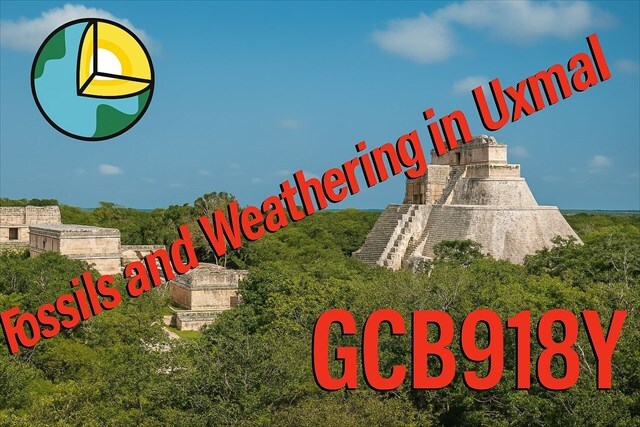
Für die Bannerfans von euch gibt es hier noch ein Banner das ihr gerne in eurem Profil einfügen könnt.
For the banner fans of yours, there is another banner that you can add to your profile.
<a href="http://coord.info/GCB918Y"><img src="https://s3.amazonaws.com/gs-geo-images/d43b661f-7895-48aa-af99-74e6b0f3d98e_l.jpg" alt="GCB918Y" width="307" height="198" /> </a>