|

🇨🇿 Vítejte u mé další EarthCache! Tentokrát vás seznámím s různými druhy krystalů v samotném srdci Brna. 🇬🇧 Welcome to my next EarthCache! This time, I will introduce you to various types of crystals in the very heart of Brno.
Alkalické živce (Larvikit)
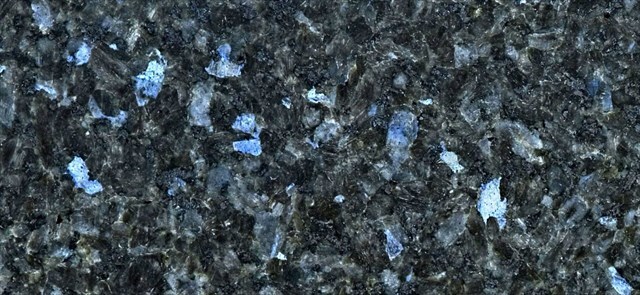
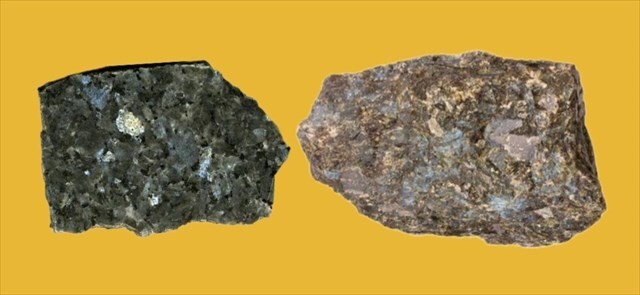
🇨🇿 Larvikit je hlubinná magmatická hornina, která vzniká pomalým chladnutím magmatu bohatého na alkalické živce v hlubokých vrstvách zemské kůře. Právě tyto podmínky umožňují vznik dobře vyvinutých krystalů živců, především plagioklasu s vysokým obsahem sodíku a draslíku. Díky pomalé krystalizaci mají tyto minerály dostatek času k růstu a vytvářejí strukturovanou texturu horniny. Krystaly bývají středně až hrubě zrnité a jejich velikost i orientace významně ovlivňují vzhled i fyzikální vlastnosti larvikitu.
Typickým znakem krystalů alkalických živců v larvikitu je labradorescence – optický jev, kdy se světlo rozptyluje a interferuje na mikroskopických lamelách uvnitř krystalové mřížky. Tento jev způsobuje proměnlivé odlesky v odstínech modré, stříbrné nebo zelené, které se mění v závislosti na úhlu dopadu světla. Intenzita a barva tohoto efektu závisí na chemickém složení, velikosti a vnitřním uspořádání krystalů. Výrazná labradorescence je znakem vysoké kvality a estetické hodnoty larvikitu.
Z mineralogického hlediska se jedná o horninu syenitického typu s nízkým obsahem křemene. Hlavními složkami jsou kromě plagioklasu také ortoklas a mikroklin, doprovázené minerály jako augit, nefelín, biotit, magnetit či amfibol. Tyto minerály ovlivňují výsledný vzhled larvikitu, ale optický efekt zajišťují výhradně alkalické živce. Jejich krystalická struktura a specifické chemické složení vzniklé v unikátních podmínkách pomalého chladnutí magmatu činí larvikit cennou dekorativní horninou.
🇬🇧 Larvikite is a deep-seated igneous rock formed by the slow cooling of magma rich in alkali feldspars deep within the Earth’s crust. This slow crystallization allows well-developed feldspar crystals, mainly plagioclase rich in sodium and potassium, to grow. The crystals are typically medium to coarse-grained, and their size and orientation strongly influence the rock’s texture and physical properties.
A distinctive feature of larvikite’s alkali feldspar crystals is labradorescence, an optical phenomenon where light scatters and interferes on microscopic lamellae within the crystal lattice. This creates shifting reflections in blue, silver, or green hues that change with the viewing angle. The intensity and color depend on the chemical makeup, crystal size, and internal structure.
Mineralogically, larvikite is a syenitic rock with low silica content. Besides plagioclase, it contains orthoclase and microcline, along with augite, nepheline, biotite, magnetite, and amphibole. While these minerals affect larvikite’s overall look, only the alkali feldspars produce the unique optical effect. Their crystal structure and special chemistry formed under slow magma cooling make larvikite a prized decorative stone.
Krystaly granátu
🇨🇿 Krystaly představují pevné látky, jejichž částice jsou uspořádány do pravidelné struktury, připomínající skládání kostek do přesného vzoru. Tento uspořádaný celek se nazývá krystalová mřížka. Vznik krystalu začíná tehdy, když se malé částice spojí a vytvoří drobný zárodek, ke kterému se následně připojují další částice. Tak krystal postupně narůstá, až dosáhne určité velikosti.
Každý typ krystalu má své specifické uspořádání, které určuje nejen jeho tvar, ale i fyzikální vlastnosti. Některé jsou průhledné a zářivé, jako například diamanty, jiné mají spíše matný vzhled.
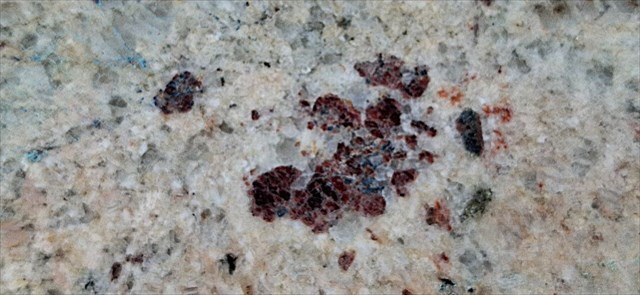
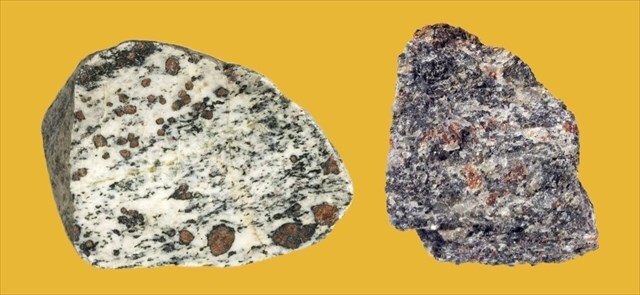
Krystaly granátu patří mezi nesosilikáty a krystalizují v krychlové soustavě, nejčastěji ve tvaru rombododekaedru. Tvrdost granátu se pohybuje mezi 6,5 až 7,5 podle Mohsovy stupnice, díky čemuž je poměrně odolný, avšak křehký. Lom bývá lasturnatý a lesk skelný až hedvábný. Barva krystalů závisí na chemickém složení a může být červená, hnědá, zelená, oranžová, žlutá, černá i bezbarvá.
Granáty tvoří skupinu minerálů se stejnou krystalovou strukturou, ale proměnlivým chemickým složením. Mezi nejznámější zástupce patří pyrop, almandin, spessartin, grosulár, andradit a uvarovit. Jejich obecný vzorec lze popsat jako X₃Y₂(SiO₄)₃, kde pozici X a Y zastupují různé kationty. Právě tyto substituce určují jejich barvu, hustotu i další fyzikální vlastnosti.
Všechny granáty mají velmi nedokonalou štěpnost a výrazně tříštivý lom. Hustota se pohybuje v rozmezí 3,4 až 4,6 g/cm³ v závislosti na konkrétním typu. Díky tvrdosti a křehkosti se granáty uplatňují nejen jako drahé kameny, ale i jako abraziva při broušení a řezání. Jejich krystaly se často vyskytují v metamorfovaných horninách, zejména v rulách a svorech, kde vznikají za vysokých tlaků a teplot.
🇬🇧 Crystals are solid materials whose particles are arranged in a precise and orderly pattern, much like stacking blocks into an exact formation. This organized structure is known as a crystal lattice. A crystal begins to form when tiny particles cluster together to create a small nucleus, which then attracts more particles. Over time, the crystal grows until it reaches a noticeable size.
Each type of crystal has a unique internal arrangement that defines not only its shape but also its physical properties. Some crystals are transparent and sparkling, like diamonds, while others have a more muted, matte finish. These differences arise from the specific way their atoms are bonded and arranged.
Garnet crystals belong to the nesosilicate mineral group and typically crystallize in the cubic system, often forming rhombdodecahedron shapes. They have a hardness between 6.5 and 7.5 on the Mohs scale, making them relatively durable but still somewhat brittle. Their fracture is conchoidal, and their luster ranges from glassy to silky. The color of garnets varies widely depending on their chemical makeup, appearing in shades of red, brown, green, orange, yellow, black, or even colorless.
Lineace krystalů
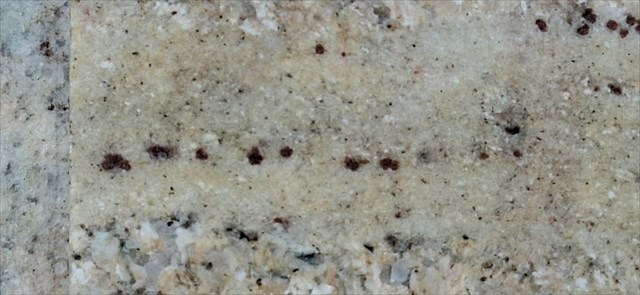
🇨🇿 Lineace představuje směrové uspořádání minerálů v hornině, které vzniká během metamorfních procesů a deformací. Tento jev odráží působení tlaků a směr deformace, přičemž minerály se během metamorfózy často orientují paralelně k hlavním směrovým silám. Takové uspořádání ovlivňuje jak texturu, tak i fyzikální vlastnosti horniny.
Různé minerály reagují na tlak a teplotu odlišně, ale často se společně uspořádávají do lineárních struktur, které lze vidět jako pásy nebo pruhy v hornině. Tato lineace je důležitým ukazatelem geologických podmínek a může pomoci při rekonstrukci deformací, kterým hornina prošla během své geologické historie.
Vznik lineace je spojen s procesem růstu a přeuspořádání krystalů pod vlivem maximálního napětí. Díky této orientaci se minerály stávají uspořádanými do směru deformace, což vytváří charakteristické lineární vzory.
🇬🇧 Lineation represents the directional arrangement of minerals within a rock that forms during metamorphic processes and deformation. This phenomenon reflects the influence of pressure and the direction of deformation, with minerals often aligning parallel to the main stress directions during metamorphism. Such an arrangement affects both the texture and physical properties of the rock.
Different minerals respond differently to pressure and temperature but often align together into linear structures visible as bands or stripes within the rock. This lineation is an important indicator of geological conditions and can assist in reconstructing the deformations the rock has undergone throughout its geological history.
The formation of lineation is associated with the growth and reorientation of crystals under the influence of maximum stress. Because of this orientation, minerals become aligned in the direction of deformation, creating characteristic linear patterns.

Tvary krystalů
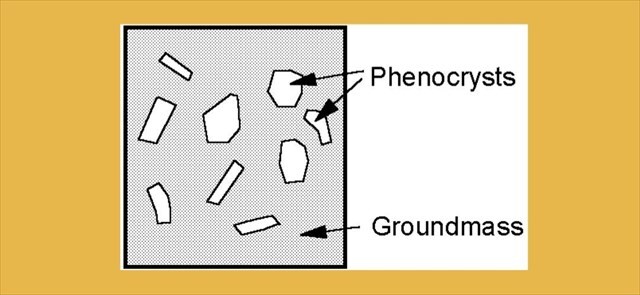
🇨🇿 Vznik krystalů začíná tím, že se malé částice (jako malé stavební dílky) spojí dohromady, aby vytvořily malý fenokryst. Poté se další částice připojují k tomuto malému krystu, aby ho zvětšily. To pokračuje, dokud fenokryst neroste do požadované velikosti a jednoho ze čtyř následujících tvarů -
A) Idiomorfní. Krystalové plochy jsou dobře definované. To znamená, že krystaly se vyvinuly volně uvnitř magmatu bez jakéhokoliv narušení.
B) Subidiomorfní. V tomto případě nejsou všechny plochy krystalu dokonalé, ale jsou stále částečně rozpoznatelné. To znamená, že při svém vývoji subidiomorfní krystaly narazily na jiné krystaly, které je omezily. Tyto krystaly se vytvořily v magmatu až po idiomorfních krystalech.
C) Allotriomorfní. Nemají definovaný tvar, protože během svého vzniku byly omezeny ve všech směrech. Jsou poslední, které se v magmatu vytvořily.
D) Skeletální. Plochy jsou dobře definované jako u idiomorfů, ale v tomto případě se krystal úplně nevyvinul, protože obsahuje dutiny. Tyto dutiny jsou obvykle vyplněny základní hmotou. Krystaly se totiž vyvinuly brzy, ale kvůli rychlému ochlazení nedokončily svůj vývoj. Mohl také chybět dostatek chemických prvků potřebných k dokončení jejich vývoje.
🇬🇧 The formation of crystals begins when small particles (like tiny building blocks) join together to form a small phenocryst. Then, additional particles attach to this small crystal, causing it to grow. This process continues until the phenocryst reaches the desired size and one of the following four shapes - A) Idiomorphic. Crystal faces are well defined. This means the crystals developed freely inside the magma without any disturbance. B) Subidiomorphic. In this case, not all crystal faces are perfect, but they are still partially recognizable. This means that during their growth, subidiomorphic crystals encountered other crystals that limited their development. These crystals formed in the magma after the idiomorphic ones. C) Allotriomorphic. They do not have a defined shape because they were restricted in all directions during their formation. They are the last to form in the magma. D) Skeletal. The faces are well defined like in idiomorphic crystals, but in this case the crystal did not fully develop because it contains cavities. These cavities are usually filled with the groundmass. These crystals developed early but did not complete their growth due to rapid cooling. There might also have been a lack of sufficient chemical elements needed to complete their development.
🇨🇿 Pro zalogování jako "found it" mi musíte na email přes profil poslat odpovědi na následující otázky a úkoly:
1) Vysvětlete, co jsou to krystaly a jak probíhá jejich vznik.
2) Charakterizujte minerální složení krystalů v larvikitu na úvodkách a krystalů granátu na Stage 2.
3) Pozorujte larvikit v okolí úvodních souřadnic. Jaké barvy vykazují odlesky alkalických živců při lámání světla na jejich povrchu?
4) Prozkoumejte alkalické živce blíže a definujte jejich tvar [A, B, C, D] a typ larvikitu, se kterým se zde setkáváme.
5) Popište, co je to lineace krystalů. Setkáváme se s tímto jevem i zde u larvikitu? Vysvětlete.
6) Přesuňte se ke granátům na Stage 2 a definujte jejich typ a tvar [A, B, C, D].
7) Už víte, co je to lineace. Kolik % krystalů granátů na celém obkladu podle vás podléhá tomuto jevu?
8) Do logu připojte fotografie sebe nebo vaší GPS s krystaly na úvodních souřadnicích a Stage 2. 🇬🇧 For log as "found it" please send me answers for those questions via my profile:
1) Explain what crystals are and how they form. 2) Characterize the mineral composition of larvikite crystals at the starting coordinates and garnet crystals at Stage 2. 3) Observe the larvikite around the starting coordinates. What colors do the reflections of alkali feldspars display when light refracts on their surface? 4) Examine the alkali feldspars more closely and define their shape [A, B, C, D] and the type of larvikite found here. 5) Explain what crystal lineation is. Do we encounter this phenomenon here in the larvikite? Explain. 6) Move to the garnets at Stage 2 and define their type and shape [A, B, C, D]. 7) You already know what lineation is. What percentage of the garnet crystals in the whole cladding do you think exhibit this phenomenon? 8) Attach a photo of yourself or your GPS with the crystals at the initial coordinates and at Stage 2 to your log.
🇨🇿 Prosím, logujte ihned po odeslání odpovědí, díky. 🇬🇧 Please log in immediately after sending your answers, thanks. Photos by DanielKotmel, 2025. Zdroje - Výlevné horniny [online]. Dostupné z https:/www.sciencedirect.com/topics/earth-and-planetary-sciences/phenocryst [cit. 25. 06. 2025]
Crystal shape [online]. Dostupné z https://learningzone.oumnh.ox.ac.uk/crystal-shape [cit. 25. 06. 2025]
Larvikite [online]. Dostupné z https://geoparken.com/main-geology/ larvikite [cit. 25. 06. 2025]
Garnets [online]. Dostupné z https://www.britannica.com/science/garnet [cit. 25. 06. 2025]
Metamorphic rock [online]. Dostupné z https://www.britannica.com/science/metamorphic-rock [cit. 25. 06. 2025]
 |