
🌍 EarthCache: The Marble of the Blue Mosque – Pillars of Permanence
Location: Sultan Ahmed Mosque (Blue Mosque), Istanbul
🕌 Introduction
The Sultan Ahmed Mosque – better known as the Blue Mosque – is one of the most iconic buildings of the Ottoman Empire. While the famous blue tiles dominate the visuals, the marble used in the structure, especially the four massive pillars inside the prayer hall, tells its own geological story.
🧱 What is Marble?
Marble is a metamorphic rock formed when limestone is subjected to intense pressure and heat. This transforms the calcite (CaCO₃) crystals through recrystallization.
- Original layers and fossils are destroyed,
- A new, dense, crystalline texture is formed,
- The result is a smooth, polishable, durable material.
🔍 Why are there no fossils in marble?
Although limestone can contain fossils, the high pressure and temperature during metamorphosis dissolve and destroy them completely. Thus, true marble contains no fossils.
🪨 The Marble of the Blue Mosque
The four large pillars are made of high-quality, light-colored marble – most likely from the Marmara Islands (Proconnesus), famous since antiquity for their fine marble. These pillars:
- Are massive and finely polished,
- Have delicate grey veining,
- Show exceptional craftsmanship,
- Contribute to the mosque’s grandeur and spiritual feel.
👁 Observation Tasks On Site
To log this EarthCache, please answer the following five observation questions at the four marble pillars in the main prayer hall:
- What colors and textures can you see in the marble? Describe the veining and patterns.
- How does the surface feel and look? Shiny, smooth, rough?
- Can you see any fossils? If not, why can’t real marble contain fossils?
- What do you notice about how the marble was shaped or polished?
- Compare this marble with other stone used in the mosque. Is it different?
📸 Logging Requirements
To log this cache:
- 📩 Send answers to the five questions above (via message or included in your log).
- 📷 Upload a log photo of either yourself or a personal object (e.g. GPS, notebook, hat) in front of one of the marble pillars.
!!! Your cacher name should be visible in the photo (e.g. note, display, hand, etc.). Do not add it digitally afterward!
!!! Dein Cacher-Name soll auf dem Foto zu sehen sein (z. B. auf einem Zettel, auf einem Display, auf deiner Hand usw.). Füge ihn nicht nachträglich digital hinzu!


Wichtig! Das Objekt muss im Hintergrund zu erkennen sein.
Important! The object must be visible in the background.
Important ! L'objet doit être visible à l'arrière-plan.
¡Importante! El objeto debe verse en el fondo.
هام! يجب أن يكون الكائن مرئيًا في الخلفية.
Σημαντικό! Το αντικείμενο πρέπει να είναι ορατό στο φόντο.
Importante! L'oggetto deve essere riconoscibile sullo sfondo.
Važno! Predmet mora biti vidljiv u pozadini.
🧭 Summary
Although the marble is not the most iconic element of the Blue Mosque, it plays a crucial role in the building's architectural language: high-quality, symbolic, masterfully crafted, and likely from the historically rich quarries of the Marmara Islands.
📌 Notes
- This is an active place of worship. Dress respectfully and avoid prayer times.
- Entry is free, but expect lines at busy times.
- Photography is allowed, but please be respectful and avoid flash during prayers.

🌍 EarthCache: Sultanahmet Camii'nin Mermeri – Kalıcılığın Sütunları
Konum: Sultanahmet Camii (Mavi Camii), İstanbul
🕌 Giriş
Sultanahmet Camii – yani Mavi Camii – Osmanlı mimarisinin en önemli eserlerinden biridir. Genellikle meşhur mavi çiniler dikkat çeker, fakat caminin içindeki dört büyük mermer sütun da başlı başına jeolojik bir hikâye anlatır.
🧱 Mermer Nedir?
Mermer, kalker gibi tortul taşların yüksek ısı ve basınca maruz kalmasıyla oluşan metamorfik (başkalaşım) bir kayaçtır. Bu süreçte:
- Katmanlar ve fosiller yok olur,
- Kristaller yeniden oluşur,
- Yoğun, düzgün ve cilalanabilir bir yapı ortaya çıkar.
🔍 Neden Fosil İçermez?
Kalker taşı bazen fosil içerebilir. Fakat başkalaşım sırasında bu yapılar tamamen çözünür ve kaybolur. Bu nedenle gerçek mermerde fosil bulunmaz.
🪨 Mavi Camii’ndeki Mermer
Dört büyük sütun, muhtemelen Marmara Adaları’ndan (Prokonnesos) çıkarılmış, açık renkli ve kaliteli mermerden yapılmıştır. Bu mermer:
- Büyük ve etkileyici boyuttadır,
- İnce gri damarlar içerir,
- Ustalıkla işlenmiştir,
- Caminin ruhani atmosferine katkı sağlar.
👁 Gözlem Görevleri
Bu EarthCache’i loglamak için ana ibadet salonundaki dört mermer sütunu gözlemleyip aşağıdaki beş soruyu yanıtlayınız:
- Mermerin renkleri ve desenleri nasıldır? Damarları tarif edin.
- Yüzeyi nasıldır? Parlak mı, pürüzlü mü, düz mü?
- Fosil görebiliyor musunuz? Eğer yoksa, neden mermerde fosil olamaz?
- İşçilikle ilgili dikkatinizi çeken bir detay var mı?
- Caminin diğer taşlarıyla karşılaştırdığınızda farklar neler?
📸 Loglama Şartları
- 📩 Yukarıdaki 5 soruya yanıt verin (mesajla ya da log içinde).
- 📷 Kendinizin veya özel bir eşyanızın (örneğin GPS, not defteri) sütunlardan biri önünde fotoğrafını yükleyin.
!!! Your cacher name should be visible in the photo (e.g. note, display, hand, etc.). Do not add it digitally afterward!
!!! Dein Cacher-Name soll auf dem Foto zu sehen sein (z. B. auf einem Zettel, auf einem Display, auf deiner Hand usw.). Füge ihn nicht nachträglich digital hinzu!
Wichtig! Das Objekt muss im Hintergrund zu erkennen sein.
Important! The object must be visible in the background.
Important ! L'objet doit être visible à l'arrière-plan.
¡Importante! El objeto debe verse en el fondo.
هام! يجب أن يكون الكائن مرئيًا في الخلفية.
Σημαντικό! Το αντικείμενο πρέπει να είναι ορατό στο φόντο.
Importante! L'oggetto deve essere riconoscibile sullo sfondo.
Važno! Predmet mora biti vidljiv u pozadini.
🧭 Sonuç
Her ne kadar mermer camideki en dikkat çekici öge olmasa da, yüksek kalitesi, sembolik anlamı ve işçilikteki ustalık ile yapının mimarisinde önemli bir yere sahiptir. Mermerin kökeni muhtemelen Marmara Adaları'ndaki köklü ocaklara dayanmaktadır.
📌 Notlar
- Burası aktif bir ibadet yeridir. Saygılı davranın, kıyafetinize dikkat edin.
- Giriş ücretsizdir, ancak yoğun saatlerde sıra olabilir.
- Fotoğraf çekimi serbesttir, ancak flaşsız ve saygılı olun.

🌍 EarthCache: Der Marmor der Blauen Moschee – Säulen der Beständigkeit
Ort: Sultan-Ahmed-Moschee (Blaue Moschee), Istanbul
🕌 Einleitung
Die Sultan-Ahmed-Moschee – besser bekannt als Blaue Moschee – ist eines der ikonischsten Bauwerke des Osmanischen Reichs. Während die berühmten blauen Fliesen auffallen, erzählen die vier massiven Marmorsäulen im Inneren der Gebetshalle ihre eigene geologische Geschichte.
🧱 Was ist Marmor?
Marmor ist ein metamorphes Gestein, das aus Kalkstein durch hohen Druck und Hitze entsteht. Dabei:
- werden Fossilien und Schichtungen aufgelöst,
- entsteht ein feinkristallines Gefüge,
- wird ein homogenes, gut polierbares Material geschaffen.
🔍 Warum enthält Marmor keine Fossilien?
Kalkstein kann Fossilien enthalten. Doch bei der Umwandlung zu Marmor werden diese durch die Hitze und Rekristallisation zerstört. Echter Marmor enthält daher keine Fossilien.
🪨 Der Marmor der Blauen Moschee
Die vier Säulen bestehen aus hochwertigem, hellgrauem Marmor, vermutlich aus den Marmara-Inseln (Prokonnesos). Sie zeichnen sich aus durch:
- ihre monumentale Größe,
- feine graue Äderungen,
- perfekte Verarbeitung,
- ihren Beitrag zur spirituellen Atmosphäre der Moschee.
👁 Beobachtungsaufgaben vor Ort
Um diesen EarthCache zu loggen, beantworte folgende 5 Beobachtungsfragen bei den vier großen Marmorsäulen im Gebetsraum:
- Welche Farben und Muster erkennst du im Marmor?
- Wie fühlt sich die Oberfläche an – glänzend, rau, glatt?
- Sind Fossilien sichtbar? Wenn nicht, warum enthält Marmor keine?
- Wie wirkt die Bearbeitung – sind Politur oder Werkspuren sichtbar?
- Unterscheidet sich der Marmor von anderen Gesteinen in der Moschee?
📸 Loggingbedingungen
- 📩 Beantworte die fünf Fragen per Nachricht oder in deinem Log.
- 📷 Lade ein Foto von dir oder einem persönlichen Gegenstand (z. B. GPS, Notizbuch) vor einer der Säulen hoch.
!!! Your cacher name should be visible in the photo (e.g. note, display, hand, etc.). Do not add it digitally afterward!
!!! Dein Cacher-Name soll auf dem Foto zu sehen sein (z. B. auf einem Zettel, auf einem Display, auf deiner Hand usw.). Füge ihn nicht nachträglich digital hinzu!
Wichtig! Das Objekt muss im Hintergrund zu erkennen sein.
Important! The object must be visible in the background.
Important ! L'objet doit être visible à l'arrière-plan.
¡Importante! El objeto debe verse en el fondo.
هام! يجب أن يكون الكائن مرئيًا في الخلفية.
Σημαντικό! Το αντικείμενο πρέπει να είναι ορατό στο φόντο.
Importante! L'oggetto deve essere riconoscibile sullo sfondo.
Važno! Predmet mora biti vidljiv u pozadini.
🧭 Fazit
Obwohl der Marmor nicht das ikonischste Element der Blauen Moschee ist, spielt er eine entscheidende Rolle in der architektonischen Sprache des Baus: hochwertig, symbolträchtig, handwerklich meisterhaft verarbeitet und wahrscheinlich aus dem traditionsreichen Steinbruch der Marmara-Inseln.
📌 Hinweise
- Die Moschee ist eine aktive Gebetsstätte – bitte respektvoll kleiden und verhalten.
- Eintritt ist kostenlos, ggf. mit Wartezeiten.
- Fotografieren ist erlaubt – bitte ohne Blitz und mit Rücksicht.
Banner:
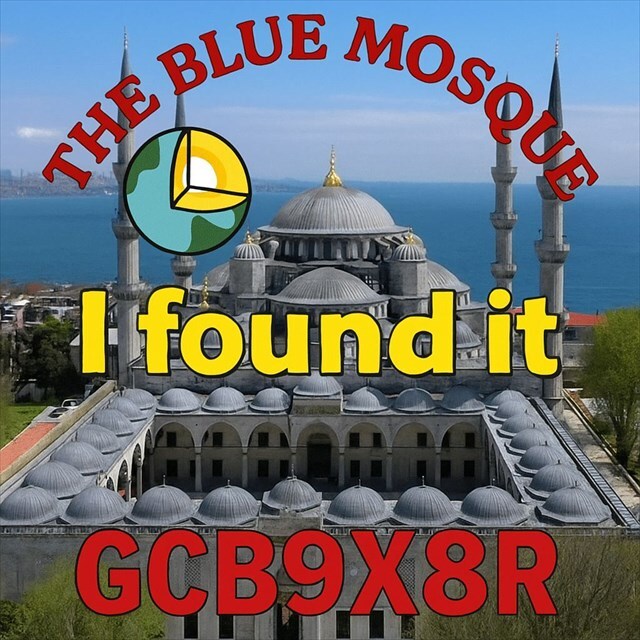
Für die Bannerfans von euch gibt es hier noch ein Banner das ihr gerne in eurem Profil einfügen könnt.
For the banner fans of yours, there is another banner that you can add to your profile.
<a href="http://coord.info/GCB9X8R"><img src="https://s3.amazonaws.com/gs-geo-images/64326d00-fd80-473f-b676-f8eb8b20d000_l.jpg" alt="GCB9X8R" width="307" height="198" /> </a>
