
🌍 EarthCache: River Dynamics of the Chao Phraya
Coordinates:
📍 N 13° 46.160′ E 100° 29.800′
(Eastern foot of Rama VIII Bridge, riverside promenade with clear river view)
🧭 Introduction:
The Chao Phraya River is Thailand’s most important waterway — economically, historically, and geologically. The Bangkok area was formed over thousands of years by sediment deposits in a wide alluvial plain. Rivers like the Chao Phraya carry not only water, but also sediment: clay, silt, sand, and organic material, which shape the landscape and change it over time.
🪨 Geological Background:
The Bangkok region lies within the Chao Phraya alluvial plain — a flat lowland formed by river sediments. The subsurface here consists of soft, water-rich clays known as the Bangkok Clay Formation, sometimes over 20 meters thick.
These conditions affect:
- the shape and course of the river,
- the stability of construction foundations,
- erosion and sedimentation zones,
- and the flooding risk during monsoon season.
🌊 Erosion & Sedimentation – What’s Happening Here?
🌪️ Erosion:
The removal of soil or rock by flowing water.
Common at outer curves of rivers, where water flows faster.
Visible signs: steep riverbanks, exposed roots, retaining walls to protect the shore.
🪱 Sedimentation:
The opposite of erosion — the deposition of transported material.
Occurs in slower flow areas like inner curves.
Visible signs: sandbanks, vegetation, flat muddy areas.
These two processes work together, constantly reshaping the riverbed and the surrounding landscape.

🔍 Your Task On Site:
- Look downstream (south) from the coordinates.
How does the riverbank curve or change? Are there islands, bends, or sandbanks?
→ Question 1: What type of river course do you observe here (e.g., straight, meandering, braided)? Name at least one visible feature.
- Observe the bank where you're standing (east side).
Can you see signs of erosion (e.g., concrete walls, washed-out soil) or sediment buildup (e.g. sand, plants)?
→ Question 2: Which process dominates here — erosion or sedimentation? Justify your answer with one visible clue.
- Watch the water movement and passing boats.
→ Question 3: How fast is the water flowing — fast, moderate, or slow? What do you base your estimate on?
- Look at the bridge and surrounding buildings.
→ Question 4: Why are Bangkok’s clay soils a challenge for building bridges and tall structures? (Keywords: soft ground, settlement, foundations)
📸 Logging Requirement – Mandatory Photo:
Please upload a photo of yourself or a personal item (e.g., GPS, sign, toy, phone) taken at the coordinates with the Rama VIII Bridge clearly visible in the background.
👉 Your geocaching username must be clearly visible — e.g., written on paper or displayed on a screen. Your face does not have to be visible.
✅ Summary:
- 📩 Send the answers to the 4 questions via message or email.
- 📸 Upload a photo with your visible geocaching username.
- ✍️ Optional: Share your experience at the site in your log.
ℹ️ Note:
Please stay on public paths and avoid restricted or unsafe areas. Be cautious near the water and with boat traffic.

🌍 พลวัตของแม่น้ำเจ้าพระยา [EC]
พิกัด:
📍 N 13° 46.160′ E 100° 29.800′
(ฝั่งตะวันออกของสะพานพระราม 8, ทางเดินริมแม่น้ำ)
🧭 บทนำ:
แม่น้ำเจ้าพระยาเป็นแม่น้ำที่สำคัญที่สุดในประเทศไทย ทั้งในด้านเศรษฐกิจ ประวัติศาสตร์ และ ธรณีวิทยา. พื้นที่กรุงเทพฯ ตั้งอยู่ใน ที่ราบลุ่มแม่น้ำเจ้าพระยา ซึ่งเกิดจากการทับถมของตะกอนแม่น้ำหลายพันปี.
🪨 พื้นฐานทางธรณี:
ชั้นดินบริเวณนี้ประกอบด้วยดินเหนียวอ่อนลึกเรียกว่า Bangkok Clay Formation ซึ่งมีความหนามากกว่า 20 เมตรในบางพื้นที่ และมีผลต่อความมั่นคงของอาคารและสะพาน.
🌊 การกัดเซาะ & การทับถม:
🌪️ การกัดเซาะ: การพังทลายของตลิ่งจากน้ำไหลแรง บริเวณโค้งนอกของแม่น้ำ.
สังเกตได้จาก ดินพัง, รากไม้โผล่, หรือการสร้างเขื่อน.
🪱 การทับถม: การสะสมของตะกอนในน้ำ เช่น ทราย ดินโคลน.
มักเกิดที่โค้งในของแม่น้ำ หรือบริเวณน้ำไหลช้า.
สังเกตจาก พื้นที่ตื้น, ต้นไม้ขึ้น, ดินตะกอน.
🔍 ภารกิจของคุณ:
- สังเกตแม่น้ำทางทิศใต้จากพิกัด
→ คำถาม 1: ลักษณะแม่น้ำเป็นอย่างไร? ตรง, โค้ง หรือแยกหลายสาย?
- ดูบริเวณตลิ่งที่คุณยืนอยู่
→ คำถาม 2: บริเวณนี้เกิดการกัดเซาะหรือตะกอนทับถมมากกว่า? ให้เหตุผล.
- ดูความเร็วของกระแสน้ำ
→ คำถาม 3: น้ำไหลเร็วหรือช้า? คุณสังเกตจากอะไร?
- ดูสะพานและสิ่งปลูกสร้าง
→ คำถาม 4: ทำไมชั้นดินในกรุงเทพฯ จึงมีความท้าทายในการก่อสร้าง?
📸 เงื่อนไขการลงชื่อ – ภาพถ่าย:
ถ่ายภาพของคุณหรือสิ่งของส่วนตัวที่พิกัด โดยให้เห็นสะพานพระราม 8 ชัดเจนด้านหลัง
👉 ชื่อผู้ใช้ geocaching ของคุณต้องแสดงในภาพ — เช่น เขียนบนกระดาษหรือหน้าจอ. ไม่จำเป็นต้องเห็นใบหน้า.

🌍 EarthCache: Flussdynamik des Chao Phraya
Koordinaten:
📍 N 13° 46.160′ E 100° 29.800′
(Östlicher Brückenfuß, Uferweg mit Blick auf den Fluss)
🧭 Einführung:
Der Chao Phraya ist Thailands bedeutendster Fluss – wirtschaftlich, historisch und geologisch. Die Region Bangkok liegt in einer alluvialen Ebene, die durch die Ablagerung von Sedimenten über Jahrtausende entstanden ist. Der Fluss transportiert Ton, Sand, Schluff und organisches Material – und verändert dadurch laufend das Landschaftsbild.
🪨 Geologischer Hintergrund:
Der Untergrund Bangkoks besteht aus weichen, wasserhaltigen Tonen – der sogenannten Bangkok Clay Formation mit bis zu 20 m Mächtigkeit. Dies hat Auswirkungen auf:
- den Verlauf des Flusses,
- die Stabilität von Gebäuden,
- Überschwemmungen,
- und die Notwendigkeit spezieller Gründungen.
🌊 Erosion und Sedimentation:
🌪️ Erosion:
Abtragung von Ufermaterial durch schnell fließendes Wasser, oft an Außenkurven.
Erkennbar an Abbrüchen, freiliegenden Wurzeln oder Uferbefestigungen.
🪱 Sedimentation:
Ablagerung von Material bei langsam fließendem Wasser, oft an Innenkurven.
Erkennbar an Sandbänken, flachen Ufern oder Pflanzenbewuchs.
🔍 Deine Aufgabe vor Ort:
- Blick stromabwärts (Süden):
→ Frage 1: Welcher Flussverlauf ist hier erkennbar? (z. B. mäandrierend, gerade, aufgeteilt)
- Beobachte das Ufer auf deiner Seite:
→ Frage 2: Überwiegt Erosion oder Sedimentation? Begründe deine Einschätzung.
- Beobachte die Strömung:
→ Frage 3: Wie schnell fließt das Wasser? Was deutet darauf hin?
- Schau zur Brücke und Umgebung:
→ Frage 4: Warum ist der Baugrund in Bangkok geologisch problematisch für Brücken und Gebäude?
📸 Logbedingung – Pflichtfoto:
Bitte lade ein Foto von dir oder einem persönlichen Gegenstand an den Koordinaten hoch – mit Blick auf die Rama VIII-Brücke.
👉 Dein Geocaching-Nutzername muss deutlich lesbar im Bild zu sehen sein (z. B. auf Zettel oder Display). Dein Gesicht muss nicht sichtbar sein.
✅ Zusammenfassung:
- 📩 Antworten auf die 4 Fragen per Nachricht oder E-Mail senden
- 📸 Pflicht-Foto mit deinem Cachernamen sichtbar hochladen
- ✍️ Optional: Eindrücke vom Ort im Log teilen
ℹ️ Hinweis:
Bitte bleibe auf öffentlichen Wegen und betrete keine gesperrten oder gefährlichen Uferbereiche. Achte auf Schiffe und rutschige Stellen.
Banner:
Für die Bannerfans von euch gibt es hier noch ein Banner das ihr gerne in eurem Profil einfügen könnt.
For the banner fans of yours, there is another banner that you can add to your profile.
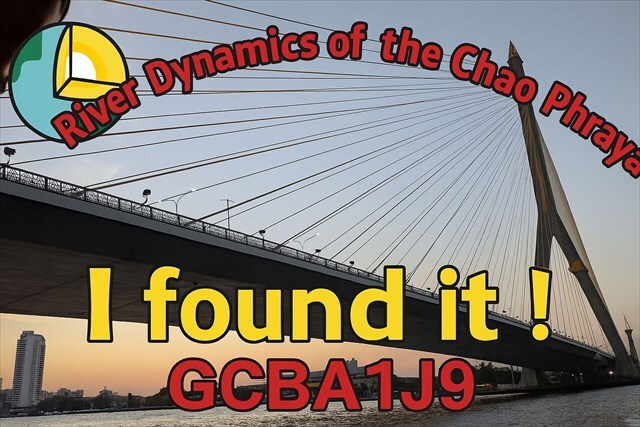
<a href="http://coord.info/GCBA1J9"><img src="https://s3.amazonaws.com/gs-geo-images/c70cba38-fdce-4f30-97fd-aa1fac2e527c_l.jpg" alt="GCBA1J9" width="307" height="197" /> </a>
