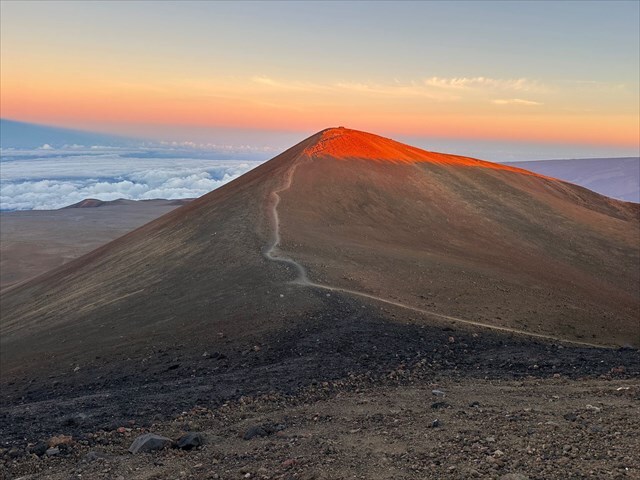
Mauna Kea is the tallest mountain in Hawaiʻi, rising 13,796 feet above sea level, and over 33,500 feet from its base on the seafloor, making it the tallest mountain on Earth when measured from base to summit. It is a dormant shield volcano that last erupted about 4,500 years ago and is capped by cinder cones and glacial deposits. The summit is considered sacred in Native Hawaiian culture and is also home to some of the world’s most advanced astronomical observatories, thanks to its high elevation, dry air, and minimal light pollution.
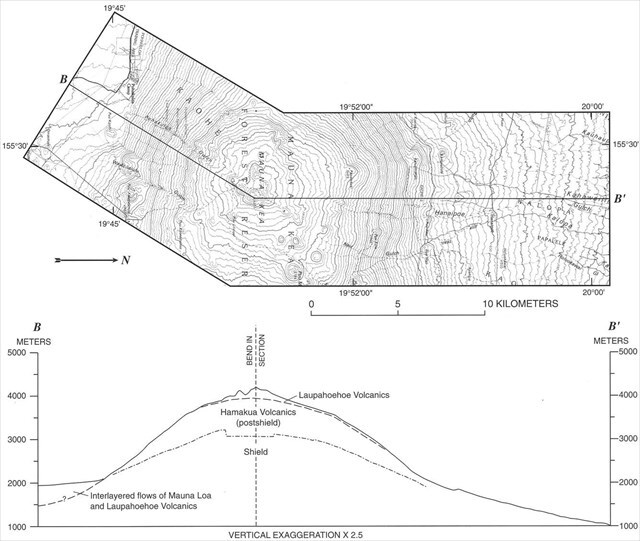
The top of Mauna Kea has a prominent rock slope which is primarily due to a combination of volcanic and glacial processes that acted on the summit over time. Mauna Kea is a shield volcano, but unlike smoother summits of other Hawaiian shield volcanoes, its summit has been shaped by late stage eruptions that produced viscous, silica-rich lavas and numerous cinder and scoria cones, which created a rougher, more uneven surface. These late stage lavas had a different mineral makeup that made them thicker and less able to flow easily. Instead of spreading out in smooth, wide flows like earlier lava, they tended to pile up, forming steep cones and blocky, rubbly surfaces.
Because many of these eruptions came from vents high on the mountain, they created a thick layer near the summit that added to the overall steepness of Mauna Kea’s upper flanks. In fact, these slopes are nearly twice as steep as those of nearby Mauna Loa, which never went through the same kind of late stage activity. Though Mauna Kea is in the tropics, its high elevation results in cold summit temperatures, and during the Pleistocene Epoch (2.58 mya – 11,700 years ago), it hosted glaciers, which further modified the landscape.
Next, lets learn about scree and talus slopes are, and the difference between the two. Scree is made up of smaller angular pieces of rock, often gravel sized, and is produced by processes such as freeze thaw action (when water seeps into cracks in rocks or the pores between soil particles and freezes) that gradually break down exposed bedrock. These fragments typically form loose, unstable surfaces. Talus, in contrast, consists of larger rock debris, often cobble to boulder sized, that accumulates from more substantial rockfall events.
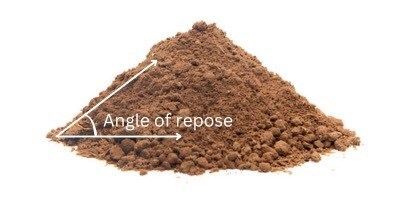
The angle of repose is the steepest angle at which loose material (such as sand, gravel, scree, or talus) can remain stable without sliding downslope. It represents a balance between gravity pulling the material downward and friction holding it in place. For dry, cohesionless materials, the angle of repose is primarily controlled by interparticle friction, which is defined as the resistance to motion as grains slide or roll past one another. Angular grains tend to interlock, which increases friction and allows for steeper slopes. In contrast rounded grains roll more easily and result in shallower angles. Another factor which influences the angle of repose is grain size distribution, well sorted material (uniform size) tends to have a lower angle than poorly sorted mixtures (since smaller grains can fill voids between larger ones and improve stability). Moisture content is another important factor. A small amount of water can create capillary tension between particles, which increases cohesion and allowing steeper slopes to temporarily form. However, once the material becomes saturated, pore water pressure builds up, which reduces friction between grains, and leads to mass movement or slope failure.
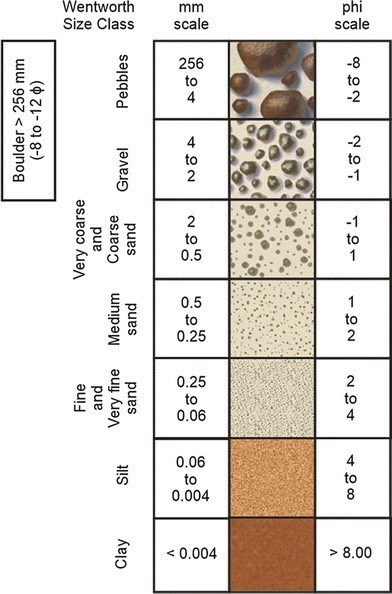
Lastly, it is worth mentioning the Wentworth scale, which is a system used by geologists to classify the sizes of sediment particles. Instead of giving specific numbers, it organizes particles into categories based on their diameter ranges, which makes it easier to describe and compare sediments in the field or lab. The scale starts with very fine particles like clay and silt, then moves up to sand, granules, pebbles, cobbles, and finally boulders. Each category represents a range of particle sizes, which helps scientists understand sediment transport, depositional environments, and rock formation processes.
Please do not leave the road since this area is considered sacred in Native Hawaiian culture. All observations can be made from the posted coordinates.
Logging Requirements:
- Would you classify the slopes in front of you as scree or talus slopes? Explain.
- Estimate the angle of repose of the hill in front of you. How would you classify the sediments according to the Wentworth scale, and are they spherical or angular? How do you think these physical characteristics affects the angle of repose?
- Upload a photo taken near the top of Mauna Kea with either yourself or a personal object.
Sources:
- https://www.nps.gov/places/talus-slope.htm
- https://www.ontariobeneathourfeet.com/alberta-scree-vs-talus
- https://en.wikipedia.org/wiki/Angle_of_repose
- https://www.usgs.gov/volcanoes/mauna-kea/science/geology-and-history-mauna-kea