🌍 EarthCache - Le Mura della Prima Torre Guaita (San Marino)
📖 Introduzione:
La Prima Torre Guaita è uno dei simboli più emblematici della Repubblica di San Marino. Le sue mura in pietra calcarea non sono solo un esempio straordinario di architettura difensiva medievale, ma anche una preziosa testimonianza geologica della storia degli Appennini. In questo EarthCache esaminerai il materiale e i processi di alterazione che hanno modellato queste mura nel corso dei secoli.
🪨 La Pietra delle Mura:
Le mura sono realizzate prevalentemente con calcare locale, formatosi nel Mesozoico in ambienti marini poco profondi. Questo calcare è costituito da micrite a grana fine e frammenti fossili di foraminiferi e molluschi.
🏛️ Rocce della Regione Appenninica:
Nella zona di San Marino prevale il calcare massiccio, mentre nelle aree circostanti si trovano anche sequenze di flysch (alternanze di arenarie, marne e argille). La scelta per la Guaita è ricaduta sul calcare per la sua resistenza e durabilità.
🔬 Forme di Alterazione Osservabili:
- Alterazione meccanica: Fessurazioni, distacchi angolari e microfratture causate da cicli di gelo-disgelo e variazioni termiche.
- Alterazione chimica: Dissoluzione superficiale del carbonato di calcio (carstificazione) con formazione di scanalature e cavità.
- Alterazione biologica: Crescita di muschi, licheni e piante, che espandono le fessure e trattengono umidità.
- Crostoni neri (patina biologica): Zone scure causate da microorganismi che metabolizzano particelle atmosferiche.

📋 Tipi di Alterazione sulla Mura:
| Tipo di Alterazione |
Esempio nell'immagine |
| Alterazione Meccanica |
Fessure da gelo-disgelo (in alto a sinistra) |
| Alterazione Chimica |
Cavità a nido d'ape / forme di dissoluzione (al centro) |
| Alterazione Biologica |
Crescita di muschi, alghe o licheni (in alto a destra) |
🔍 Il tuo Compito:
Durante la visita, rispondi alle seguenti domande e inviale al proprietario del cache tramite messaggio o e-mail. Puoi registrare il log immediatamente.
- Quali colore, tessitura e struttura presenta la pietra? Riesci a vedere fossili o stratificazioni?
- Secondo te, di che tipo di roccia si tratta? Spiega la tua osservazione.
- Trova almeno due segni di alterazione. Quali tipi riconosci (meccanica, chimica, biologica)? Come pensi si siano formati?
- Noti differenze nel modo di costruzione (formati dei blocchi, malte, restauri)? Cosa potrebbero indicare queste differenze?
- Secondo te, la pietra è stata estratta localmente? Motiva la tua risposta basandoti sulle osservazioni.
ℹ️ Regole Importanti:
- Non toccare né danneggiare le mura.
- Rispetta il sito Patrimonio Mondiale UNESCO.
- Le risposte devono basarsi su osservazioni personali.
✅ Condizioni per il Log:
- Inviami le risposte tramite il centro messaggi.
- Carica una foto in cui sei presente tu stesso o un oggetto personale (ad es. dispositivo GPS, taccuino, mascotte). Anche il tuo nome utente deve essere visibile (ad es. su un foglietto).
- I log senza risposte e senza foto saranno cancellati.
!!! Your cacher name must be visible in the photo (e.g. note, display, hand, etc.). Do not add it digitally afterward!
!!! Dein Cacher-Name muss auf dem Foto zu sehen sein (z. B. auf einem Zettel, auf einem Display, auf deiner Hand usw.). Füge ihn nicht nachträglich digital hinzu!


Wichtig! Das Objekt muss im Hintergrund zu erkennen sein.
Important! The object must be visible in the background.
Important ! L'objet doit être visible à l'arrière-plan.
¡Importante! El objeto debe verse en el fondo.
هام! يجب أن يكون الكائن مرئيًا في الخلفية.
Σημαντικό! Το αντικείμενο πρέπει να είναι ορατό στο φόντο.
Importante! L'oggetto deve essere riconoscibile sullo sfondo.
Važno! Predmet mora biti vidljiv u pozadini.
📚 Fonti:
- Servizio Geologico della Repubblica di San Marino
- UNESCO Patrimonio Mondiale San Marino
- Osservazioni geologiche sul campo

🌍 EarthCache - The Walls of Prima Torre Guaita (San Marino)
📖 Introduction:
The Prima Torre Guaita is one of the most iconic symbols of the Republic of San Marino. Its limestone walls are not only a remarkable example of medieval defensive architecture but also a geological witness to the Apennine Mountains' formation. In this EarthCache, you will examine the stone material and the weathering processes that have shaped these walls over centuries.
🪨 The Wall Stone:
The walls are mainly constructed from local limestone, formed during the Mesozoic era in shallow marine environments. This limestone consists of fine-grained micrite and fossil fragments such as foraminifera and mollusk shells.
🏛️ Rocks of the Apennine Region:
Massive limestone is dominant in San Marino, while the surrounding areas also feature sequences of flysch (alternating sandstone, marl, and clay layers). Limestone was chosen for the Guaita walls due to its high strength and durability.
🔬 Observable Weathering Forms:
- Mechanical weathering: Cracks, angular flaking, and microfractures caused by freeze-thaw cycles and thermal stresses.
- Chemical weathering: Surface dissolution of calcium carbonate (karstification), creating grooves and cavities.
- Biological weathering: Growth of mosses, lichens, and plants whose roots widen fractures and retain moisture.
- Black crusts (biological patina): Darkened zones caused by colonies of microorganisms metabolizing atmospheric particles.
📋 Types of Weathering on the Wall:
| Type of Weathering |
Example in the Image |
| Mechanical Weathering |
Cracks from freeze-thaw action (top left) |
| Chemical Weathering |
Honeycomb weathering / solution cavities (center) |
| Biological Weathering |
Moss, algae, or lichen growth (top right) |
🔍 Your Task:
During your visit, answer the following questions and send your answers to the cache owner via message or email. You may log immediately.
- What color, texture, and structure does the stone display? Can you identify fossils or layering?
- What type of rock do you think it is? Explain your observation.
- Find at least two signs of weathering. Which types do you recognize (mechanical, chemical, biological)? How do you think they were formed?
- Do you notice differences in construction techniques (block sizes, mortar joints, restorations)? What might these differences indicate?
- Do you think the stone was quarried locally? Support your answer based on your observations.
ℹ️ Important Notes:
- Do not touch or damage the walls.
- Respect the UNESCO World Heritage Site.
- Your answers must be based on your personal observations.
✅ Logging Requirements:
- Send me your answers via the message centre.
- Upload a photo showing yourself or a personal item (e.g. GPS device, notebook, mascot). Your cache name must also be visible (e.g. on a piece of paper).
- Logs without answers and without a photo will be deleted.
!!! Your cacher name must be visible in the photo (e.g. note, display, hand, etc.). Do not add it digitally afterward!
!!! Dein Cacher-Name muss auf dem Foto zu sehen sein (z. B. auf einem Zettel, auf einem Display, auf deiner Hand usw.). Füge ihn nicht nachträglich digital hinzu!
Wichtig! Das Objekt muss im Hintergrund zu erkennen sein.
Important! The object must be visible in the background.
Important ! L'objet doit être visible à l'arrière-plan.
¡Importante! El objeto debe verse en el fondo.
هام! يجب أن يكون الكائن مرئيًا في الخلفية.
Σημαντικό! Το αντικείμενο πρέπει να είναι ορατό στο φόντο.
Importante! L'oggetto deve essere riconoscibile sullo sfondo.
Važno! Predmet mora biti vidljiv u pozadini.
📚 Sources:
- Geological Service of the Republic of San Marino
- UNESCO World Heritage San Marino
- On-site geological observations

🌍 EarthCache - Die Mauern der Prima Torre Guaita (San Marino)
📖 Einleitung:
Die Prima Torre Guaita ist eines der bekanntesten Wahrzeichen der Republik San Marino. Ihre Kalksteinmauern sind nicht nur ein beeindruckendes Beispiel mittelalterlicher Verteidigungsarchitektur, sondern auch ein geologisches Zeugnis der Entstehung der Apenninen. In diesem EarthCache wirst du das verwendete Gestein sowie die Verwitterungsprozesse, die diese Mauern über Jahrhunderte geprägt haben, genauer untersuchen.
🪨 Der Mauerstein:
Die Mauern bestehen hauptsächlich aus lokalem Kalkstein, der im Mesozoikum in seichten Meeren entstand. Dieser Kalkstein besteht aus feinkörnigem Mikrit sowie fossilen Fragmenten von Foraminiferen und Muscheln.
🏛️ Gesteine der Apenninregion:
In San Marino dominiert massiver Kalkstein, während in den umliegenden Gebieten auch Schichtfolgen aus Flysch (Wechsel von Sandstein, Mergel und Ton) vorkommen. Für die Mauern der Guaita wurde der widerstandsfähige Kalkstein wegen seiner Festigkeit und Dauerhaftigkeit bevorzugt verwendet.
🔬 Beobachtbare Verwitterungsformen:
- Mechanische Verwitterung: Risse, kantige Abplatzungen und Mikrofrakturen durch Frostsprengung und Temperaturschwankungen.
- Chemische Verwitterung: Oberflächliche Lösung von Calciumcarbonat (Karstprozesse), die Rillen und Hohlräume entstehen lässt.
- Biologische Verwitterung: Wachstum von Moosen, Flechten und Pflanzen, deren Wurzeln Risse erweitern und Feuchtigkeit speichern.
- Schwarze Krusten (biologische Patina): Dunkle Verfärbungen, verursacht durch Mikroorganismen, die atmosphärische Partikel verarbeiten.
📋 Verwitterungsarten an der Mauer:
| Verwitterungstyp |
Beispiel im Bild |
| Mechanische Verwitterung |
Rissbildung durch Frostsprengung (links oben) |
| Chemische Verwitterung |
Wabenverwitterung / Lösungsformen (zentral) |
| Biologische Verwitterung |
Moos-, Algen- oder Flechtenbewuchs (rechts oben) |
🔍 Deine Aufgabe:
Beantworte beim Besuch vor Ort folgende Fragen und sende deine Antworten per Nachricht oder E-Mail an den Cache-Owner. Du darfst sofort loggen:
- Welche Farbe, Textur und Struktur zeigt das Gestein? Erkennst du Fossilien oder Schichtungen?
- Um welchen Gesteinstyp handelt es sich deiner Meinung nach? Begründe deine Einschätzung.
- Finde mindestens zwei Spuren von Verwitterung. Welche Verwitterungsarten erkennst du (mechanisch, chemisch, biologisch)? Wie könnten sie entstanden sein?
- Beobachtest du Unterschiede in der Bauweise (Steingrößen, Fugen, Restaurierungen)? Was könnten diese Unterschiede bedeuten?
- Wurde das Gestein deiner Meinung nach lokal gewonnen? Begründe deine Antwort mit deinen Beobachtungen.
ℹ️ Wichtige Hinweise:
- Bitte nichts berühren oder beschädigen.
- Respektiere das UNESCO-Weltkulturerbe San Marino.
- Deine Antworten müssen auf eigenen Beobachtungen beruhen.
✅ Logbedingungen:
- Sende mir die Antworten via Message-Center.
- Lade ein Foto hoch, auf dem du selbst oder ein persönlicher Gegenstand (z. B. GPS-Gerät, Notizbuch, Maskottchen) zu sehen ist. Dein Cachername muss ebenfalls sichtbar sein (z. B. auf einem Zettel).
- Logs ohne Antworten und ohne Foto werden gelöscht.
!!! Your cacher name must be visible in the photo (e.g. note, display, hand, etc.). Do not add it digitally afterward!
!!! Dein Cacher-Name muss auf dem Foto zu sehen sein (z. B. auf einem Zettel, auf einem Display, auf deiner Hand usw.). Füge ihn nicht nachträglich digital hinzu!
Wichtig! Das Objekt muss im Hintergrund zu erkennen sein.
Important! The object must be visible in the background.
Important ! L'objet doit être visible à l'arrière-plan.
¡Importante! El objeto debe verse en el fondo.
هام! يجب أن يكون الكائن مرئيًا في الخلفية.
Σημαντικό! Το αντικείμενο πρέπει να είναι ορατό στο φόντο.
Importante! L'oggetto deve essere riconoscibile sullo sfondo.
Važno! Predmet mora biti vidljiv u pozadini.
📚 Quellen:
- Geologischer Dienst der Republik San Marino
- UNESCO Welterbe San Marino
- Eigene geologische Beobachtungen vor Ort
Banner:
Für die Bannerfans von euch gibt es hier noch ein Banner das ihr gerne in eurem Profil einfügen könnt.
For the banner fans of yours, there is another banner that you can add to your profile.
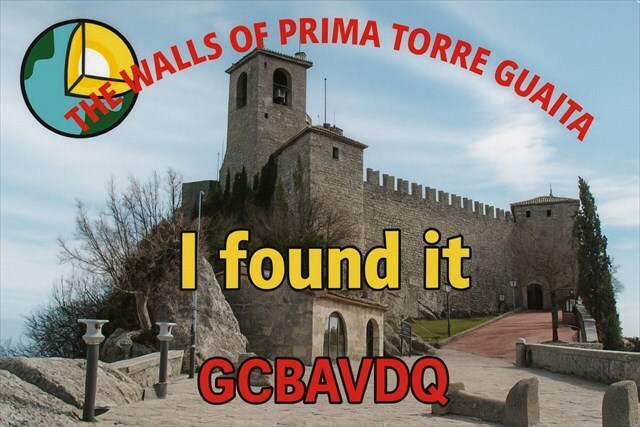
<a href="http://coord.info/GCBAVDQ"><img src="https://s3.amazonaws.com/gs-geo-images/0abbaee0-d92e-42cd-ac1d-51145731d483_l.jpg" alt="GCBAVDQ" width="307" height="197" /> </a>