
🌍 EarthCache: Erosion & Weathering at the Church of St. Michael, Korčula
In the old town of Korčula you can observe fascinating traces of erosion and weathering at the Church of St. Michael. Especially striking are the plants growing in the masonry, which damage the stone over time. Over centuries, natural processes have left visible marks and still contribute to the decay of the church.
🪨 What is Weathering?
Weathering is the decomposition and breakdown of rocks at the Earth’s surface. There are three main types:
- Mechanical (physical) weathering: Breakdown of rocks without chemical change. Examples: frost shattering, temperature changes, abrasion by wind or use.
- Chemical weathering: Change of minerals by chemical reactions, usually with water. Examples: dissolution of limestone by acid rain, oxidation, hydrolysis.
- Biological weathering: Caused by living organisms. Examples: roots growing into cracks, lichens and algae producing acids.
🌬️ What is Erosion?
Erosion is the transport of weathered material. Without weathering there is no erosion – but without erosion the loosened material remains in place.
Erosion forces at the Church of St. Michael:
- 💨 Wind: Wind carries sand and dust, acting like a natural sandblasting tool, gradually wearing down even hard stones.
- 💧 Water: Rain penetrates cracks and joints in the limestone, dissolving salts and washing away particles. Droplet erosion can be seen on edges and protrusions.
- 🌱 Plant growth: Roots penetrate deep into cracks, widening them and loosening the stone. Plants also hold moisture, accelerating chemical weathering.
- 🧱 Gravity: Loosened stones can fall due to their own weight or after being displaced by roots.

🧠 Why is this important?
These processes show how quickly historical buildings can be damaged without human action. They help archaeologists and restorers understand:
- Which stones are particularly vulnerable
- How plants accelerate destruction
- Which protective measures might be necessary
🔍 At the Church of St. Michael
You can observe:
- Cracks and gaps in the masonry filled with plants
- Loose stones where roots have widened gaps
- Discoloration from moisture, lichens, or algae
- Rounded edges and material losses at exposed parts
📜 Logging tasks
- Describe the surface of the stone: smooth, rough, cracked or porous? Where do you see the strongest traces of plant growth?
- Which type(s) of weathering (mechanical, chemical, biological) can you identify? Explain your observations.
- Find an example where plant roots directly damage the masonry. Describe what you see.
- In your opinion: Which process (mechanical, chemical, biological) is most important here? Why?
📸 Photo requirement
- Send me your answers via the message centre.
- Upload a photo showing yourself or a personal item (e.g. GPS device, notebook, mascot). Your cache name must also be visible (e.g. on a piece of paper).
- Logs without answers and without a photo will be deleted.
🌍 EarthCache: Erozija i trošenje kod crkve svetog Mihovila, Korčula
U starom gradu Korčuli možete promatrati zanimljive tragove erozije i trošenja na crkvi svetog Mihovila. Posebno su uočljive biljke koje rastu u zidovima i time oštećuju kamen. Stoljećima prirodni procesi ostavljaju vidljive tragove i još uvijek doprinose propadanju crkve.
🪨 Što je trošenje?
Trošenje je raspadanje i razgradnja stijena na površini Zemlje. Postoje tri glavne vrste:
- Mehaničko trošenje: Raspad stijena bez kemijske promjene. Primjeri: smrzavanje i pucanje, temperaturne promjene, abrazija vjetrom ili uporabom.
- Kemijsko trošenje: Promjena minerala kemijskim reakcijama, obično s vodom. Primjeri: otapanje vapnenca kiselom kišom, oksidacija, hidroliza.
- Biološko trošenje: Uzrokovano živim organizmima. Primjeri: korijenje koje raste u pukotinama, lišajevi i alge koje proizvode kiseline.
🌬️ Što je erozija?
Erozija je prijenos materijala nastalog trošenjem. Bez trošenja nema erozije – ali bez erozije materijal ostaje na mjestu.
Sile erozije kod crkve svetog Mihovila:
- 💨 Vjetar: Prenosi pijesak i prašinu, poput prirodnog pjeskarenja, i polako troši čak i tvrdi kamen.
- 💧 Voda: Kiša prodire u pukotine i fuge vapnenca, ispire soli i odnosi čestice. Kapljice kiše stvaraju male udubine na rubovima.
- 🌱 Biljni rast: Korijenje ulazi duboko u pukotine, širi ih i oslabljuje kamen. Biljke zadržavaju vlagu, što ubrzava kemijsko trošenje.
- 🧱 Gravitacija: Oslabljeni kamen može otpasti pod vlastitom težinom ili nakon djelovanja korijenja.
🧠 Zašto je to važno?
Ovi procesi pokazuju koliko se brzo povijesne građevine mogu oštetiti bez ljudskog djelovanja. Pomažu arheolozima i restauratorima da razumiju:
- Koje su stijene posebno osjetljive
- Kako biljke ubrzavaju propadanje
- Koje su mjere zaštite potrebne
🔍 Kod crkve svetog Mihovila
Možete promatrati:
- Pukotine i razmake u zidovima ispunjene biljkama
- Oslabljene kamenove gdje je korijenje proširilo pukotine
- Promjene boje od vlage, lišajeva ili algi
- Zaobljene rubove i gubitak materijala na izloženim dijelovima
📜 Zadaci za logiranje
- Opišite površinu kamena: glatka, hrapava, ispucala ili porozna? Gdje vidite najjače tragove biljaka?
- Koje vrste trošenja (mehaničko, kemijsko, biološko) možete prepoznati? Objasnite svoja opažanja.
- Pronađite primjer gdje korijenje biljaka izravno oštećuje zidove. Opišite što vidite.
- Po vašem mišljenju: koji je proces (mehanički, kemijski, biološki) najvažniji ovdje? Zašto?
📸 Zahtjevi za logiranje
- Prenesite svoju fotografiju ili osobni predmet (npr. GPS uređaj, bilježnicu, maskotu). Ime vašeg keša također mora biti vidljivo (npr. na komadu papira).
- Zapisnici bez odgovora i bez fotografije bit će izbrisani
- Pošaljite mi odgovore putem Centra za poruke.
🌍 EarthCache: Erosion & Verwitterung an der Kirche St. Michael, Korčula
Im alten Stadtkern von Korčula lassen sich eindrucksvolle Spuren von Erosion und Verwitterung an der Kirche St. Michael beobachten. Besonders auffällig ist der Pflanzenwuchs im Mauerwerk, der den Stein schädigt. Über die Jahrhunderte haben diese natürlichen Prozesse sichtbare Spuren hinterlassen und tragen bis heute zum Zerfall bei.
🪨 Was ist Verwitterung?
Verwitterung bezeichnet die Zersetzung und den Zerfall von Gestein an der Erdoberfläche. Es gibt drei Hauptarten:
- Mechanische Verwitterung: Zerfall ohne chemische Veränderung. Beispiele: Frostsprengung, Temperaturwechsel, Abrieb durch Wind oder Nutzung.
- Chemische Verwitterung: Veränderung von Mineralien durch chemische Reaktionen, meist mit Wasser. Beispiele: Lösung von Kalkstein durch sauren Regen, Oxidation, Hydrolyse.
- Biologische Verwitterung: Verursacht durch Lebewesen. Beispiele: Wurzeln in Spalten, Flechten und Algen, die Säuren bilden.
🌬️ Was ist Erosion?
Erosion ist der Abtransport des verwitterten Materials. Ohne Verwitterung keine Erosion – aber ohne Erosion bleibt das Material am Ort.
Erosionskräfte an der Kirche St. Michael:
- 💨 Wind: Trägt Sand und Staub mit sich, wirkt wie ein Sandstrahlgerät und schleift über Jahrhunderte den Stein ab.
- 💧 Wasser: Regen dringt in feine Risse ein, löst Salze und wäscht Partikel aus. Tropferosion sichtbar an Kanten.
- 🌱 Pflanzenwuchs: Wurzeln dringen in Spalten, vergrößern sie und lockern den Stein. Pflanzen halten zudem Feuchtigkeit im Gestein.
- 🧱 Schwerkraft: Gelockerte Steine können durch ihr Gewicht oder Wurzeldruck herabfallen.
🧠 Warum ist das wichtig?
Diese Prozesse zeigen uns, wie schnell historische Bauwerke beschädigt werden können. Sie helfen Archäolog:innen und Restaurator:innen zu verstehen:
- Welche Steine besonders anfällig sind
- Wie Pflanzen die Zerstörung beschleunigen
- Welche Schutzmaßnahmen nötig wären
🔍 An der Kirche St. Michael
Hier kannst du beobachten:
- Risse und Spalten im Mauerwerk mit Pflanzenbewuchs
- Lose Steine, wo Wurzeln das Mauerwerk gesprengt haben
- Verfärbungen durch Feuchtigkeit, Flechten oder Algen
- Abgerundete Kanten und Materialverluste
📜 Logging-Aufgaben
- Beschreibe die Oberfläche des Steins: glatt, rau, rissig oder porös? Wo erkennst du die stärksten Spuren von Pflanzenbewuchs?
- Welche Art(en) der Verwitterung (mechanisch, chemisch, biologisch) kannst du beobachten? Begründe anhand deiner Beobachtungen.
- Finde ein Beispiel, wo Pflanzenwurzeln das Mauerwerk direkt schädigen. Beschreibe die Veränderung.
- Welcher Prozess (mechanisch, chemisch, biologisch) ist deiner Meinung nach hier am wichtigsten? Warum?
📸 Logbedingung
- Sende mir die Antworten via Message-Center.
- Lade ein Foto hoch, auf dem du selbst oder ein persönlicher Gegenstand (z. B. GPS-Gerät, Notizbuch, Maskottchen) zu sehen ist. Dein Cachername muss ebenfalls sichtbar sein (z. B. auf einem Zettel).
- Logs ohne Antworten und ohne Foto werden gelöscht.
Banner:
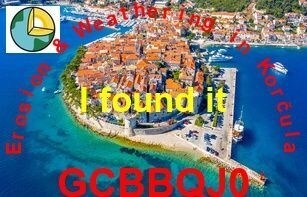
Für die Bannerfans von euch gibt es hier noch ein Banner das ihr gerne in eurem Profil einfügen könnt.
For the banner fans of yours, there is another banner that you can add to your profile.
<a href="http://coord.info/GCBBQJ0"><img src="https://s3.amazonaws.com/gs-geo-images/a61ec02d-c3f5-4c3c-9313-275b125c1f7e_l.jpg" alt="GCBBQJ0" width="307" height="197" /> </a>
