
L'église paroissiale Saint-Barthélémy est construite en 1895 après que Saint-Barthélémy soit devenue commune puis paroisse. Elle remplace l'ancienne chapelle Saint-Barthélémy devenue trop petite, située au Vieux bourg et rasée en 1912. Les plans de l'église sont dessinés par Gloire, employé à la mairie de Lorient.
Les matériaux réutilisables de l'ancienne chapelle sont utilisés pour sa construction. Il faut cependant attendre 1913 pour que le clocher soit édifié par Mathurin Morvan, entrepreneur, sur les plans de Caubert de Cléry, architecte diocésain à Vannes, dans un style néo-roman comme le reste de l'église. Un petit beffroi, probablement en bois, était placé à l'ouest de l'église en attendant la réalisation du clocher définitif.
Cette earthcache vous invite à venir observer ces matériaux réutilisés et en particuliers les différents blocs de granite - et leurs défauts ou inclusions - utilisés pour la construction de cette église.
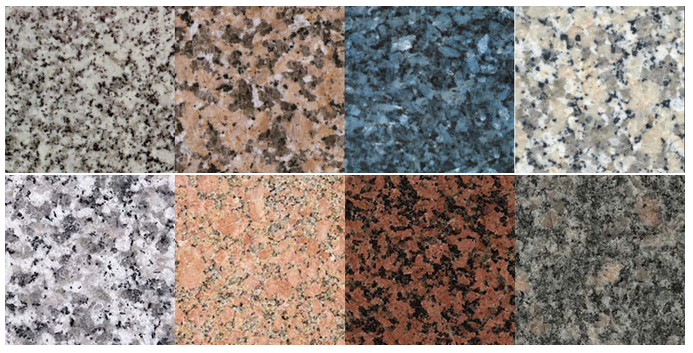
La majeure partie des roches utilisées pour cette construction sont issues de filons de granite. Le granite est la roche magmatique plutonique la plus répandue. Son nom vient du fait qu’il est constitué de grains visibles à l’œil nu, de 2 à 5 mm en moyenne. Quand les cristaux sont plus grands, on parle de pegmatite. Quand ils sont plus petits, la structure est microgrenue.
Les principaux minéraux qui constituent un granite sont : le quartz, les feldspaths alcalins, les feldspaths plagioclases et d’autres minéraux comme les micas ou l’amphibole.
 Défauts et inclusions dans les granites
Comme tous les matériaux naturels, le granite peut contenir des défauts.
Le plus courant est appelé "crapaud", un terme venant des tailleurs de pierre et qui désigne une imperfection de la roche sous la forme d’une tache sombre, grande ou petite ayant une forme irrégulière et différente à chaque fois.
Cette imperfection viens d'une fusion de la roche mère qui n'est jamais complète, parfois des éléments non fondus peuvent se retrouver entrainés par le magma qui monte vers la surface.
On y retrouve des minéraux qui ont un point de fusion élevé. Ces amas de cristaux sombres sont appelés restites. Cette inclusion n'a pas de limite nette avec la roche cristallisée.
On peut aussi trouver dans les granites des inclusions qui se réfèrent aux matériaux étrangers ou aux substances piégées dans le granite pendant sa formation. Ces inclusions peuvent varier en taille, en forme et en composition.
- Le quartz est l'un des minéraux les plus courants trouvés dans le granit, et il apparaît souvent comme des cristaux clairs ou laiteux. Les inclusions de quartz peuvent varier en taille, de minuscules taches aux grands grappes, et ils peuvent donner au granit une apparence scintillante ou scintillante.
- Le feldspath est un autre composant majeur du granit, et il apparaît généralement sous forme de cristaux roses, blancs ou gris. Les inclusions de feldspath peuvent varier en taille et en forme, et elles peuvent donner au granit un aspect moucheté ou marbré.
- Le mica est un groupe de minéraux qui comprend de la biotite et de la muscovite, et il apparaît souvent comme des flocons plats brillants dans le granit. Les inclusions de mica peuvent varier en couleur du noir à l'argent, et elles peuvent donner au granit une apparence scintillante ou irisée.
Pour valider cette earthcache
Question 1. Rendez-vous aux coordonnées de cette earthcache pour y observer le premier défaut ou inclusion présent (sous la zone A colorée en orange). Décrivez ce que vous observez et, avec les informations présentes dans le descriptif de cette earthcache, indiquez quel est le type de défaut et/ou inclusion et avec quel matériau il.elle est constitué.e.

Question 2. Rendez-vous au WP2 (N 47° 55.572′ W 3° 02.669′) pour observer la zone B et la zone C. Décrivez ce que vous observez et, avec les informations présentes dans le descriptif de cette earthcache, indiquez quel est le type de défaut et/ou inclusion et avec quel matériau il.elle est constitué.e.

Question 3. Rendez-vous au dernier waypoint (N 47° 55.581′ W 3° 02.668′) pour y faire vos dernières observations sur les zones E et F. Décrivez ce que vous observez et, avec les informations présentes dans le descriptif de cette earthcache, indiquez quel est le type de défaut et/ou inclusion et avec quel matériau il.elle est constitué.e.

Photo obligatoire. Pour finir je vous demanderais de faire une photo avec un élément permettant de vous identifier (pseudo écrit sur un bout de papier ou sur votre main, objet voyageur portant votre pseudo, ...) devant la porte d'entrée de l'église, photo qui sera à inclure dans votre log.
Pour rappel : il n'y a pas de boîte à trouver pour valider une earthcache ! Vous pouvez loguer votre découverte mais devez aussi m'envoyer vos réponses au plus vite. Je vous contacterais en cas de soucis dans vos réponses ou juste pour vous féciliter pour votre découverte.

The Saint-Barthélémy parish church was built in 1895 after Saint-Barthélémy became a municipality and then a parish. It replaced the old Saint-Barthélémy chapel, which had become too small; that chapel was located in the Old Town and was demolished in 1912. The church’s plans were drawn up by Gloire, an employee at the Lorient city hall.
Reusable materials from the old chapel were used in its construction. However, it was not until 1913 that the bell tower was built by Mathurin Morvan, a contractor, based on plans by Caubert de Cléry, the diocesan architect in Vannes, in a Neo-Romanesque style like the rest of the church. A small belfry, likely made of wood, was placed to the west of the church while the permanent bell tower was being constructed.
This EarthCache invites you to come and observe these reused materials—and in particular the various granite blocks—and their flaws or inclusions—used in the construction of this church.
Most of the rock used in this construction comes from granite veins. Granite is the most common plutonic igneous rock. Its name comes from the fact that it consists of grains visible to the naked eye, averaging 2 to 5 mm in size. When the crystals are larger, the rock is called pegmatite. When they are smaller, the structure is microgranular.
The main minerals that make up granite are: quartz, alkali feldspars, plagioclase feldspars, and other minerals such as micas and amphibole.
Defects and inclusions in granite
Like all natural materials, granite can contain imperfections.
The most common is called a “crapaud,” a term used by stonemasons to describe an imperfection in the rock that appears as a dark spot—large or small—with an irregular shape that varies from one piece to the next.
This imperfection results from the partial melting of the parent rock; sometimes unmelted elements are carried along by the magma as it rises toward the surface.
These include minerals with a high melting point. These clusters of dark crystals are called restites. This inclusion has no clear boundary with the crystallized rock.
Granites may also contain inclusions, which are foreign materials or substances trapped within the granite during its formation. These inclusions can vary in size, shape, and composition.
- Quartz is one of the most common minerals found in granite, and it often appears as clear or milky crystals. Quartz inclusions can vary in size, from tiny specks to large clusters, and they can give granite a sparkling or shimmering appearance.
- Feldspar is another major component of granite, and it typically appears as pink, white, or gray crystals. Feldspar inclusions can vary in size and shape, and they can give granite a speckled or marbled appearance.
- Mica is a group of minerals that includes biotite and muscovite, and it often appears as flat, shiny flakes in granite. Mica inclusions can range in color from black to silver, and they can give granite a shimmering or iridescent appearance.
To validate this EarthCache
Question 1. Go to the coordinates of this EarthCache to observe the first defect or inclusion present (within the area marked in orange). Describe what you observe and, using the information provided in this EarthCache’s description, identify the type of defect and/or inclusion and the material of which it is composed.
Question 2. Go to WP2 (N 47° 55.572′ W 3° 02.669′) to observe Zone B and Zone C. Describe what you observe and, using the information provided in this EarthCache’s description, identify the type of defect and/or inclusion and the material of which it is composed.
Question 3. Go to the last waypoint (N 47° 55.581′ W 3° 02.668′) to make your final observations of zones E and F. Describe what you observe and, using the information provided in this EarthCache’s description, identify the type of defect and/or inclusion and the material of which it is composed.
Photo required. Finally, I’d like to ask you to take a photo in front of the church’s main entrance with something that identifies you (your username written on a piece of paper or on your hand, a travel item with your username on it, etc.). Please include this photo in your log.
Just a reminder: there’s no cache to find to validate an EarthCache! You can log your find, but you must also send me your answers as soon as possible. I’ll contact you if there are any issues with your answers or just to congratulate you on your find.
Sources : base POP Mérimée
 Cette earthcache fait partie d'une série de caches placées pour qu'il n'y ai plus de communes sans géocaches en Bretagne.
Plus d'infos sur le site des Breizh Geocacheurs.