Don't Squeeze the Sponge!
Wingecarribee Peat Swamp: Coal in the making
The Wingecarribee Reservoir sits in a region is characterised by a vast Permian (Permian Period 298-251 million years ago) sedimentary plateau of sandstone, siltstone, and shale, forming a significant part of the larger Sydney Basin.
1. The Educational Lesson: Peat Swamps and the Path to Coal
The Wingecarribee Reservoir area is home to the temperate Highland Peat Swamp on Sandstone, a fragile and critical ecosystem. The peat here is not just soil—it is the first geological stage in the formation of coal, offering a unique lesson in the vast timeline of Earth's sedimentary processes.
A. The Paradox of Peat on Sandstone
Peat is an accumulation of partially decayed organic matter (vegetation). It forms in anaerobic (low-oxygen) and waterlogged conditions where decomposition is drastically slowed, allowing plant matter to build up into a thick organic layer.
This deep accumulation of peat is geologically unusual in an area dominated by porous sandstone, which typically drains quickly. The Swamp exists due to a unique combination of flat, high-altitude terrain and hydrology that maintains permanent waterlogging, allowing the peat to form and persist.
B. Peat as the "Giant Sponge" of the Catchment
Peat swamps are often called the "giant sponges" of the landscape, providing essential ecological services to the drinking water catchment:
| Function |
Geological/Hydrological Mechanism |
| Water Storage & Flow Regulation |
The thick, organic peat absorbs and stores vast amounts of rainwater. This water is released slowly over time, maintaining base flows in the Wingecarribee River and regulating the water level in the reservoir.
|
| Water Filtration |
As water slowly percolates through the dense peat substrate, the organic material acts as a natural bio-filter, trapping sediments and binding pollutants, significantly improving water quality.
|
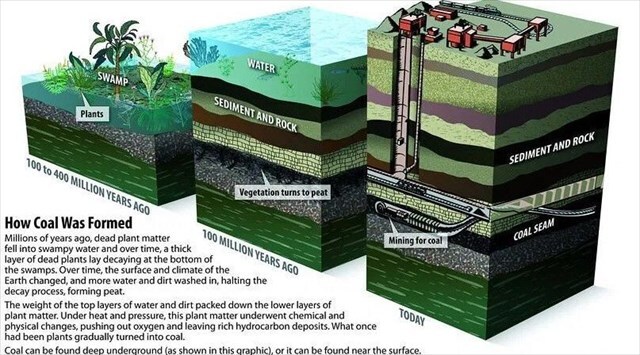
C. The Ultimate Destiny: Peat and Coalification
The peat found here represents the very beginning of the geological process known as Coalification, which transforms dead plant matter into coal over millions of years. This location perfectly demonstrates the starting conditions required: a high concentration of plant material preserved in an anoxic, water-saturated environment.
| Stage |
Material Name |
Geological Process |
Transformation Summary |
| Stage 1 (Current) |
Peat
|
Peatification
|
High moisture, low carbon (approx. 60% dry carbon). Forms at or near the surface.
|
| Stage 2 |
Lignite (Brown Coal)
|
Burial & Compaction
|
Overlying sediments apply pressure, squeezing out water and gases. Carbon content begins to increase.
|
| Stage 3 |
Bituminous (Soft Coal)
|
Heat & Pressure
|
Deeper burial and higher temperatures drive off more volatiles (oxygen/hydrogen). The rock becomes denser and richer in carbon.
|
| Stage 4 (Highest Rank) |
Anthracite (Hard Coal)
|
Metamorphism
|
Maximum heat and pressure (often from tectonic activity) results in the highest-grade coal (up to 90% carbon) with the lowest moisture and highest energy density.
|
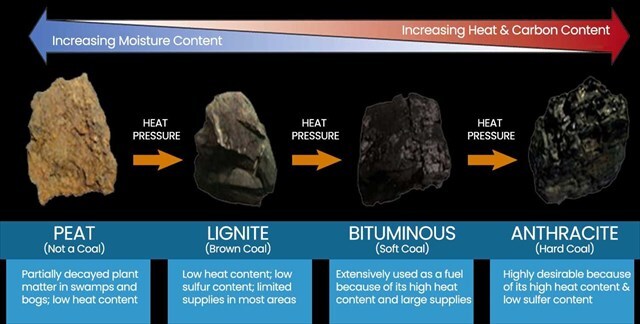
The regional geology supports this lesson, as the area is underlain by the Sydney Basin, which contains vast seams of bituminous coal formed from similar peat swamps that were buried and transformed many years ago.
D. The Wingecarribee Peat Collapse of 1998
The history of the Wingecarribee Peat Swamps provides a stark lesson in the fragility of these environments. Due to historical peat mining operations and specific weather conditions, the peat beds suffered a catastrophic structural collapse in August 1998. Floating islands of peat broke away and drifted into the Wingecarribee Reservoir, permanently highlighting the instability of this ecosystem when altered by human activity.
Logging Requirements
To claim this EarthCache find, you must visit the coordinates and send the answers to the questions below to me, the cache owner. You may log your find immediately after sending the answers; you do not need to wait for a reply.
Question 1: Decomposition
Why do you think the decomposition of the organic matter is slowed drastically?
Question 2: The Peat's Influence on Water
Based on the information provided on this cache page about the function of peat swamps, what two distinct hydrological roles (one concerning flow and one concerning quality) do the intact peat swamps play in regulating the water that enters the Wingecarribee Reservoir?
Question 3: The Carbon Journey
You are standing at a site that represents the first stage of coal formation. What is the single most important geological force or process that must occur to transform peat into Lignite (Brown Coal)?
Post a photo of yourself, your GPS device, or something personal, even your caching name, at the posted coordinates (or the nearest safe viewing area) with a distinctive feature of the reservoir or surrounding landscape visible in the background.