A series of geocaches detailing the Kings, Queens and other Rulers of England/United Kingdom of Great Britain.
Name: King William I The Conqueror
Born: September 1028 at Falaise, Normandy
Parents: Robert I, Duke of Normandy, and Arlette daughter of Fulbert (illegitimate)
Relation to Charles III: 26th great-grandfather
House of: Normandy
Ascended to the throne: December 25, 1066 aged 38 years
Crowned: December 25, 1066 at Westminster Abbey
Married: Matilda, Daughter of Count of Flanders
Children: 4 sons including William II and Henry I, and 6 daughters
Died: September 9, 1087 at Rouen, France, aged 59 years, and 7 days
Buried at: St Stephens Abbey, Caen, Normandy
Reigned for: 20 years, 8 months, 14 days
Succeeded by: his son William II
King of England from 25 December 1066. He was the illegitimate son of Duke Robert the Devil whom he succeeded as Duke of Normandy in 1035. Claiming that his 2nd cousin King Edward the Confessor had bequeathed him the English throne, William invaded England in September 1066, defeating Harold II Godwineson at the Battle of Hastings on 14 October 1066.
William's coronation took place in Westminster Abbey on Christmas Day 1066. He completed the establishment of feudalism in England, compiling detailed records of land and property in the Domesday Book, and kept the barons firmly under control. He died in Rouen after a fall from his horse and is buried in Caen, France. He was succeeded by his son William II.
William's early years were marked by violence and disorder. In 1046 his cousin, Guy of Burgundy, led a revolt which forced the young duke to seek the aid of his overlord, Henry I of France. With Henry's help, William defeated Guy at Val-és-Dunes, and firmly secured control over Normandy. In 1051–52 William and Henry besieged and captured Domfront castle and Alençon in Maine, France. Almost immediately afterwards, William, Count of Arques, rebelled against the duke with the support of Henry I, who was increasingly concerned about Normandy's growing power. William quickly besieged the rebel Arques-la-Bataille castle and it was surrendered to him in 1053. In 1054 Henry I and Geoffrey of Anjou invaded Normandy, but the annihilation of part of their force at Mortimer forced them to withdraw. Their second invasion, in 1057, was defeated at Varaville. In 1051 Edward the Confessor had nominated William as heir to the English throne, but when he died in January 1066 Harold (II) Godwinson was crowned. William immediately began preparations for an invasion of England. On 28 September his forces landed unopposed at Pevensey, Sussex. Harold was in the north of England defeating an invasion led by Harald Hardrada, King of Norway, but immediately marched south to meet William. Their armies clashed in the Battle of Hastings on 14 October 1066. Harold was slain and William achieved a decisive victory. In 1067 William forcibly brought southwest England under his control.
In 1068 he marched north and east to establish a number of strategic fortifications. In the summer of 1069 Swein Estrithson of Denmark landed with a considerable force in the Humber and was welcomed by the northern English earls who joined him in expelling the Norman garrison at York. William immediately marched north, destroying everything in his path, and reoccupied York. He undertook a systematic harrying of the north, setting his troops to kill and burn in order to leave nothing that could support future rebellion. The Danish fleet was bought off and departed. In 1072 William led an invasion that forced King Malcolm of Scotland to surrender hostages and swear fealty. In 1073 he was back in France suppressing rebellion in Maine. His regents dealt with a rebellion by the English earls in 1075, and in the latter years of his reign, William twice faced rebellion in Normandy led by his eldest son, Robert (II) Curthose. In 1087 William sacked the French-controlled town of Mantes in the Vexin. In the fighting he suffered a fatal internal injury after being thrown against the pommel of his saddle. He was taken to the priory of Saint-Gervais near Rouen where on 9 September he died.
This is a Reverse Wherigo. Solve the puzzle to reveal the required numbers to find GZ.
https://www.jigidi.com/created.php?id=kf5oeddv
Reverse Wherigo!
The cache is NOT at the posted coordinates, but you may begin your search from any point in the world!
This Wherigo converts your player into a virtual version of the "Reverse Cache Box" which tells you the distance to the cache, but not the bearing. You may begin your search from any spot in the world using your Smartphone or Whereigo compatible GPS to navigate to the cache
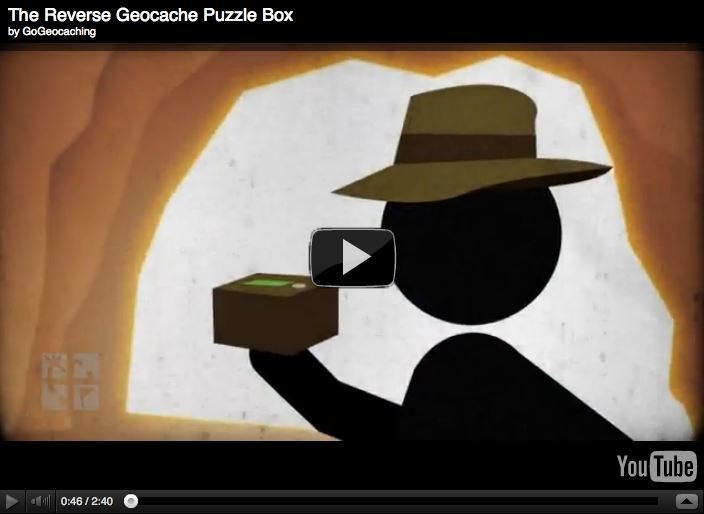
The cartridge was created by -Waldmeister- and is available to download from the wherigo website. The Reverse Cache - beta .
-Waldmeister-'s "The first Reverse Cache [WIG]" is the original cache in this family.
Your task is to find the cache by periodically querying your Reverse Cache Box for the distance to the final location. Try to use your Reverse Cache Box as few times as possible. All instructions and necessary information needed to complete the cartridge is contained within it. The cartridge is multilingual.
To begin, you will have to type the three six digit numbers you located on the cache page into your player when prompted:
It is suggested that you take the code with you on your journey. It will be needed if it becomes necessary to restart your player for any reason.