|

🇹🇷 Bu küçük EarthCache serisi size İstanbul'daki jeolojik ilgi çekici noktaları gösterecek. Eğlence!
🇬🇧 This EarthCache series will show you geological points of interests in Istanbul. Enjoy!
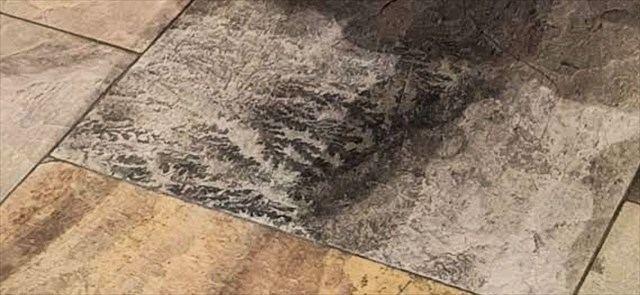
Dendrites
🇹🇷 Dendritler, metal oksitlerin genellikle manganez veya demirin küçük çatlaklar ya da yarıklardan sızan mineralce zengin sıvılardan çökelmesiyle kaya yüzeylerinde doğal olarak oluşan desenlerdir. Bu birikintiler, ağaç dallarını veya yaprak damarlarını andıran ince, dallanan yapılar meydana getirir.
Fosilleşmiş bitkilere benzese de dendritler inorganiktir ve biyolojik kökenleri yoktur.
Şekilleri fraktal bir yapıya sahiptir, çünkü basit bir büyüme sürecinin tekrarlanmasıyla oluşurlar. Dallanma deseni farklı ölçeklerde tutarlılığını korur ve kendi kendine benzerlik gösterir. Dendritler genellikle, kaya içerisindeki sıcaklık ya da kimyasal ortam değişiklikleri sonucunda çözeltiden kristalleşen manganez dioksit tarafından oluşturulur.
Fosillerin aksine, dendritler sadece yüzeyde bulunur ve üç boyutlu olarak uzanmazlar. İç yapılarının ve organik özelliklerinin olmaması, görsel benzerliğe rağmen onları gerçek bitki fosillerinden ayırt edilebilir kılar.
🇬🇧 Dendrites are naturally occurring patterns that form on rock surfaces when metal oxides, typically manganese or iron, precipitate from mineral-rich fluids seeping through small cracks or fissures. These deposits create fine, branching structures that resemble tree branches or leaf veins. Although they may look like fossilized plants, dendrites are inorganic and have no biological origin.
Their shape is fractal in nature, as it results from the repeated application of a simple growth process. The branching pattern remains consistent across different scales, showing self-similarity. Dendrites commonly form when manganese dioxide crystallizes from solution due to changes in temperature or the chemical environment within the rock.
Unlike fossils, which can be embedded in rock and preserve anatomical details, dendrites occur only on the surface and do not extend in three dimensions. Their lack of internal structure and organic features makes them distinguishable from true plant fossils, despite their visual similarity.
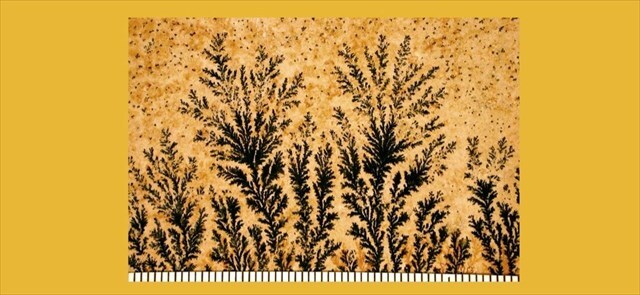
Dendrites and Oxidation
🇹🇷 Çoğu tortul kaya bir miktar demir içerir; en yaygın olarak kumtaşında bulunur. Kayaçlardaki demir oranı yüzde 15’i aştığında, genellikle demir bileşiklerinin yoğun oksidasyonu gözlemlenir. Bu tür kayaçlar, oksidasyonun pas rengi ince tabakalar halinde ürünler oluşturmasıyla kendini gösterdiği geniş diziler sergiler.
Oksidasyon süreci, demirin nemli bir ortamda oksijenle tepkimeye girmesiyle gerçekleşir ve bu, orijinal demirin zamanla oksitlenmiş biçimlere dönüşmesine yol açar. Bu kimyasal değişim yalnızca kayaç rengini değil, aynı zamanda fiziksel özelliklerini de değiştirir, çünkü oluşan oksitler genellikle özgün minerallerden daha az kararlıdır. Bu nedenle oksidasyon, demirce zengin tortul kayaçların uzun vadeli evrimi ve özelliklerini etkileyen temel bir faktördür.
Görsel olarak, oksidasyon belirtileri çevredeki kaya matrisinden kolayca ayırt edilir. Oluşan oksitlerin tipik tonları açık kahverengiden canlı pas kırmızısına kadar değişir ve bu da onları kolayca tanınabilir kılar. Bu renk farkı ve küçük yapısal değişiklikler, jeologlara tortul ortamda meydana gelen ayrışma ve kimyasal etkilerin geçmişi hakkında değerli bilgiler sağlar.
🇬🇧 Most sedimentary rocks contain some amount of iron, with its most common occurrence found, for example, in sandstone. When the iron content in rocks exceeds 15 percent, intense oxidation of iron compounds is often observed. These rocks exhibit extensive sequences where oxidation manifests as the formation of thin layers of rust-colored products.
The oxidation process occurs when iron reacts with oxygen in a moist environment, leading to the gradual transformation of the original iron into oxidized forms. This chemical change not only alters the color of the rock but also affects its physical properties, as the resulting oxides are generally less stable than the original minerals. Therefore, oxidation is a key factor influencing the long-term evolution and characteristics of iron-enriched sedimentary rocks.
Visually, signs of oxidation often stand out from the surrounding rock matrix. Typical shades of the formed oxides range from light brown to vivid rust red, making them easy to identify. This color differentiation, along with minor structural changes, provides geologists with valuable information about the history of weathering and chemical influences in the sedimentary environment.
Types
🇹🇷 (Bunlar yalnızca gözlemsel tiplerdir, resmi bir jeolojik sınıflandırma değildir)
[1] Yıldız şeklindeki dendritler (yıldızlar) - Bu yapılar ortak bir merkez noktasından büyüyerek tüm yönlere eşit biçimde dallanır ve yıldız ya da dallanmış mercan benzeri desenler oluşturur. Bu tip, kristalleşmenin belirgin bir yön kısıtlaması olmadan serbest bir ortamda gerçekleştiğini gösterir.
[2] Bir yarığın sadece bir tarafında oluşan dendritler - Bu durumda kristaller, kaya içindeki bir yarığın ya da yüzeyin yalnızca bir tarafı boyunca yayılır. Küçük ağaçlar, çalılar veya “ufuktaki orman” benzeri desenler oluştururlar. Büyüme yönü, yarık boyunca yayılan manganez veya demir oksitli çözeltilerin akışıyla belirlenir.
[3] Yarığın her iki tarafında oluşan dendritler - Burada dallanma, yarığın her iki tarafında ayna simetrisi şeklinde görülür ve çatlağın yönünü açıkça izleyen desenler oluşturur. Bu tip, çözeltinin kaya içine yarık boyunca nüfuz ettiğini ve çözeltiden çöken minerallerin her iki tarafa doğru kristal desenler oluşturduğunu gösterir.
[4] Çift dendritler - Bu tip, iki farklı oksit türünün birleşimini temsil eder. Siyah dendritler manganez oksitlerinden, pas rengindeki kahverengi dendritler ise demir oksitlerinden oluşur. Her iki mineral de aynı anda veya ardışık olarak çökelerek farklı bileşim ya da çökelme evrelerini gösteren kontrast renkli desenler oluşturabilir. Siyah ile pas kahverenginin renk zıtlığı, dallanmayı vurguladığı için bu tip görsel olarak en dikkat çekici olandır.
🇬🇧 (These are observational types only, not a formal geological classification)
[1] Star-shaped dendrites (stars) - These structures grow from a common central point and branch evenly in all directions, forming patterns resembling a star or a branching coral. This type indicates that crystallization occurred freely in open space without significant directional constraints.
[2] Dendrites along a fracture on one side - In this case, crystals spread exclusively along one side of a fracture or surface in the rock. They form patterns similar to small trees, shrubs, or a “forest on the horizon.” The growth direction is primarily controlled by the flow of manganese or iron-rich solutions moving along the crack.
[3] Dendrites on both sides of a fracture - Here, branching appears symmetrically on both sides of the fracture, resulting in mirror-like patterns that clearly follow the course of the crack. This type indicates that the solution penetrated the rock through the fracture, and minerals precipitating from the solution formed crystalline patterns on both sides.
[4] Double dendrites - This type represents a combination of two kinds of oxides. Black dendrites are formed by manganese oxides, while rusty brown dendrites are formed by iron oxides. Both minerals may precipitate simultaneously or sequentially, creating contrasting color patterns that indicate variations in composition or stages of precipitation. This type is visually the most striking, as the contrast between black and rusty brown highlights the branching.
🇹🇷 "Buldum" olarak oturum açmak için lütfen bu soruların yanıtlarını profilim aracılığıyla bana gönderin:
1) Bir dendrit ile fosil arasındaki fark nedir?
2) Alışveriş merkezindeki zeminde bulunan dendritlerin görünümünü tanımlayın ve taşın genel estetiğini nasıl zenginleştirdiklerini açıklayın.
3) Günlüğünüze, alışveriş merkezindeki dendritlerle birlikte çekilmiş bir fotoğrafınızı veya GPS’inizi ekleyin.
🇬🇧 For log as "found it" please send me answers for those questions via my profile:
1) What is the difference between a dendrite and a fossil? 2) Characterize the appearance of dendrites on the floor in the mall and describe how they enhance the overall aesthetics of the stone.
3) Attach a photo of yourself or your GPS with the dendrites in the mall to your log.
🇹🇷 Lütfen cevaplarınızı gönderdikten hemen sonra önbelleği kaydedin, teşekkürler.
🇬🇧 Please log the cache immediately after sending your answers, thanks.
Photos by DanielKotmel, 2025. Sources -
Iron rich rocks [online]. Available from https://www.britannica.com/science/sedimentary-rock/Iron-rich-sedimentary-rocks [cit. 21. 10. 2025]
Dendrite (crystal) [online]. Available from https://en.m.wikipedia.org/wiki/Dendrite_(crystal) [cit. 21. 10. 2025]
Dendritický opál [online]. Available from https://cs.geologyscience.com/gemstone/dendritic-opal/ [cit. 21. 10. 2025]
Sandstone [online]. Available from https://www.geolsoc.org.uk/ks3/gsl/ education/resources/rockcycle/page3522.html [cit. 21. 10. 2025]

|