
長石是地殼中最豐富的礦物群,約佔陸地岩石的60%。多數礦床同時含有鈉長石、鉀長石及混合長石。長石因富含氧化鋁與鹼金屬,主要應用於工業領域。長石一詞涵蓋了廣泛的礦物種類。 我們日常使用的多數產品皆含長石成分:飲用玻璃器皿、防護玻璃、隔熱玻璃纖維、浴室地磚與淋浴盆,乃至餐桌上的食器。長石已融入日常生活。
其色澤變化豐富,從(淺)白色、灰色到紅褐色、綠色,乃至(深)黑色皆可呈現。長石是全球普遍存在的礦物,尤其常見於花崗岩與片麻岩中呈現粉紅色的脈狀紋理。
長石礦物是火成岩、變質岩與沉積岩的重要組成成分,其重要性甚至使多種岩石的分類依據取決於長石含量。 大多數長石的礦物組成可透過三元系統表示:正長石(KAlSi₃O₈)、鋁長石(NaAlSi₃O₈)與斜長石(CaAl₂Si₂O₈)。
第1亞群:正長石
第2亞群:鈉長石
第3亞群:斜長石
正長石與鈉長石亞群構成:正長石(鉀長石)
鈉長石與斜長石亞群構成:斜長石
長石族礦物由兩端晶體群——鈉長石(NaAlSi₃O₈)與斜長石(鈣長石,CaAl₂Si₂O₈)——的混合晶體群構成,通常可透過劈開面上的獨特孪晶條紋與鹼長石區分。長石族礦物的典型特徵在於其具有鮮明的「無色」特性。
長石源自侵入岩與噴出岩中的岩漿,並於其中結晶形成。

晶體的大小揭示了它們在地球地殼中形成的位置與時間長度。簡單來說:晶體越大,意味著它們在地殼深處形成的歷時越久,且形成位置越深。長石是火成岩中的關鍵成分,其比例與種類正是岩石分類的依據。

火成岩類型圖表
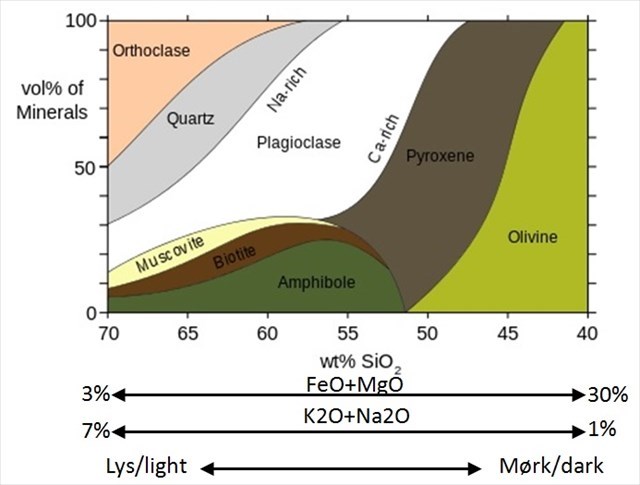
根據礦物成分對火成岩進行分類。
長石特性
形態:管狀,礦物呈均勻厚度分布
顏色:通常為白色、淺灰色或淺紅/粉紅色
光澤:玻璃光澤
斷口:平整至不規則
解理:具兩組解理,其中一組較發達
硬度:6(莫氏硬度)
密度:
產出環境:風化作用
要記錄此地球寶藏,
您必須親臨現場並回答與地球寶藏坐標相關的問題。
收集答案後,請將其提交給管理員進行核驗。
提交答案後即可立即記錄。若管理員對您的答案有疑問,將主動聯繫您。
未向管理員提交解答或存在待處理問題的記錄將被刪除,恕不另行通知。
請勿在記錄中附上可能透露問題答案的照片。
問題
1. 請至座標位置實地觀察後回答下列問題:
A. 如何快速辨識長石?請描述GZ地區長石的形狀、顏色,以及其晶粒是否細密或粗糙?
B. 觀察該地點的岩石,您認為其中長石礦物的含量約佔多少比例?你認為在岩石的不同部位,是否比其他區域更容易發現長石結晶?
C. 你發現的紅粉色斑點平均呈現何種形狀與尺寸?
2. 請拍攝你本人、小組成員或該地點的GPS定位器照片,但不得透露任何解答內容。
Feldspar is by far the most abundant group of minerals in the earth's crust, forming about 60% of terrestrial rocks. Most deposits offer sodium feldspar as well as potassium feldspar and mixed feldspars. Feldspars are primarily used in industrial applications for their alumina and alkali content. The term feldspar encompasses a whole range of materials. Most of the products we use on a daily basis are made with feldspar: glass for drinking, glass for protection, fiberglass for insulation, the floor tiles and shower basins in our bathrooms, and the tableware from which we eat. Feldspar is part of our daily life.
The color can vary from (light) white, gray to reddish, greenish, and over the (dark) black. Feldspar is a mineral that is found throughout the world, and this typically distinctively as pink veins in granites and gneisses.
Feldspar minerals are essential components in igneous, metamorphic and sedimentary rocks, to such an extent that the classification of a number of rocks is based upon feldspar content. The mineralogical composition of most feldspars can be expressed in terms of the ternary system Orthoclase (KAlSi3O8), Albite (NaAlSi3O8) and Anorthite (CaAl2Si2O8).
Subgroup 1: Orthoclases
Subgroup 2: Albite
Subgroup 3: Anorthite
Subgroup orthoclase and albite constitut: Orthoclase (K-feldspar)
Subgroup albite and anorthite constitut: Plagioclase
The mixed crystal groups between the two end joints albite (sodium feldspar), NaAlSi3O8) and anorthite (lime feldspar, CaAl2Si2O8) constitutes plagioclase that usually can be separated from alkali feldspar by distinctive twin striping on the cleaving surfaces. Typical for the plagioclase group is that it has a distinctive "colorless" color.
Feldspar comes from magma in intrusive rocks and extrusive rock in which they crystallize.
The size of the crystals tells us how far and how long they have been in the earth's crust where they were produced. Easily explained: the greater crystals, the longer time they have been formed down in the crust, and the deeper into the earth they have been formed. Feldspar is a vital element in igneous rocks where the proportion and type of feldspar used for classification of rock.
Chart of igneous rock types
Classification of igneous rocks based on mineral content.
Properties Feldspar
Form: Tubular, mineral occurs as uniform thickness
Colour: generally white, pale grey or pale red / pink
Lustre: Vitreous
Fracture: Even to uneven
Cleavage: Two sets one set is better developed
Hardness: 6mohs scale
Density:
Occurence: Weathing
To log this cache.
To get to log this cache you will have to visit and answer the questions which are related to the coordinates given the earthcache.
When answers are collected, send them to CO for verification.
You can log immediately after answers are sent CO. If there are any questions about your answers CO will contact you.
Logs without answers to CO or with pending questions from CO will be deleted without any further notice.
Please do not include pictures in your log that may answer the questions.
Questions
1. Answer the questions under by visiting the Coordinates.
A. How can you easily identify the Feldspar? Also describe the feldspar at GZ with its shape and colour and if it fine or coarse grained?
B. Have a look around the stones at the location, how much percentage of the feldspar mineral would you say the stone contains? Do you think there are more crystals of feldspar to find within different part of the stone, rather than other parts?
C. What average shape and size are the red-ish pink colored spots that you find?
2. Take a photo of you, the group or the GPS from the location without revealing any of the answers.