 Le Parc Soubise
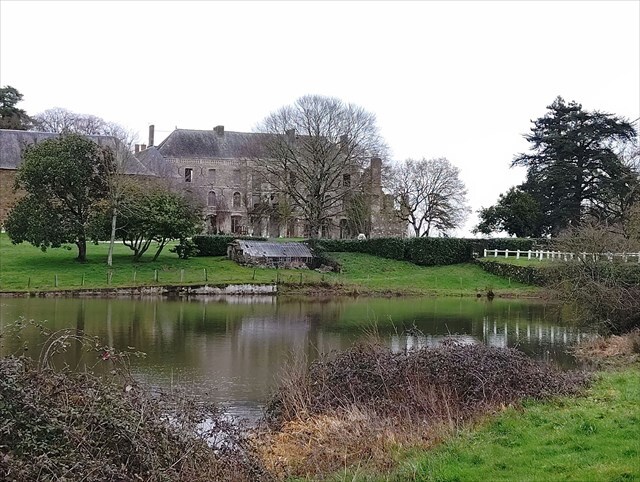
Le Parc Soubise, témoin de l'histoire tumultueuse de la région
Le domaine du Parc Soubise, sur la commune de Mouchamps en Vendée, a toujours été la propriété de familles d’ancienne noblesse du Bas-Poitou. Le lieu fut d’abord occupé par les civilisations antiques : des fouilles opérées à la fin du XIXème siècle ont mis à jour des tombes de l’époque Gallo-Romaine.
Au XIIème siècle, la propriété fut le parc de chasse et de pêche des seigneurs de Mauléon puis de Lusignan. Cette famille célèbre donna le dernier roi chrétien à la ville de Jérusalem au temps des croisades et, dans un autre genre, une fée moitié femme moitié serpent, la fée Mélusine.
Le domaine du Parc Soubise devint en 1247, par un mariage entre Valence de Lusignan et Guillaume de Parthenay, la propriété de la famille Parthenay l’Archevêque. Le grand et puissant château fort construit au Moyen Age fut peu à peu transformé en château Renaissance, style rapporté d’Italie lors des guerres du même nom menées par Louis XII et plus tard François Ier.
C’est une grande figure féminine de son époque qui brille au Parc Soubise : Michèle de Saubonne (1485-1549), épouse de Jean V de Parthenay et amie du grand mathématicien François Viète. Michèle est elle-même une mathématicienne de renommée et reçoit à sa cour au Parc Soubise tout ce qui compte d’intellectuels dans la province. Rabelais viendra en voisin ainsi qu’Aggrippa d’Aubigné un peu plus tard.
Cette « dame du Parc Soubise » fut dame d’atours de la reine Anne de Bretagne, épouse du roi Louis XII, puis gouvernante de leur fille, Renée de France. Dotée d’un fort caractère, Michèle n’hésite pas à dire ce qu’elle pense, et sera l’une des premières protectrices de Bernard Palissy, l’inventeur de la céramique.
Une rencontre décisive pour la Vendée
À l’occasion du mariage de René de France avec le duc de Ferrare, Michèle de Saubonne rencontre Jean Calvin, théologien français et initiateur de la Réforme, et se convertit à ses idées et, femme de poigne et de conviction, de retour au Parc Soubise en 1536, Michèle s’attache à imposer vigoureusement sa nouvelle foi protestante à toute la région. C’est ainsi que naquit le protestantisme en Vendée.
Sa petite fille, la très belle, érudite et austère Catherine de Parthenay l’Archevêque, épouse du protestant René de Rohan, hérite du domaine et tient sa cour au Parc Soubise où vient la visiter son cousin Henri de Navarre, futur Henri IV. Bien que sous son charme, il ne peut s’empêcher de reconnaître que Catherine a la dent dure. Il dira d’elle « Voici venir Madame de Rohan ; gardez-vous mesdames qu’elle ne crache sur vous. Pour le moins, si elle n’y crache elle en médira ».
Catherine est une bâtisseuse et une gestionnaire hors pair. C’est à elle que la propriété doit les magnifiques bâtiment du XVIIème siècle: la grande grange à l’architecture unique dans la région, l’ample grenier à charpente de coque de bateau renversée et le cellier. Le couple aura 2 fils, Benjamin et Henri. Benjamin mourra jeune suite à duel crapuleux et Henri deviendra la fierté de ses parents.
Henri chef des armées huguenotes
La vie sous les Rohan n’est pas un long fleuve tranquille. En effet les guerres de religions entre protestants et catholiques sont finies. L’Edit de Nantes qui met fin au conflit est signé en 1598 par Henry IV. Il autorise la liberté religieuse et permet toujours aux grands féodaux de lever des armées et de tenir place forte. Il n’en faut pas moins pour les protestants pour reprendre les combats que l’on appellera « les guerres huguenotes » de 1621 à 1628. Les affrontements sont fréquents et s’étendent rapidement dans tout le sud-ouest. Le duc et la duchesse sont des protestants passionnés.
Le Parc et ses habitants deviennent vite un centre actif de la révolte contre le roi Louis XIII. Le fils de Catherine et de René, Henri de Rohan prend la tête des armées protestantes avec le soutien de son frère Benjamin et de sa mère pour aller combattre les armées du roi menées par Richelieu. Celui-ci connaît bien la Vendée pour en avoir été l’évêque. Acculée à la Rochelle en 1627 où elle attendait l’aide des anglais, l’armée protestante d’Henri est assiégée et doit se rendre en 1628, après avoir mangé chevaux, rats, chiens, chats et … pour finir les selles de chevaux bouillies !
Richelieu, pour éviter une nouvelle rébellion, décide de faire démanteler tous les châteaux des chefs protestants. C’est ainsi que le château du Parc Soubise sera détruit, puis vendu. Henri de Rohan est chassé de la cour par Catherine de Médicis. Un malheur n’arrivant jamais seul, la fille d’Henri de Rohan, Marguerite, tombe amoureuse d’un noble catholique et de famille aussi ancienne mais moins prestigieuse, Charles-Auguste de Chabot. Elle l’épouse par amour, au désespoir de ses parents mais avec l’accord de Louis XIV, trop heureux de voir rentrer dans le giron de l’église catholique le dernier rejeton de cette illustre famille protestante !
La tourmente des guerres de Vendée
Au milieu du XVIIIème siècle, un autre protestant, armateur à la Rochelle, Monsieur de Bonfils écuyer et secrétaire-conseiller du roi achète le domaine et commence à construire le château dont il reste aujourd’hui une belle ruine. Mais il revend bientôt le domaine car il est appelé à Versailles. Par une ironie de l’histoire c’est un membre de la famille de Chabot qui rachète la propriété et finit la construction du château en 1784, en commençant par la chapelle qui est aujourd’hui classée monument historique. La vie y est bien agréable au Parc Soubise selon les chroniques de l’époque de l’abbé Staub, curé de Mouchamps.
Mais l’histoire de France rattrape ce petit coin de Vendée lors de la révolution française de 1789 et plus particulièrement pendant la Terreur de 1793. Les vendéens, attachés à leur liberté de conscience et à leur foi catholique soutiennent les prêtres qui veulent rester fidèles à leur conviction en refusant de prêter serment à la République lors de la Constitution Civile du Clergé en 1790. Les prêtres « réfractaires » et ceux qui les soutiennent sont réprimés et envoyés en Guyane aux travaux forcés. Ils sont emprisonnés. Beaucoup d’entre eux meurent de mauvais traitements.
Les vendéens se rebellent également car ils ne veulent pas être enrôlés dans l’armée républicaine. La Vendée s’embrase. Commence alors une guérilla fratricide entre la grande armée catholique et royale et le nouveau pouvoir révolutionnaire. Si la Vendée remporte des grandes victoires, elle est écrasée fin 1793. Pour les punir de leur rébellion, la Convention envoie ce que l’on a appelé avec effroi les colonnes infernales en janvier 1794. Leur seul but est de ravager la Vendée et ses habitants.
Le 31 janvier 1794, la colonne infernale de Lachenay arrive au Parc Soubise après avoir ramassé sur son passage 200 femmes, hommes, enfants, vieillards. Les soldats les alignent le long du château et les fusillent… puis mettent le feu au château.
Aujourd’hui encore les ruines de ce drame sont intactes et se dressent comme témoin d’un passé douloureux pour la région.
La vie reprend au Parc Soubise après le Concordat de 1802 et le domaine, toujours entre les mains de la famille de Chabot, se relève. La pêche et la chasse reprennent leur droit et aujourd’hui encore cette tradition perdure.
La guerre de 1939-45 voit la Vendée accueillir des nombreux réfugiés qui fuient l’invasion nazi. Le Parc Soubise sera un refuge pour des enfants juifs cachés par la famille. Le comte Pierre et la comtesse Zoé de Chabot sont d’ailleurs reconnus « justes parmi les nations » sur le mémorial de Yad Vashem en Israël.
Le Parc Soubise, offre encore de nos jours le charme de son parc, de ses étangs, de ses bâtiments historiques aux visiteurs désireux de faire une plongée dans l’histoire authentique de la région.
© source du descriptif : histoire du Parc Soubise
Pour valider cette virtuelle
Pour valider votre log found it, vous devrez remplir 2 critères :
> sur le panneau aux coordonnées, trouvez et envoyez-moi par messagerie le prénom et le nom de l'enfant survivant au massacre du 31 janvier 1794
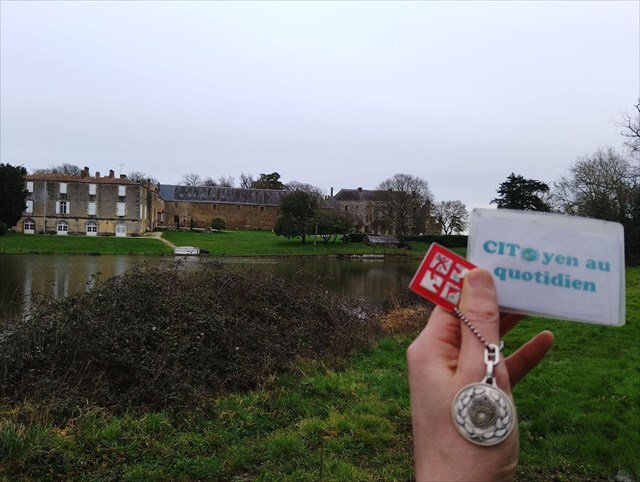
> joindre à votre log (pas dans la messagerie) une photo de vous (visage non obligatoire) ou d'un objet vous appartenant avec le château en arrière-plan comme ci-dessous :
Récompense Virtuelle 5.0 - 2026/2027
Cette Cache Virtuelle fait partie d'une édition limitée de Virtuelles créées entre le 3 février 2026 et le 3 février 2027. Seuls 4000 poseurs ont eu l'opportunité de placer une Cache Virtuelle. En savoir plus sur les Récompenses Virtuelles 5.0 sur le Blog Géocaching.
 The Soubise Park
The Soubise Park, witness to the tumultuous history of the region
The Parc Soubise estate, in the commune of Mouchamps in the Vendée, has always been the property of families of the former nobility of Bas-Poitou. The place was first occupied by ancient civilizations: excavations carried out at the end of the nineteenth century brought to light tombs from the Gallo-Roman period.
In the twelfth century, the property was the hunting and fishing park of the lords of Mauléon and then Lusignan. This famous family gave the last Christian king to the city of Jerusalem at the time of the Crusades, and, in another kind, a fairy half woman and half snake, the fairy Melusine.
In 1247, the Domaine du Parc Soubise became the property of the Parthenay l'Archevêque family through a marriage between Valence de Lusignan and Guillaume de Parthenay. The large and powerful fortified castle built in the Middle Ages was gradually transformed into a Renaissance castle, a style brought back from Italy during the wars of the same name led by Louis XII and later François I.
It is a great female figure of her time who shines at the Parc Soubise: Michèle de Saubonne (1485-1549), wife of Jean V de Parthenay and friend of the great mathematician François Viète. Michèle was herself a renowned mathematician and received at her court at the Parc Soubise all the intellectuals in the province. Rabelais came as a neighbour as well as Aggrippa d'Aubigné a little later.
This "lady of the Parc Soubise" was lady-in-waiting to Queen Anne of Brittany, wife of King Louis XII, then governess to their daughter, Renée of France. Endowed with a strong character, Michèle did not hesitate to say what she thought, and was one of the first protectors of Bernard Palissy, the inventor of ceramics.
A decisive match for the Vendée
On the occasion of the marriage of René of France to the Duke of Ferrara, Michèle de Saubonne met Jean Calvin, French theologian and initiator of the Reformation, and converted to his ideas and, a woman of strength and conviction, returning to the Parc Soubise in 1536, Michèle set about vigorously imposing her new Protestant faith on the entire region. This is how Protestantism was born in the Vendée.
His granddaughter, the very beautiful, erudite and austere Catherine de Parthenay the Archbishop, wife of the Protestant René de Rohan, inherited the estate and held court in the Parc Soubise where her cousin Henri de Navarre, the future Henri IV, came to visit her. Although under her spell, he can't help but recognize that Catherine has a hard tooth. He will say of her: "Here comes Madame de Rohan; Take care ladies, lest she spit on you. At the very least, if she doesn't spit on it, she will speak back."
Catherine is an outstanding builder and manager. It is to her that the property owes the magnificent 17th century buildings: the large barn with its unique architecture in the region, the large attic with the framework of an overturned boat hull and the storeroom. The couple had 2 sons, Benjamin and Henri. Benjamin died young following a villainous duel and Henri became the pride of his parents.
Henry, leader of the Huguenot
armies
Life under the Rohans is not a long, quiet river. Indeed, the religious wars between Protestants and Catholics are over. The Edict of Nantes, which put an end to the conflict, was signed in 1598 by Henry IV. It allowed religious freedom and still allowed the great feudal lords to raise armies and hold a stronghold. It took no less for the Protestants to resume the battles that would be called "the Huguenot Wars" from 1621 to 1628. Clashes were frequent and spread rapidly throughout the southwest. The Duke and Duchess were passionate Protestants.
The Park and its inhabitants quickly became an active centre of the revolt against King Louis XIII. Catherine and René's son, Henri de Rohan led the Protestant armies with the support of his brother Benjamin and his mother to fight the king's armies led by Richelieu. The latter knew the Vendée well, having been its bishop. Cornered in La Rochelle in 1627 where it was waiting for help from the English, Henry's Protestant army was besieged and had to surrender in 1628, after having eaten horses, rats, dogs, cats and ... to finish the boiled horse saddles!
Richelieu, to avoid a new rebellion, decided to dismantle all the castles of the Protestant leaders. This is how the Château du Parc Soubise was destroyed and then sold. Henri de Rohan was chased from the court by Catherine de Medici. A misfortune that never comes alone, Henri de Rohan's daughter, Marguerite, falls in love with a Catholic nobleman and a family as old but less prestigious, Charles-Auguste de Chabot. She married him out of love, to the despair of her parents but with the agreement of Louis XIV, who was only too happy to see the last scion of this illustrious Protestant family return to the bosom of the Catholic Church!
The turmoil of the Vendée
wars
In the middle of the eighteenth century, another Protestant, a shipowner in La Rochelle, Monsieur de Bonfils, squire and secretary-advisor to the king, bought the estate and began to build the castle, of which a beautiful ruin remains today. But he soon sold the estate because he was called to Versailles. By an irony of history, it was a member of the Chabot family who bought the property and finished the construction of the castle in 1784, starting with the chapel which is now classified as a historical monument. Life is very pleasant in the Parc Soubise according to the chronicles of the time of Abbé Staub, parish priest of Mouchamps.
But the history of France caught up with this little corner of the Vendée during the French Revolution of 1789 and more particularly during the Terror of 1793. The people of Vendée, attached to their freedom of conscience and their Catholic faith, supported the priests who wanted to remain faithful to their convictions by refusing to take the oath to the Republic during the Civil Constitution of the Clergy in 1790. The "refractory" priests and those who supported them were repressed and sent to French Guiana for forced labour. They are imprisoned. Many of them die from mistreatment.
The Vendeans also rebelled because they did not want to be enlisted in the republican army. The Vendée is ablaze. Thus began a fratricidal guerrilla war between the great Catholic and royal army and the new revolutionary power. Although the Vendée won great victories, it was crushed at the end of 1793. To punish them for their rebellion, the Convention sent what was horribly called the infernal columns in January 1794. Their only goal is to ravage the Vendée and its inhabitants.
On January 31, 1794, Lachenay's infernal column arrived at the Parc Soubise after picking up 200 women, men, children and old men in its path. The soldiers lined them up along the castle and shot them... then set fire to the castle.
Even today, the ruins of this tragedy are intact and stand as witnesses to a painful past for the region.
Life resumed at the Parc Soubise after the Concordat of 1802 and the estate, still in the hands of the de Chabot family, was revived. Fishing and hunting regained their right and this tradition continues today.
The war of 1939-45 saw the Vendée welcome many refugees fleeing the Nazi invasion. The Parc Soubise was a refuge for Jewish children hidden by the family. Count Pierre and Countess Zoé de Chabot are recognized as "Righteous Among the Nations" on the Yad Vashem memorial in Israel.
The Parc Soubise still offers the charm of its park, its ponds and its historic buildings to visitors wishing to immerse themselves in the authentic history of the region..
© source of the description : history of the Soubise Park
To validate this Virtual
To validate your found it log, you'll have to fulfill 2 criteria:
> on the panel at the coordinates, Find and send me via the message center the first and last name of the child who survived the massacre of January 31, 1794.
> attach to your log (not via the message center) a photo of yourself (face not required) or an object belonging to you with the castle in the background, like this one :
Virtual Rewards 5.0 - 2026-2027
This Virtual Cache is part of a limited release of Virtuals created between February 3, 2026 and February 3, 2027. Only 4,000 cache owners were given the opportunity to hide a Virtual Cache. Learn more about Virtual Rewards 5.0 on the Geocaching Blog.