|

🇩🇪 Luxemburg ist eine geologisch vielfältige Stadt. Dieses EarthCache führt Sie zu den magmatischen Enklaven.
🇬🇧
Luxembourg is a geologically diverse city. This EarthCache will introduce you to the magmatic enclaves.
🇫🇷 Luxembourg est une ville géologiquement diversifiée. Ce EarthCache vous fera découvrir les enclaves magmatiques.
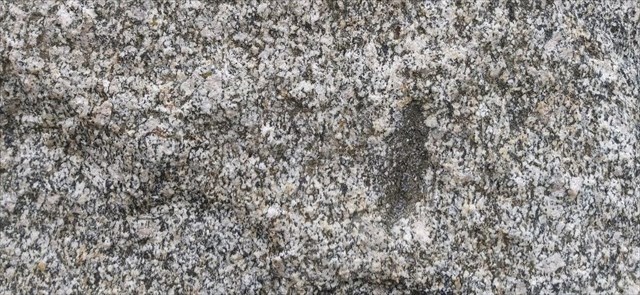
Enklave / Enclave / Enclave
🇩🇪 Normalerweise wird der Begriff Enklave mit einem Gebiet verbunden, das politische und kulturelle Besonderheiten aufweist und dessen geografische Grenzen vollständig innerhalb eines anderen Territoriums liegen. In Europa und im Hinblick auf ganze Nationen, die im Gebiet eines anderen Landes liegen, sind zwei Enklaven bekannt: die Republik San Marino und der Vatikanstaat. Beide liegen eingeschlossen innerhalb Italiens.
Das Wort Enklave stammt aus dem Französischen und erschien erstmals Mitte des 15. Jahrhunderts als Ableitung des Verbs enclaver (1283), vom umgangssprachlichen Latein inclavare (mit Schlüssel verschließen). Ursprünglich war es ein Begriff des Sachenrechts, der die Situation eines Grundstücks oder Landstücks bezeichnete, das von Land eines anderen Eigentümers umgeben war und dessen Nutzung praktisch und ausreichend nur schwer möglich war, ohne das umgebende Land zu betreten.
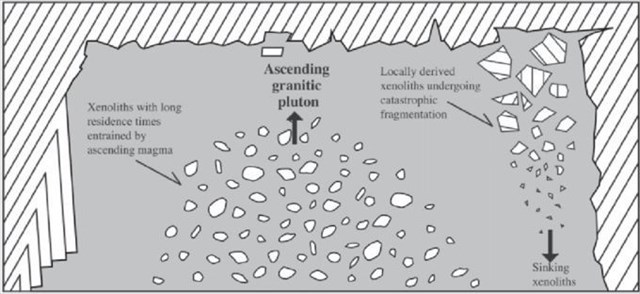
In der Geologie bezeichnet eine Enklave ein Mineral- oder Gesteinsaggregat, das innerhalb eines größeren Gesteinskörpers beobachtet wird. Üblicherweise bezieht sich der Begriff auf Plutongesteine. Mikrogranulare Enklaven in felsischen Plutonen entstehen durch das Einbringen mafischer Magma in die Magmakammer und deren anschließende Abkühlung nach unvollständiger Durchmischung. Grob lassen sich vier Typen von Enklaven unterscheiden: Xenolithe, mikrogranulare Enklaven, Magmamischungen und mikaische Enklaven (Restite).
🇬🇧 Usually, the term enclave is associated with a territory with political and cultural distinctions whose geographic borders are completely within the limits of another territory. In Europe and in terms of entire nations included in the territory of another country, two enclaves are known: the Republic of San Marino and the Vatican City. Both enclaved within Italy.
The word enclave is French and first appeared in the mid-15th century as a derivative of the verb enclaver (1283), from the colloquial Latin inclavare (to close with a key). Originally, it was a term of property law that denoted the situation of a land or parcel of land surrounded by land owned by a different owner, and that could not be reached for its exploitation in a practical and sufficient manner without crossing the surrounding land.
In geology, an enclave is an aggregate of minerals or rock observed inside a larger rock body. Usually, it refers to such situations in plutonic rocks. Micro-granular enclaves in felsic plutons result from the introduction of mafic magma into the magma chamber and its subsequent cooling following incomplete mixing. Roughly it can be divided in four types of enclaves: xenoliths, microgranular enclaves, magma mixture and micaceous enclaves (restites).
🇫🇷 Habituellement, le terme enclave est associé à un territoire présentant des distinctions politiques et culturelles dont les frontières géographiques se trouvent entièrement à l’intérieur d’un autre territoire. En Europe, et en ce qui concerne des nations entières incluses dans le territoire d’un autre pays, deux enclaves sont connues : la République de Saint-Marin et la Cité du Vatican. Les deux sont enclavées à l’intérieur de l’Italie.
Le mot enclave est d’origine française et est apparu pour la première fois au milieu du XVe siècle comme dérivé du verbe enclaver (1283), issu du latin populaire inclavare (fermer à clé). À l’origine, c’était un terme de droit de propriété désignant la situation d’un terrain ou d’une parcelle de terrain entourée par des terres appartenant à un autre propriétaire et qui ne pouvait être exploitée de manière pratique et suffisante sans traverser les terres environnantes.
En géologie, une enclave est un agrégat de minéraux ou de roches observé à l’intérieur d’un corps rocheux plus vaste. En général, le terme s’applique aux roches plutoniques. Les enclaves microgranulaires dans les plutons felsiques résultent de l’introduction de magma mafique dans la chambre magmatique et de son refroidissement ultérieur après un mélange incomplet. On peut grossièrement distinguer quatre types d’enclaves : les xénolithes, les enclaves microgranulaires, les mélanges magmatiques et les enclaves micacées (restites).
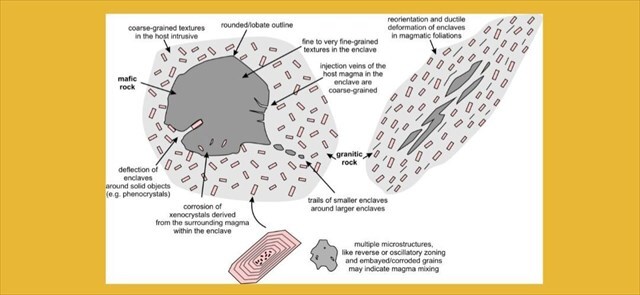
Mikrogranulare Enklaven / Microgranular enclaves / Enclaves microgranulaires
🇩🇪 Diese Enklaven zeichnen sich dadurch aus, dass sie normalerweise abgerundete oder ellipsoide Formen besitzen, eine Textur zwischen porphyrisch und gleichkörnig aufweisen, mit einer Tendenz zu feinkörnigem Gefüge und einem hohen Anteil mafischer Minerale. Sie sind typisch für Granite, und ihr Ursprung ist ebenfalls magmatisch (basisches Magma), weshalb sie als Nachweis für Magmamischung betrachtet werden können (ohne dass Zwischenstufen erreicht werden).
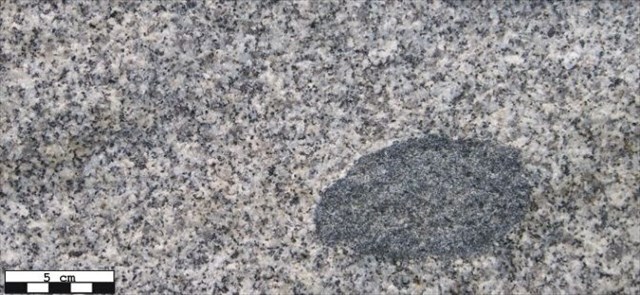
Sie entsprechen in der Regel Gesteinen vom dioritischen, tonalitischen oder granodioritischen Typ. Dass die Kontakte abgerundet oder geschwungen sind, deutet darauf hin, dass sie beim Einschluss in das granitische Magma ganz oder teilweise aufgeschmolzen waren. Zwei Beispiele für mikrogranulare Enklaven in Monzograniten sind in den oberen Bildern zu sehen. Die porphyrische Textur ist in beiden Fällen erkennbar, mit Feldspat-Phänokristallen. Die Kontakte sind deutlich sichtbar, wobei im linken Bild ein felsischer, feldspathischer Halo wahrgenommen werden kann, möglicherweise reaktionsbedingt.
Die mikrogranularen Enklaven können in unterschiedlichem Maße mit dem granitischen Schmelzgemisch vermischt sein. In solchen Fällen sind ihre Kontakte Übergangskontakte und ihre Form unregelmäßiger. Das linke Bild zeigt eine stärker „verdauete“ Enklave mit unregelmäßigem Kontakt, größerer Korngröße und geringerem Mafikanteil. Das rechte Bild zeigt eine runde Form, einen klaren Kontakt und eine größere Biotit-Anreicherung an den Rändern, wodurch ein Quarz-Feldspat-Halo entsteht. Diese Form kann durch den zähflüssigen Fluss der beiden Schmelzen oder auch durch Deformation der Intrusion verursacht werden.
🇬🇧 These enclaves are characterized by having normally rounded or ellipsoidal shapes, having a texture between porphyritic and equigranular with a tendency to fine grain and a high content of mafic minerals. They are typical of granites, and their origin is also igneous (basic magma), which is why they can be considered proof of magma mixing (without reaching intermediate terms).
They usually correspond to rocks of the dioritic, tonalitic or granodioritic type. The fact that the contacts are rounded or sinuous implies that they were totally or partially molten when they were included in the granitic magma. Two examples of microgranular enclaves included in monzogranites can be seen in the upper images. The porphyritic texture can be appreciated in both cases, with feldspar phenocrysts. The contacts are quite clear, although in the left image a felsic, feldspathic halo can be sensed, perhaps of reactional origin.
The microgranular enclaves can be mixed to a lesser or greater degree with the granitic melt. When they do, their contacts are transitional and their form more irregular. The left image shows a more "digested" enclave with irregular contact, larger grain size and less mafic. The right image shows a rounded shape, net contact and a greater abundance of biotite on the edges, developing a quartz-feldspathic halo. This shape can be caused by the viscous flow of the two melts, or also by deformation of the intrusion.
🇫🇷 Ces enclaves se caractérisent par des formes généralement arrondies ou ellipsoïdales, une texture entre porphyrique et équigranulaire avec une tendance au grain fin et une teneur élevée en minéraux mafiques. Elles sont typiques des granites, et leur origine est également magmatique (magma basique), ce qui permet de les considérer comme des preuves de mélange magmatique (sans atteindre des compositions intermédiaires).
Elles correspondent généralement à des roches de type dioritique, tonalitique ou granodioritique. Le fait que les contacts soient arrondis ou sinueux implique qu’elles étaient totalement ou partiellement fondues lorsqu’elles ont été incluses dans le magma granitique. Deux exemples d’enclaves microgranulaires incluses dans des monzogranites sont visibles sur les images supérieures. La texture porphyrique est appréciable dans les deux cas, avec des phénocristaux de feldspath. Les contacts sont assez nets, bien que sur l’image de gauche on puisse percevoir un halo felsique et feldspathique, probablement d’origine réactionnelle.
Les enclaves microgranulaires peuvent se mélanger dans une plus ou moins grande mesure avec le magma granitique. Lorsqu’elles le font, leurs contacts deviennent transitionnels et leur forme plus irrégulière. L’image de gauche montre une enclave plus « digérée » avec un contact irrégulier, une taille de grain plus grande et moins de minéraux mafiques. L’image de droite montre une forme arrondie, un contact net et une plus grande abondance de biotite sur les bords, développant un halo quartz-feldspathique. Cette forme peut être causée par l’écoulement visqueux des deux magmas ou également par une déformation de l’intrusion.
Magmatische Minerale / Igneous minerals / Minéraux ignés
🇩🇪
Magmatische Minerale sind Minerale, die durch die Kristallisation von geschmolzenem Gesteinsmaterial entstehen, entweder aus Magma unter der Erdoberfläche oder aus Lava, die an der Oberfläche ausgetreten ist. Während das geschmolzene Gestein abkühlt, beginnen die Minerale in einer bestimmten Reihenfolge zu kristallisieren, abhängig von ihrer chemischen Zusammensetzung und ihren Schmelzpunkten. Dieser Prozess führt zur Bildung magmatischer Gesteine wie Granit, Basalt und Gabbro.
Zu den häufigsten magmatischen Mineralen gehören Quarz, Feldspäte (Orthoklas und Plagioklas), Amphibole, Pyroxene, Olivin und Biotit. Diese Minerale helfen Geologen, die Bedingungen zu bestimmen, unter denen ein Gestein entstanden ist, wie Tiefe, Druck und Temperatur. Farbe, Härte, Kristallform und andere physikalische Eigenschaften dieser Minerale beeinflussen auch das Erscheinungsbild und die Klassifikation des Gesteins.
Magmatische Minerale werden im Allgemeinen in zwei Hauptgruppen auf der Grundlage ihrer chemischen Zusammensetzung unterteilt: felsisch und mafisch. Felsische Minerale wie Quarz und Orthoklas sind reich an Silizium und Aluminium und kommen typischerweise in helleren Gesteinen wie Granit vor. Mafische Minerale wie Pyroxen und Olivin enthalten höhere Anteile an Eisen und Magnesium und sind häufig in dunkleren Gesteinen wie Basalt zu finden.
🇬🇧 Igneous minerals are minerals that form through the crystallization of molten rock material, either magma beneath the Earth's surface or lava erupted at the surface. As the molten rock cools, minerals begin to crystallize in a specific order depending on their chemical composition and melting points. This process leads to the formation of igneous rocks such as granite, basalt, and gabbro.
Common igneous minerals include quartz, feldspars (orthoclase and plagioclase), amphibole, pyroxene, olivine, and biotite. These minerals can help geologists determine the conditions under which a rock was formed, such as depth, pressure, and temperature. The color, hardness, crystal shape, and other physical properties of these minerals also influence the appearance and classification of the rock.
Igneous minerals are generally divided into two main groups based on their chemical composition: felsic and mafic. Felsic minerals, like quartz and orthoclase, are rich in silica and aluminum and are typically found in lighter-colored rocks like granite. Mafic minerals, such as pyroxene and olivine, contain higher amounts of iron and magnesium and are common in darker rocks like basalt.
🇫🇷 Les minéraux ignés sont des minéraux qui se forment par la cristallisation de matière rocheuse en fusion, soit du magma sous la surface de la Terre, soit de la lave éruptée à la surface. Lorsque la roche en fusion refroidit, les minéraux commencent à cristalliser dans un ordre spécifique en fonction de leur composition chimique et de leur point de fusion. Ce processus conduit à la formation de roches ignées telles que le granite, le basalte et le gabbro.
Parmi les minéraux ignés les plus courants figurent le quartz, les feldspaths (orthose et plagioclase), les amphiboles, les pyroxènes, l’olivine et la biotite. Ces minéraux aident les géologues à déterminer les conditions de formation d’une roche, comme la profondeur, la pression et la température. La couleur, la dureté, la forme cristalline et d’autres propriétés physiques de ces minéraux influencent également l’apparence et la classification de la roche.
Les minéraux ignés sont généralement divisés en deux groupes principaux selon leur composition chimique : felsiques et mafiques. Les minéraux felsiques, comme le quartz et l’orthose, sont riches en silice et en aluminium et se trouvent typiquement dans des roches claires comme le granite. Les minéraux mafiques, tels que les pyroxènes et l’olivine, contiennent davantage de fer et de magnésium et sont fréquents dans des roches plus sombres comme le basalte.
🇩🇪
Um log als "gefunden" anzumelden, musst du mirüber mein Profil eine E-Mail senden und Antworten auf die folgenden Fragen und Aufgaben senden:
1) Beschreiben Sie mit eigenen Worten, was eine Enklave ist. 2) Basierend auf Ihren Beobachtungen im Gelände, ist der Kontakt zwischen den Enklaven und dem Muttergestein regelmäßig oder unregelmäßig? Warum denken Sie das?
3) Im Vergleich zum Muttergestein, ist die Farbe der Enklaven dunkler oder heller?
4) Machen Sie ein Foto von sich selbst oder Ihrem GPS-Gerät zusammen mit den Enklaven an den Ausgangskoordinaten und fügen Sie es Ihrem Protokoll bei.
🇬🇧
For log as "found it" please send me answers for those questions via my profile:
1) Describe in your own words what is an enclave.
2) Based on your observation in the terrain, is the contact between the enclaves and the parent rock regular or irregular? Why do you think that?
3) In relation to the parent rock, is the color of the enclaves darker or lighter?
4) Take a photo of you or your GPS device with the enclaves on the initial coordinates and attach it to your log.
🇫🇷 Pour vous connecter comme "trouvé", veuillez m'envoyer des réponses à ces questions via mon profil : 1) Décrivez avec vos propres mots ce qu’est une enclave. 2) D’après vos observations sur le terrain, le contact entre les enclaves et la roche encaissante est-il régulier ou irrégulier ? Pourquoi pensez-vous cela ? 3) Par rapport à la roche encaissante, la couleur des enclaves est-elle plus foncée ou plus claire ? 4) Prenez une photo de vous ou de votre appareil GPS avec les enclaves aux coordonnées de départ et joignez-la à votre carnet.
🇬🇧
Please log the cache immediately after sending your answers, thanks.
By DanielKotmel, 2026. Sources -
Magmatic Enclaves [online]. Available from https://geologyistheway.com/igneous/magma-mingling-and-mixing/ [17. 01. 2026]
Igneous Minerals [online]. Available from https://geo.libretexts.org/Bookshelves/ Geology/Mineralogy_(Perkins_et_al.) [17. 01. 2026]
Phenocrysts [online]. Available from https://www.sciencedirect.com/topics/earth-and-planetary-sciences/phenocryst [17. 01. 2026]
Mafic Enclaves [online]. Available from https://pubs.geoscienceworld.org/gsa/A-tale-of-five-enclaves-Mineral-perspectives-on [17. 01. 2026]
 |