|

🇩🇪 Luxemburg ist eine geologisch vielfältige Stadt. Dieses EarthCache führt Sie in das Geheimnis des Bohus-Granits ein.
🇬🇧
Luxembourg is a geologically diverse city. This EarthCache will introduce you to the secret of Bohus granite.
🇫🇷 Luxembourg est une ville géologiquement diversifiée. Cet EarthCache vous fera découvrir le secret du granite de Bohus.
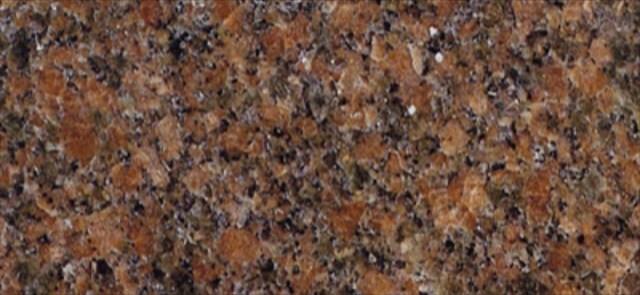
Über das Gestein / About the rock / À propos de la roche
🇩🇪
Der Bohus-Granit ist ein Monzogranit, der hauptsächlich aus Plagioklas, Kalifeldspat und Quarz besteht. Neben diesen Hauptmineralen kommen auch geringere Mengen an Magnetit, Apatit, Zirkon, Titanit, Granat und Monazit vor. In einigen begrenzten Bereichen wurde das ursprüngliche Gestein verändert, wodurch zusätzlich Prehnit, Calcit und Chlorit entstanden sind. Die Textur des Granits reicht von feinkörnig bis grobkörnig, und häufig treten Pegmatitgänge auf. Geochemisch zeichnen sich die Gesteine durch einen relativ engen Bereich an hohem Siliziumdioxidgehalt (68–75 Gew.-% SiO₂) aus und sind leicht peraluminös, zudem weisen sie erhöhte Gehalte an Uran und Thorium auf.
Das Magma, aus dem der Bohus-Granit entstand, erstarrte vor etwa 920 Millionen Jahren nach dem Ende der svekonorwegischen Orogenese. Diese Intrusion stellte die letzte Phase einer längeren Periode intensiver plutonischer Aktivität im Südwesten Schwedens dar. Der Granit drang in die spröde mittlere Erdkruste ein, wo er abkühlte und kristallisierte, bevor er relativ rasch gehoben und an die Oberfläche gebracht wurde.
Bereits im späten Neoproterozoikum, zur Zeit der Bildung der subkambrischen Rumpffläche, lagen die Gesteine an der Oberfläche frei. Später wurden sie von Sedimenten überdeckt und im Perm von basischen Gängen mit einer Nordnordwest-Südsüdost-Ausrichtung durchzogen. Im Mesozoikum kam es zu intensiver Verwitterung, die zur Ausbildung einer großräumigen, unregelmäßigen Landschaft führte, die als submesozoische hügelige Rumpffläche bezeichnet wird.
🇬🇧
The Bohus granite is a type of monzogranite composed mainly of plagioclase, potassium feldspar, and quartz. In addition to these dominant minerals, it contains smaller amounts of magnetite, apatite, zircon, titanite, garnet, and monazite. In some localized areas, the original rock has been altered, leading to the presence of prehnite, calcite, and chlorite. The texture of the granite ranges from fine-grained to coarse-grained, and it is often associated with pegmatite dykes. Geochemically, the rocks are characterized by a relatively narrow range of high silica content (68-75 wt% SiO₂) and are slightly peraluminous, with notably elevated levels of uranium and thorium.
The magma that formed the Bohus granite solidified approximately 920 million years ago, following the end of the Sveconorwegian orogeny. This intrusion marked the final stage of an extended period of widespread plutonic activity in southwestern Sweden. The granite intruded into the brittle middle crust, where it cooled and crystallized before being relatively quickly uplifted and exposed at the surface.
By the Late Neoproterozoic, during the formation of the Sub-Cambrian peneplain, the rocks were already at the surface. Later, they became buried beneath sedimentary layers and were subsequently cut by basic dykes trending in a north-northwest to south-southeast direction during the Permian period. In the Mesozoic era, the region experienced significant weathering, which led to the development of a large-scale, uneven landscape known as the Sub-Mesozoic hilly peneplain.
🇫🇷 Le granite de Bohus est un monzogranite composé principalement de plagioclase, de feldspath potassique et de quartz. En plus de ces minéraux dominants, il contient de plus petites quantités de magnétite, d’apatite, de zircon, de titanite, de grenat et de monazite. Dans certaines zones limitées, la roche d’origine a été altérée, ce qui a entraîné l’apparition de préhnite, de calcite et de chlorite. Sa texture varie de fine à grossière, et il est souvent associé à des filons de pegmatite. Du point de vue géochimique, ces roches présentent une teneur élevée en silice (68-75 % de SiO₂) dans une plage relativement étroite et sont légèrement péralumineuses, avec des concentrations élevées en uranium et en thorium.
Le magma à l’origine du granite de Bohus s’est solidifié il y a environ 920 millions d’années, après la fin de l’orogenèse sveconorvégienne. Cette intrusion représente la phase finale d’une longue période d’activité plutonique étendue dans le sud-ouest de la Suède. Le granite s’est mis en place dans la croûte moyenne fragile, où il a refroidi et cristallisé, avant d’être relativement rapidement exhumé et exposé en surface.
À la fin du Néoprotérozoïque, lors de la formation de la pénéplaine subcambrienne, ces roches affleuraient déjà en surface. Par la suite, elles ont été recouvertes par des sédiments, puis recoupées par des filons basiques orientés nord-nord-ouest sud-sud-est au cours du Permien. Durant le Mésozoïque, la région a subi une altération importante, conduisant à la formation d’un relief irrégulier de grande échelle appelé pénéplaine vallonnée submésozoïque.
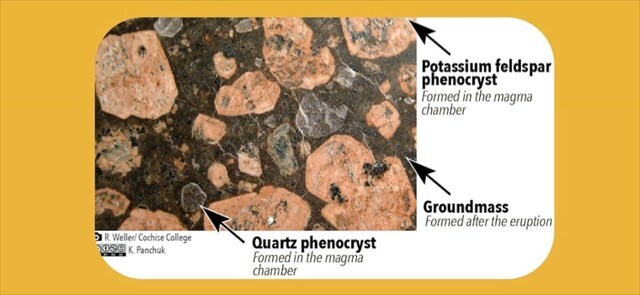
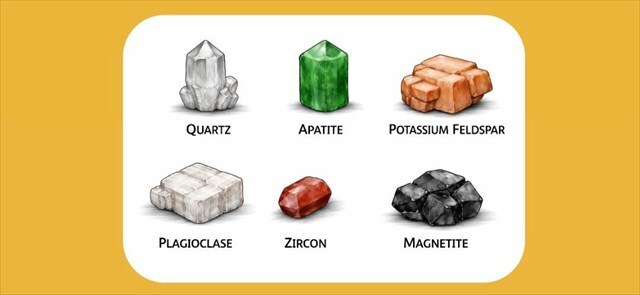
Mineralzusammensetzung / Mineral composition / Composition minérale
🇩🇪 Plagioklas ist ein Feldspatmineral mit einer Natrium Calcium Mischreihe Albit Anorthit meist weiß bis grau gefärbt und zeigt charakteristische polysynthetische Verzwillingung als feine Streifung auf den Spaltflächen mit zwei guten Spaltrichtungen und glasigem Glanz.
Kalifeldspat ist ein kaliumreiches Feldspatmineral Orthoklas Mikroklin meist rosa bis fleischfarben und bildet blockige Kristalle mit zwei gut entwickelten Spaltrichtungen oft mit gitterförmiger Verzwillingung beim Mikroklin und glasigem bis perlmuttartigem Glanz.
Quarz ist Siliziumdioxid SiO₂ ein farbloses bis graues Mineral mit glasigem Glanz ohne Spaltbarkeit und mit muscheligem Bruch gekennzeichnet durch hohe Härte Mohs 7 und tritt meist als unregelmäßige Körner zwischen anderen Mineralen auf.
Magnetit ist ein Eisenoxid Fe₃O₄ ein schwarzes undurchsichtiges Mineral mit metallischem Glanz stark magnetisch mit hoher Dichte und tritt meist als kleine Körner oder körnige Aggregate im Gestein auf.
Apatit ist ein Calciumphosphat Ca₅ PO₄ ₃ F Cl OH und bildet meist kleine prismatische bis nadelige Kristalle grünlich bläulich oder farblos mit glasigem Glanz und relativ geringer Härte Mohs 5.
Zirkon ist ein Zirkoniumsilikat ZrSiO₄ ein sehr widerstandsfähiges Mineral das in kleinen gut ausgebildeten Kristallen vorkommt meist braun bis rötlich gefärbt mit hohem Brechungsindex starkem Glanz und sehr hoher chemischer und physikalischer Stabilität.
🇬🇧 Plagioclase is a feldspar mineral composed of a sodium calcium solid solution albite anorthite typically white to gray in color showing characteristic polysynthetic twinning as fine striations on cleavage surfaces with two good cleavage directions and a vitreous luster.
Potassium feldspar is a potassium rich feldspar mineral orthoclase microcline commonly pink to flesh colored forming blocky crystals with two well developed cleavage directions often displaying grid twinning in microcline and a vitreous to pearly luster.
Quartz is silicon dioxide SiO₂ a colorless to gray mineral with a vitreous luster lacking cleavage and showing conchoidal fracture characterized by high hardness Mohs 7 and typically occurring as anhedral grains filling spaces between other minerals.
Magnetite is an iron oxide Fe₃O₄ a black opaque mineral with a metallic luster strongly magnetic with high density typically occurring as small grains or granular aggregates within the rock.
Apatite is a calcium phosphate mineral Ca₅ PO₄ ₃ F Cl OH usually forming small prismatic to needle like crystals greenish to bluish or colorless with a vitreous luster and relatively low hardness Mohs 5.
Zircon is a zirconium silicate mineral ZrSiO₄ highly resistant occurring as small well formed crystals typically brown to reddish in color with high refractive index strong luster and excellent chemical and physical stability.
🇫🇷 Le plagioclase est un minéral feldspathique de la série sodium-calcium albite-anorthite, généralement blanc à gris, présentant un maclage polysynthétique caractéristique sous forme de fines stries sur les plans de clivage, avec deux directions de clivage bien développées et un éclat vitreux.
Le feldspath potassique est un minéral feldspathique riche en potassium (orthose, microcline), typiquement rose à couleur chair, formant des cristaux massifs avec deux directions de clivage bien développées, souvent avec un maclage en treillis dans le microcline, et présentant un éclat vitreux à nacré.
Le quartz est du dioxyde de silicium (SiO₂), minéral incolore à gris avec éclat vitreux, sans clivage, présentant une fracture concoïdale, dureté élevée (Mohs 7) et se trouvant généralement sous forme de grains anédriques comblant les espaces entre les autres minéraux.
La magnétite est un oxyde de fer (Fe₃O₄), minéral noir opaque au lustre métallique, fortement magnétique, de densité élevée, apparaissant généralement sous forme de petits grains ou d’agrégats granulaires dans la roche.
L’apatite est un phosphate de calcium (Ca₅(PO₄)₃(F,Cl,OH)), formant généralement de petits cristaux prismatiques à aiguillés, de couleur verdâtre à bleutée ou incolore, avec éclat vitreux et dureté relativement faible (Mohs 5).
Le zircon est un silicate de zirconium (ZrSiO₄), minéral très résistant, se présentant sous forme de petits cristaux bien formés, généralement brun à rougeâtre, avec un indice de réfraction élevé, un éclat prononcé et une grande stabilité chimique et physique.
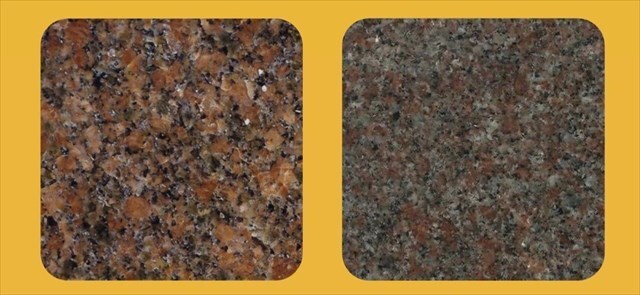
Abkühlung des Magmas / Magma cooling / Refroidissement du magma
🇩🇪 Die Abkühlungsgeschwindigkeit von Granit lässt sich häufig anhand der Größe und Eigenschaften der Phänokryste erkennen, also der größeren Kristalle, die im feinkörnigen Grundgefüge des Gesteins deutlich sichtbar sind. Große, gut ausgebildete Kristalle deuten darauf hin, dass das Magma genügend Zeit hatte, langsam tief unter der Oberfläche abzukühlen, sodass sich die Minerale zu klar erkennbaren Formen und Größen entwickeln konnten. Beispielsweise können Quarz, Feldspäte und Biotit Phänokryste von mehreren Millimetern bis Zentimetern Größe bilden, wenn das Magma langsam erstarrt.
Im Gegensatz dazu weisen kleine, schlecht entwickelte Phänokryste oder deren völliges Fehlen auf ein schnelleres Abkühlen des Magmas hin, etwa wenn es näher an die Oberfläche gelangt oder mit kühleren Nebengesteinen in Kontakt kommt. In solchen Fällen haben die Minerale keine Zeit, sich vollständig zu entwickeln, und das Grundgefüge bleibt feinkörnig bis glasig. Die Analyse von Form und Größe der Phänokryste ermöglicht es Geologen daher, die Kristallisationsbedingungen und die Tiefe, in der das Magma erstarrt ist, zu rekonstruieren.
Ein weiterer Hinweis ist die Verteilung der Phänokryste im Gestein. Sind große Kristalle gleichmäßig verteilt und gut im Grundgefüge eingebettet, spricht dies für ein langsames, tiefsitzendes Abkühlen. Sind Phänokryste unregelmäßig verteilt, verformt oder teilweise vom umgebenden Gesteinsgefüge eingeschlossen, kann dies auf schnelleres, teilweises Abkühlen oder Bewegung des Magmas hinweisen.
🇬🇧 The cooling rate of granite can often be inferred from the size and characteristics of phenocrysts, which are larger crystals clearly visible within the finer-grained groundmass of the rock. Large, well-formed crystals indicate that the magma had sufficient time to cool slowly deep below the surface, allowing minerals to grow into distinct shapes and sizes. For example, quartz, feldspars, and biotite can form phenocrysts several millimeters to centimeters in size if the magma cooled slowly.
In contrast, small, poorly developed phenocrysts or their complete absence indicate faster cooling of the magma, such as when it moves closer to the surface or contacts cooler surrounding rocks. In such cases, minerals do not have time to fully develop, and the groundmass remains fine-grained to glassy. Analyzing the shape and size of phenocrysts therefore allows geologists to reconstruct the crystallization conditions and the depth at which the magma solidified.
Another indicator is the distribution of phenocrysts within the rock. If large crystals are evenly spaced and well embedded in the groundmass, it points to slow, deep-seated cooling. If phenocrysts are irregularly distributed, deformed, or partially engulfed by the surrounding mass, it may indicate faster, partial cooling or magma movement.
🇫🇷 La vitesse de refroidissement du granite peut souvent être déduite de la taille et des caractéristiques des phénocristaux, c’est-à-dire les cristaux plus gros clairement visibles dans la matrice plus fine de la roche. De gros cristaux bien formés indiquent que le magma a eu suffisamment de temps pour refroidir lentement en profondeur, permettant aux minéraux de croître en formes et tailles distinctes. Par exemple, le quartz, les feldspaths et le biotite peuvent former des phénocristaux de plusieurs millimètres à centimètres si le magma a refroidi lentement.
En revanche, de petits phénocristaux mal développés ou leur absence complète indiquent un refroidissement plus rapide du magma, comme lorsqu’il se rapproche de la surface ou entre en contact avec des roches environnantes plus froides. Dans ce cas, les minéraux n’ont pas le temps de se développer pleinement et la matrice reste fine à vitreuse. L’analyse de la forme et de la taille des phénocristaux permet donc aux géologues de reconstituer les conditions de cristallisation et la profondeur à laquelle le magma s’est solidifié.
Un autre indicateur est la distribution des phénocristaux dans la roche. Si les gros cristaux sont uniformément répartis et bien intégrés dans la matrice, cela indique un refroidissement lent en profondeur. Si les phénocristaux sont distribués de manière irrégulière, déformés ou partiellement englobés par la matrice environnante, cela peut indiquer un refroidissement partiel plus rapide ou un mouvement du magma.
🇩🇪
Um log als "gefunden" anzumelden, musst du mirüber mein Profil eine E-Mail senden und Antworten auf die folgenden Fragen und Aufgaben senden:
1) Welche Gesteinsart begegnet Ihnen an den Startkoordinaten, und wie würden Sie deren mineralische Zusammensetzung beschreiben?
2) Beobachten Sie die einzelnen Phänokryste und die Struktur des Gesteins und entscheiden Sie, ob dessen Abkühlung schnell oder langsam erfolgte.
3) Haben Sie alle oben beschriebenen Minerale im Gestein festgestellt? Begründen Sie Ihre Antwort.
4) Wie beeinflussen die einzelnen Phänokryste die Gesamtästhetik des Gesteins? Sind ihre Formen überall gleichmäßig?
5) Fügen Sie Ihrem Log ein Foto bei, das Sie oder Ihr GPS-Gerät an den angegebenen Koordinaten zeigt.
🇬🇧
For log as "found it" please send me answers for those questions via my profile:
1) What type of rock do you encounter at the starting coordinates, and how would you describe its mineral composition?
2) Observe the individual phenocrysts and the rock’s structure, and determine whether its cooling occurred quickly or slowly.
3) Did you find all the minerals described above in the rock? Explain your reasoning.
4) How do the individual phenocrysts affect the overall aesthetics of the rock? Are their shapes uniform throughout?
5) Attach a photo to your log showing you or your GPS device at the provided coordinates.
🇫🇷 Pour vous connecter comme "trouvé", veuillez m'envoyer des réponses à ces questions via mon profil : 1) Quel type de roche rencontrez-vous aux coordonnées de départ et comment décririez-vous sa composition minérale ? 2) Observez les phénocristaux individuels et la structure de la roche, et déterminez si son refroidissement s’est produit rapidement ou lentement. 3) Avez-vous trouvé tous les minéraux décrits ci-dessus dans la roche ? Justifiez votre réponse. 4) Comment les phénocristaux individuels influencent-ils l’esthétique générale de la roche ? Leurs formes sont-elles uniformes partout ?
5) Joignez à votre log une photo vous montrant ou montrant votre appareil GPS aux coordonnées fournies.
🇬🇧
Please log the cache immediately after sending your answers, thanks.
By DanielKotmel, 2026. Sources -
Bohus granite [online]. Available from https://www.sonat.de/en/select/jura-kalkstein [17. 01. 2026].
Red bohus granite [online]. Available from https://www.edurus.se/en/granitsorter
Magma crystallization [online]. Available from https://en.m.wikipedia.org/wiki/Limestone [17. 01. 2026]
Minerals database [online]. Available
from https://www.wirefence.co.ukminerals-a-z/ [17. 01. 2026]
Grain size and cooling rate [online]. Available from https://www.geolsoc.org.uk/ks3/ [17. 01. 2026]
Igneous rock [online]. Available from https://education.nationalgeographic.org/ resource/igneous-rock/ [17. 01. 2026]
 |