This is an educational field puzzle cache, a very easy stroll to 6 information plaques. Its one of the Princeton Battlefield puzzle caches and is recommended to complete these field puzzles first, as all these cache final locations are in nearby Institute Woods property.
As America celebrates the 250th anniversary of the American Revolution we are refreshing some of the "American Revolution Geo Trail” cache located at historic sites across New Jersey.
Start your journey or revisit these historic locations to learn about the endurance, perseverance and bravery of the American patriots who fought in the War for Independence.
The 10 Crucial Days refer to some of the most iconic and important moments of the American Revolution, moments that may have turned the tide in the War for Independence.
Following the defeat at the Battle of Long Island, which led to the loss of New York City to the British, General George Washington became desperate for a victory to secure his army’s morale, attract new recruits, and keep the fledgling independence initiative moving forward.
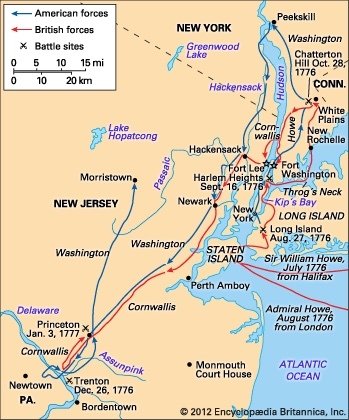 ”Escape fron NY and NJ"
By December 1776 the Patriot cause seemed to be almost lost, suffering a disastrous defeat at the Battle of Long Island, Fort Washington and Fort Lee, George Washington's Continental Army had been driven all the way across the Delaware River into Pennsylvania.
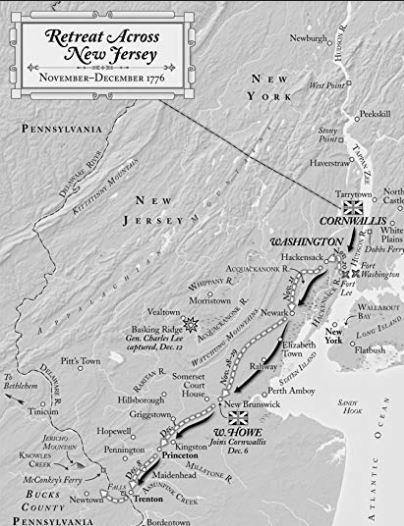 ”Escape fron NY and NJ"
Exhausted, and facing the prospect of mass desertion, Washington made a desperate gamble on Christmas night by crossing the Delaware River into British occupied colony of New Jersey. The next morning, Washington's army surprised a garrison of Hessian mercenaries at Trenton, and defeated the British reinforcements under Charles Lord Cornwallis just days later at Princeton.
A period of just ten days from December 25, 1776 to January 3, 1777 — Washington's brave soldiers would win a series of victories at Trenton and Princeton that were glorious indeed. These Ten Crucial Days proved instrumental to rekindling Patriot morale and keeping the cause for American independence alive in the wake of early defeats.
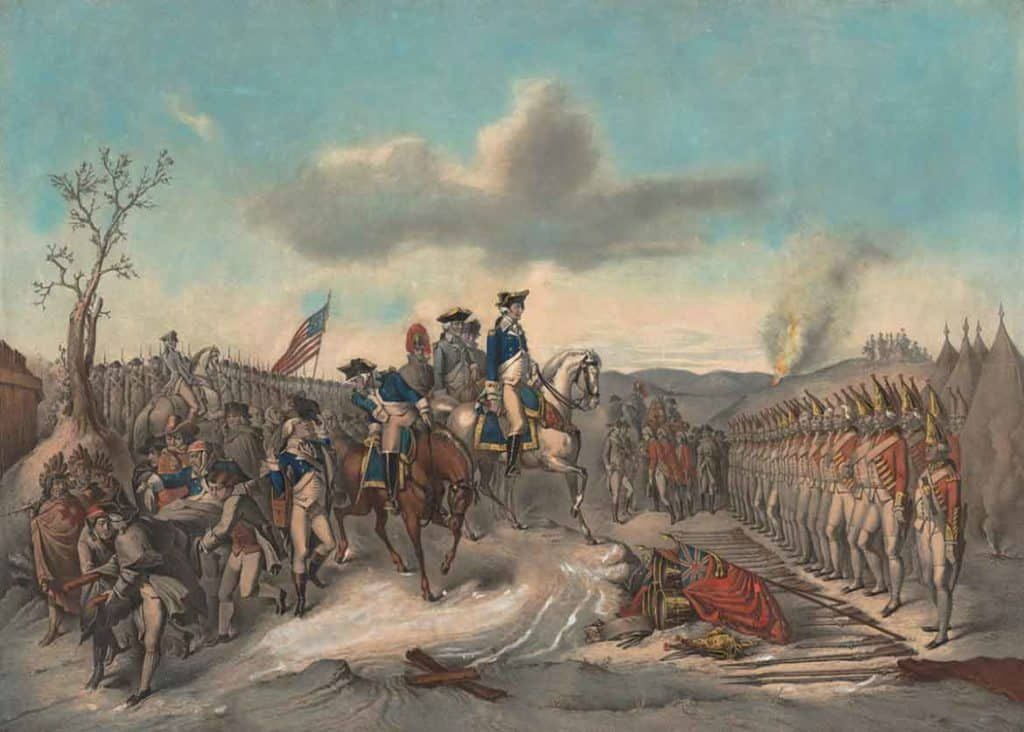 ”Surrender of the Hessian troops to General Washington after the Battle of Trenton"
Thanks to Washington’s leadership and determination, the army that nearly disintegrated after retreating from New York proved to Britain that it still had fight left. These ten days and the battles fought in them helped saved the American war effort against Britain.
Between 29th and 31st December 1776, Washington brought his troops back across the river into Trenton. He there received information that Lord Cornwallis and Major General Grant were at Princeton with 8,000 British troops and artillery and about to advance upon him. Washington’s force numbered 1,500 soldiers. Cadwalader was south of Trenton with 2,100 Americans, while at Bordenton, General Mifflin waited with 1,600 Pennsylvania militia.
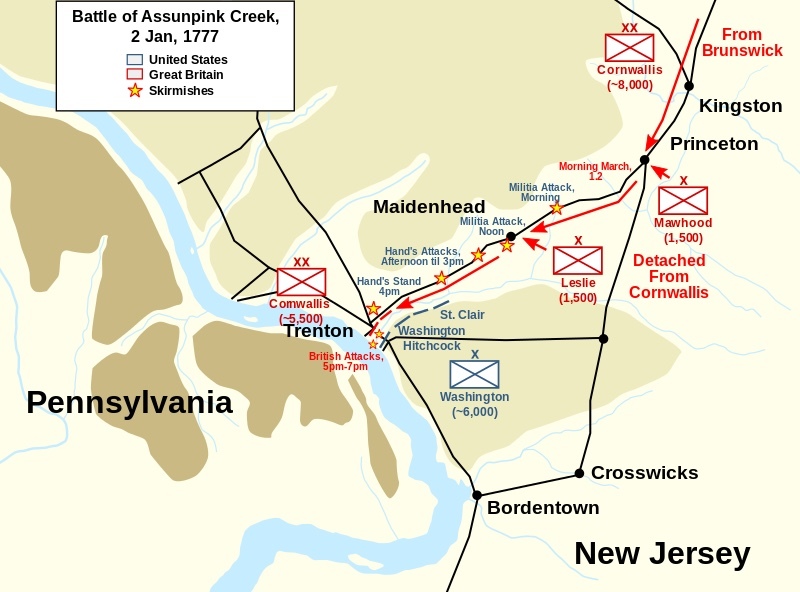 ”second battle of Trenton"
Washington’s army was formed of two groups; recently embodied militia, well dressed and fed, but almost devoid of training or experience, and Continental Army soldiers, experienced and hardy, but almost destitute and exhausted.
On 2nd January 1777, Lord Cornwallis advanced with his British troops from Princeton towards Trenton, leaving Lieutenant Colonel Mawhood with the 17th, 40th, and 55th Foot at Princeton, and General Leslie with the 2nd Brigade at Maidenhead on the Trenton road. Cornwallis’s force comprised 5,500 troops and twenty-eight guns up to the size of 12 pounder.
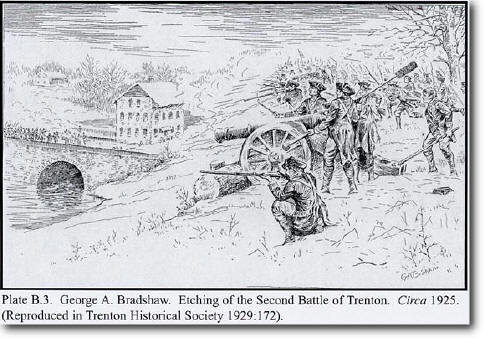 ”second battle of Trenton, Assunpink Creek"
Despite their success in repulsing several frontal attacks at the Battle of Assunpink Creek (Battle of Second Trenton) on January 2, 1777, Gen. George Washington and his senior officers were filled with a sense of dread. Gen. Charles Cornwallis’ army of 8,000 veteran soldiers were poised to deliver a punishing blow the following morning. The fact that the British had discovered a ford that led to the vulnerable American right flank made the American position on the Assunpink Creek near Trenton all the more dangerous.
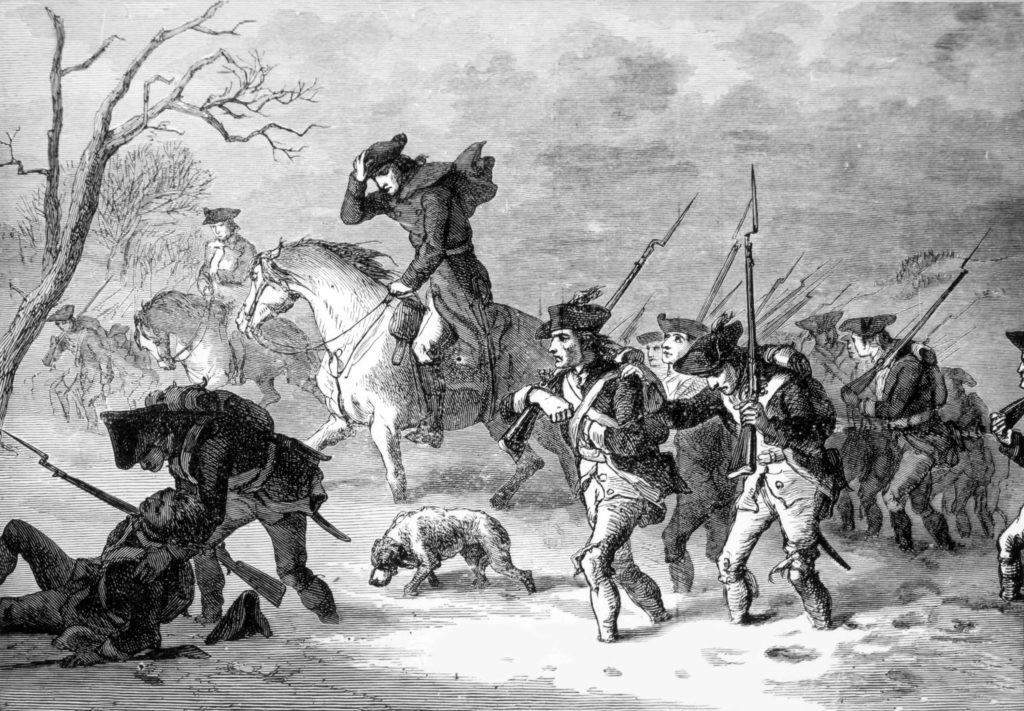 “Washington's night time plan to quietly march from Trenton to Princeton"
Rather than risk defeat in Trenton, Washington, in collaboration with his senior officers, agreed upon a bold and dangerous plan. That very night the Continental army would quietly leave its positions along the creek and march east, then north towards Princeton. With deceptive campfires still burning along the creek, Washington’s intrepid soldiers began their 18-mile march through the dark and bitterly cold night. By stealing a march on Cornwallis, Washington retained the all-important initiative and avoided any movement that smacked of retreat. Washington’s successful night march on January 2 and 3, 1777 is remembered as one of the great flank marches in American history.
The American troops in position to the south-west of Maidenhead on the Trenton road were Fermoy’s brigade, Colonel Hand’s Pennsylvania riflemen, a German battalion, Scott’s Virginia Continentals and two guns.
The weather was wet and the roads muddy. Cornwallis advanced, driving the Americans back to Trenton. Resisting strongly, the American troops were forced through the town to their positions on the south bank of the Assunpink River. Attempts were made that evening by the British to cross the creek and force the American lines, but in the face of stiff resistance the crossing was postponed to the morning.
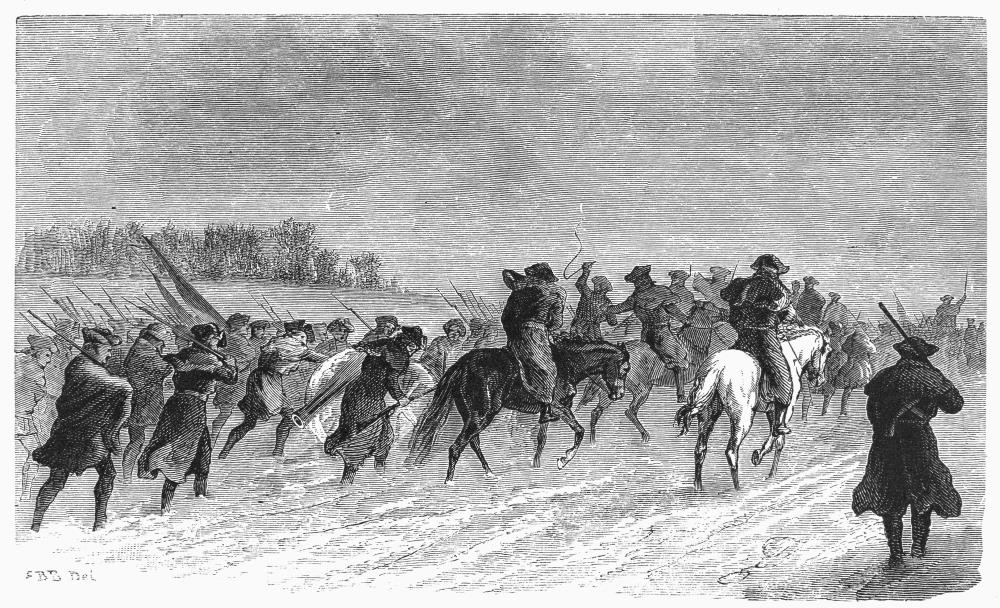 ”middle of the night march north towards Princeton"
Following a council of war held on the evening of 2nd January 1777, General Washington resolved to move before his army was attacked and overwhelmed the next day. In the middle of the night, the Americans left fires burning and marched off to the east and then to the north towards Princeton.
Princeton Battlefield State Park
On these New Jersey fields, George Washington rallied his forces to defeat British troops, a crucial turning point in the Revolutionary War. Waged on January 3, 1777, the battle at Princeton transformed prospects for the American Revolution. Not only did Washington's success inspire countless soldiers to renew their commissions, it reinvigorated support for the sometimes desperate Colonial effort. The story of our country's fight for independence is incomplete without a fully preserved Princeton Battlefield.
 ”Map of the Battle of Princeton on 3rd January 1777 in the American Revolutionary War: map by John Fawkes"
On January 3, 1777, the peaceful winter fields and woods of Princeton Battlefield were transformed into the site of what is considered to be the fiercest fight of its size during the American Revolution. During this desperate battle, American troops under General George Washington surprised and defeated a force of British Regulars.
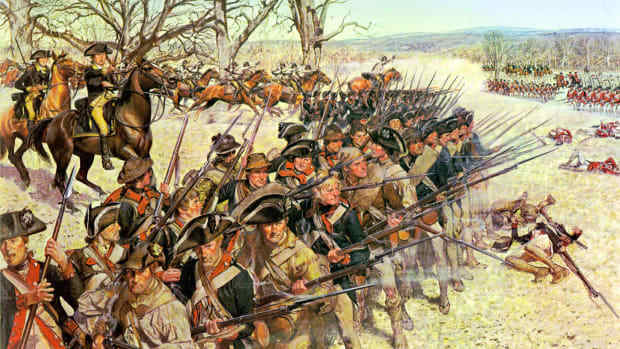 ”Battle of Princeton"
Coming at the end of "The Ten Crucial Days" which saw the well-known night crossing of the Delaware River and two battles in Trenton, the Battle of Princeton gave Washington his first victory against the British Regulars on the field. The battle extended over a mile away to the College of New Jersey (now Princeton University)where several soldiers took refuge in the Nassau Hall, they later surrendered to Captain Alexander Hamilton.
Washington pursued Mawhood down the Trenton road, until he found himself confronted by the returning troops of Cornwallis’s main force. Washington turned and marched hurriedly for Princeton, leaving the two British guns that had been taken on the field. Cornwallis’s advance was swift and the Americans were forced to march on from Princeton, without securing the extensive supplies the British had stored in the town. The American army marched up the New Brunswick road, but turned off to Morristown. The British continued to New Brunswick, now their only position in New Jersey.
”6 Information plagues"
The posted coordinates start near the parking and is a short walk to 6 Information plaques where you will find answers on the plaque for the following clues. These Plaques are an easy walk to experience the Princeton battlefield.
”6 Information plagues"
N40 19. A B C W074 40.D E F
#1A = Ten Crucial Days Plaque: What was Washington's second major victory ?
Monmouth = (10 ), Princeton = ( 02 ),Trenton = (10 ), Assunpink Creek = ( 4 ),
#2B = “Legacy of the Battle of Princeton Plaque: On the last Paragraph,What Great Britain recognized? ?"
American Army = ( 6 ), George Washington = ( 3 ), United States = ( 4 ), General Mercer = ( 5 )
#3C = The British Perspective Plaque: Where did fleeing British soldiers take refuse and ultimately surrender: ?
Orchard grove = ( 1 ), Kings Highway = ( 9 ), Nassau Hall = ( 5 )
#4D = British Forces Spot Americans Plaque: Lt. Col. Mawhood sent Dragoons to scout how many times?
One time = ( 4 ), Two times = ( 2 ),Three time = ( 1 ), Four times = ( 0 ),
#5E = Commemorating Soldiers Lost Plaque: Under the photo, what is the first name of Lt. McDonough?
Kevin = ( 5 ), Susan = ( 4 ), Robert = ( 7 ), Meghan = (6 )
#6F = Princeton and the Revolution Plaque: How Many British Soldiers quartered near Princeton?
8000 = ( 3 ), 7000 = ( 2 ),6000 = ( 9 ), 10000 = ( 4 ),
New Jersey was at the crossroads of the American Revolution, positioned between the Nation's capital in Philadelphia and the British stronghold in New York City, no place in New Jersey was spared the ravages of war.
The New Jersey American Revolution Geo-Trail is a heritage journey to adventure and discovery. This geocache is one of The American Revolution Geo~Trail geocaches placed throughout New Jersey. Visit many historic locations that have a connection to important New Jersey's American Revolutionary War history. Information at njpatriots.org
 ”njpatriots.org"
The Northern New Jersey Cachers, NNJC is about promoting a quality caching experience in New Jersey. For information on The Northern New Jersey Cachers group you can visit: www.nnjc.org.
 nnjc.org & njpatriots.org