Skip to content

Premena (SK/EN) EarthCache

Hidden : 5/11/2026
Difficulty:
2 out of 5
Terrain:
2.5 out of 5

Size: Size:   other (other)

Join now to view geocache location details. It's free!

Watch

How Geocaching Works

Please note Use of geocaching.com services is subject to the terms and conditions in our disclaimer.

Geocache Description:


Keška

Nachádzate sa v bývalom lome, pod vrchom Mníchová (v starších mapách Rázdiel). Auto môžete odparkovať na waypointe P0 (parking), odtiaľ je to necelých 300 metrov k lomu.

Starý lom

Lom je starý, postupne zarastá. Ťažili sa v ňom amfibolity, premenené horniny, využívané ako stavebný kameň. A v rámci dnešnej geologickej lekcie sa o nich niečo naučíme.

Podmienky logovania

Earthcache nemá fyzický logbook kde sa môžete zapísať. Aby ste mohli zalogovať návštevu, musíte zodpovedať na nasledovné otázky a zaslať mi odpovede na profilový e-mail, alebo cez message centrum.

Zalogovať môžete okamžite po odoslaní odpovedí, nemusíte čakať na potvrdenie ich správnosti. Dodržuje prosím následnosť: 1) poslanie odpovedí na úlohy; 2) logovanie.


  1. Pozorujte horniny na lokalite. Ideálne nejaký čerstvý úlomok. Aká je ich farba a textúra?
  2. Môžete v hornine pozorovať nejaké minerálne zrnká? Aká je ich veľkosť (odhad)?
  3. Sú minerálne zrnká v hornine nejako usporiadané?

Fotografia nie je súčasťou úloh, ale ako dôkaz návštevy mám právo o ňu požiadať, tak ako je to uvedené v Help Centre.

  • Poprosím teda o fotku Vás, alebo vašej osobnej veci takým spôsobom, aby ste boli jednoznačne identifikovateľný na lokalite.

  • Bez doručených odpovedí je log neplatný a bez ďalšieho upozorňovania ho zmažem.
  • Skupinové odlovy - každý posiela odpovede sám za seba.

A na záver - nebojte sa odpovedí, skúste ;-)
A čítajte listing, možno Vám to pomôže.

Amfibolity

Amfibolit je hornina, obsahujúca v prevažnej miere minerály zo skupiny amfibolu a živce (plagioklas). Z ďalších minerálov môže byť prítomný chlorit, sľudy (biotit), epidot, pyroxény, granáty a kremeň. Vzniká premenou iných hornín vyplvom tlaku a teploty.

Amfibolit
Amfibolit

Hornina je jemnozrnná, veľkosť jednotlivých mineráov nepresahuje niekoľko milimetrov. Jednotlivé minerálne zrná vykazujú znaky usporiadania do pásov, ale nie tak výrazne ako napríklad pri bridliciach. Farba horniny je sivá, niekedy so zelenkavým odtieňom.

Amfibolit
Amfibolit

Názov horniny je odvodený od prevládajúceho minerálu amfibolu. V závislosti od pôvodnej horniny, sa rozdeľujú na orto- a paraamfibolity. Ortoamfibolity vznikli premenou vyvretých hornín ako bazalt, pôvodné horniny paraamfibolitov sú sedimenty. Oproti ortamfibolitom obsahujú často viac biotitu a kremeňa.

Vznik

Ako už bolo spomenuté, amfibolity vznikajú premenou (metamorfózou) už existujúcich hornín. Pod premenou sa rozumie pôsobenie teploty a tlaku na horninu a tým zmenu je minerálneho zloženia a vonkajších znakov, ako napr. usporiadanie minerálov. V závislosti od kombinácie teplota/tlak, ako aj pôvodného minerálneho zloženia bol vypracovaný koncept tzv. metamorfných fácií, ktoré na základe závislosti teploty a tlaku určujú druhy hornín (resp. minerálov v nich obsiahnutých).

Metamorfné fácie
Metamorfné fácie. Legenda:
  • A: zeolitová fácia
  • B: fácia kontaktných rohovcov
  • C: sanidínová fácia
  • D: prehnitovo-pumpellyitová fácia
  • E: fácia zelených bridlíc
  • F: amfibolitová fácia
  • G: granulitová fácia
  • H: fácia modrých bridlíc
  • I: eklogitová fácia

Amfibolity a teda amfibolitová fácia patrí do poľa so strednými tlakmi, od 4 do ~12 kbar (~1 200 MPa) a stredných teplôt: 500 - 700 °C. Pri týchto podmienkach dochádza ku vzniku mminerálov, typických pre tieto horniny.

Výskyt

V pohorí Tríbeč sú amfibolity súčasťou kryštalnika, t.j. najstarších hornín pohoria. Ich výskyt je lokalizovaný na oblasť Rázdiela (v novších mapách Mníchová), kde sa vyskytujú spolu s inými premenenými horninami ako fylity a svory.

Výrez z geologickej mapy Tríbeča
Výrez z geologickej mapy Tríbeča. Legenda:
lokalizácia lomu
vrch Mníchová (Rázdiel)
amfibolity
svory
fylity
granity
permské zlepence

Amfibolity z oblasti Mníchovej obsahujú až 80 % amfibolu, zvyšok tvorí sodno-vápenatý živec (plagioklas) a ako sprievodné minerály (pod 1 %) granát, ilmenit a zirkón. Hornina je jemnozrnná, veľkosť jednotlivých minerálnych zŕn je 0,2 - 0,5 mm, ojedinele až 2 mm. Pôvodná hornina bol pravdepodobne bazalt.

Cache

You are in a former quarry, under the Mníchová hill (former name Rázdiel). You can park your car at waypoint P0 (parking), from there it is less than 300 meters to the quarry.

Old quarry

The quarry is old, gradually overgrown. Amphibolites, metamorphosed rocks used as building stone, were mined there. And in today's geology lesson we will learn something about them.

Logging conditions

EarthCache does not have a physical logbook. In order to log a visit, you must answer the following questions and send me the answers through my profile e-mail, or through Message center.

You can log immediately after sending the answers, you don't have to wait for confirmation of their correctness. Follow this sequence please: 1) sending answers; 2) log.


  1. Observe the rocks at the site. Ideally, a fresh fragment. What is their color and texture?
  2. Can you see any mineral grains in the rock? What is their size (approximate)?
  3. Are the mineral grains in the rock arranged in any way?

Photography itself is not a part of tasks, but I can request it as a proof of visit, as stated in the Help Center.

  • So, I kindly ask you a photo of you, your navigation device, your XWG... Just something that clearly identifies you on the site.

  • Without received answers, the log is invalid and I will delete it without further notice.
  • No group logging - everyone sends answers for himself.

And most of all - don't be afraid of the answers, just try ;-)
And read the listing, maybe it will help you.

Amphibolites

Amphibolite is a metamorphic rock that contains amphibole, as well as plagioclase feldspar, but with little or no quartz. It is typically dark-colored and dense, with a weakly foliated or flaky structure.
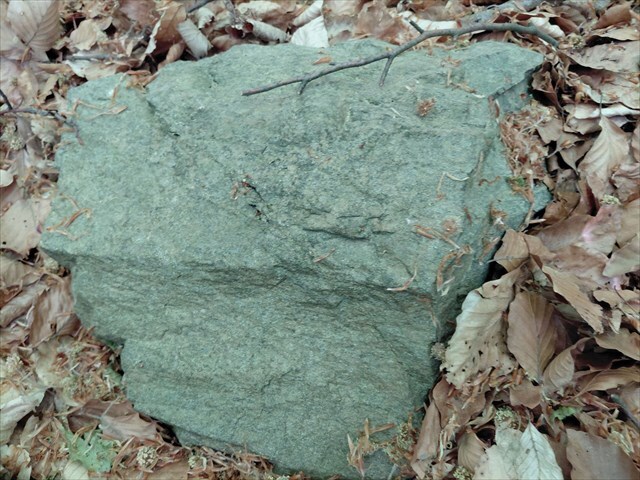
Amphibolite
Amphibolite

The rock is fine-grained, the size of individual minerals does not exceed a few millimeters. Individual mineral grains show signs of banding, but not as pronounced as in slates. The color of the rock is gray, sometimes with a greenish tint.
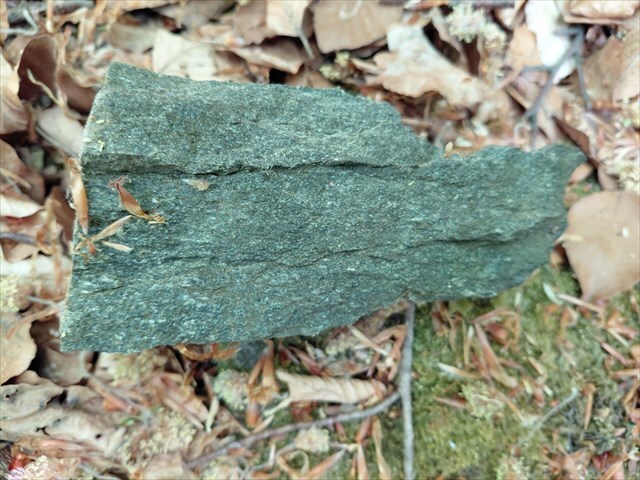
Amphibolite
Amphibolite

The name of the rock is derived from the predominant mineral amphibole. Depending on the original rock, they are divided into ortho- and paraamphibolites. Orthoamphibolites were formed by the transformation of igneous rocks such as basalt, the original rocks of paraamphibolites are sediments. Compared to orthoamphibolites, they often contain more biotite and quartz.

Formation

As already mentioned, amphibolites are formed by the metamorphosis of already existing rocks. Transformation is understood as the effect of temperature and pressure on the rock and thus a change in its mineral composition and external features, such as the arrangement of minerals. Depending on the combination of temperature/pressure, as well as the original mineral composition, the concept of so-called metamorphic facies was developed, which, based on the dependence of temperature and pressure, determine the types of rocks (or the minerals contained in them).
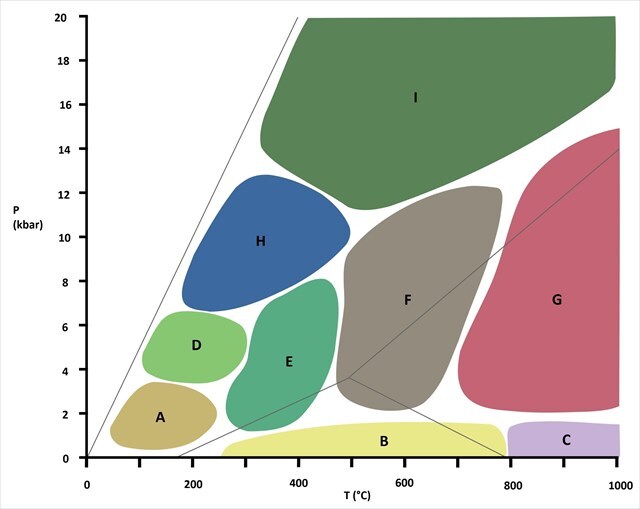
Metamorphic facies
Metamorphic facies. Legend:
  • A: zeolite
  • B: hornfels
  • C: sanidine facies
  • D: prehnite-pumpellyite facies
  • E: greenschists
  • F: amphibolites
  • G: granulites
  • H: blueschist facies
  • I: eklogites

Amphibolites and thus the amphibolite facies belong to a field with medium pressures, from 4 to ~12 kbar (~1,200 MPa) and medium temperatures: 500 - 700 °C. Under these conditions, the formation of minerals typical of these rocks occurs.

Occurence

In the Tríbeč Mountains, amphibolites are part of the crystalline rock, i.e. the oldest rocks of the mountain range. Their occurrence is localized in the Rázdiel area (in newer maps Mníchová hill), where they occur together with other metamorphic rocks such as phyllites and shales.
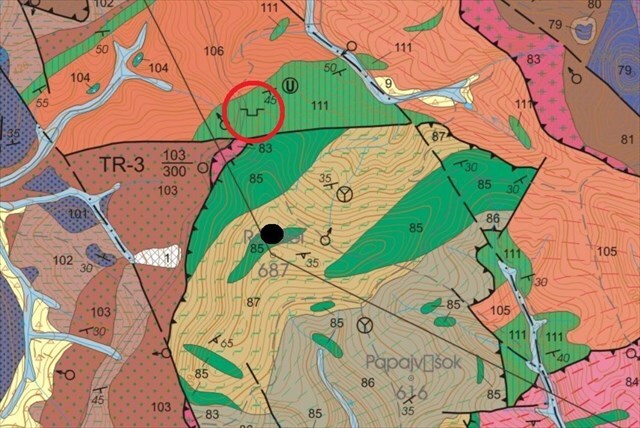
Geological map of Tríbeč (Rázdiel and surrounding area)
Geological map of Tríbeč (Rázdiel and surrounding area). Legend:
old quarry location
Mníchová hill (Rázdiel)
amphibolites
schists
phyllites
granites
permian conglomerates

Amphiboles from the Mníchová area contain up to 80% amphibole, the rest is sodium-calcium feldspar (plagioclase) and as accesoric (under 1%) minerals: garnet, ilmenite and zircon. The rock is fine-grained, the size of individual mineral grains is 0.2 - 0.5 mm, rarely up to 2 mm. The original rock was probably basalt.

Zdroje/sources

  • Ivanička, J. (ed.), 1998: Geologická mapa Tribeča 1: 50 000; MŽP SR – GSSR, Bratislava (sk)
  • Ivanička, J. (ed.), 1998: Vysvetlivky ku geologickej mape Tribeča 1 : 50 000; Bratislava, GS SR. 236 s. (sk)
  • Wikipedia: Amfibolit (en)
  • Wikipedia: Metamorfné fácie (en)

Additional Hints (No hints available.)

Advertising with Us